Clara Riveros presents an expert analysis of Trump’s plans for Latin America.
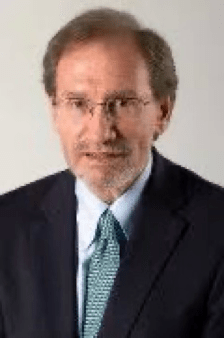
Eduardo Gamarra, Professor of Political Science at Florida International University (FIU), is a worried man.
It’s been clear to him since the start of Trump’s second term in 2025 that the Western Hemisphere would be a priority for this US Administration. The National Security Strategy, published in December 2025, confirmed that. Then came the events of January 2026 in Venezuela: for Professor Gamarra, what has happened in Venezuela represents “the complete abandonment of democracy as the core value of US foreign policy for the past few decades”.
Talking to the Bulletin of Advanced Spanish, he does not hide his concern about the implications of this for the future of democracy in the United States.
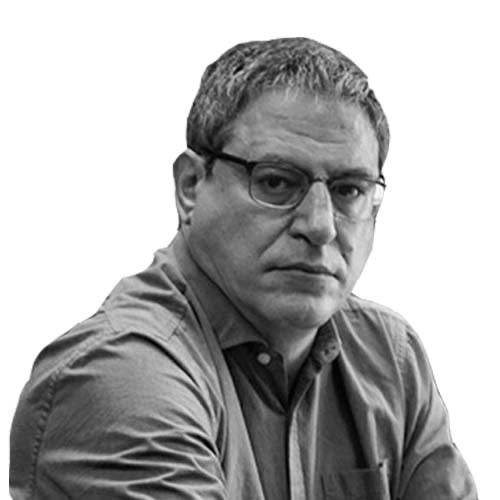
His concerns are shared by Mario Ojeda Revah, Professor of International Relations at the National Autonomous University of Mexico (UNAM). He regards aspects of Trump’s foreign policy, such as punitive tariffs, as a form of “blackmail,” akin to ‘gangsterism’.
The triumphalist aftermath to the capture of Venezuelan dictator Nicolás Maduro has reinforced Trump’s sense of omnipotence. “The ‘Donroe’ doctrine is a true reflection of Trump,” Professor Ojeda Revah tells the Bulletin. “He justifies decisions based on U.S. national security and his conviction that the Western Hemisphere is a US sphere of influence. And under this paradigm, he is lining Latin American states up with his position. There are no restraining influence to make him moderate his stance, as recent events have shown”.
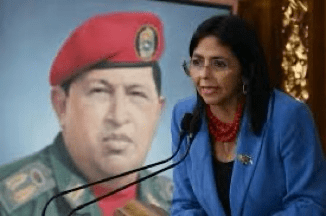
Donald Trump is unconcerned about the image he projects. He has said little or nothing about democracy in relation to Venezuela. Instead, he has reinvented the interim dictator Delcy Rodríguez as the “elected president” and collaborator. ‘Oil’ is probably the term he uses most frequently when speaking about Venezuela. “It’s very clear what the administration is interested in,” Gamarra explains: “promoting U.S. national interests. Oil is their priority, not the transition to democracy or removing the repressive apparatus of the Chavista regime”.
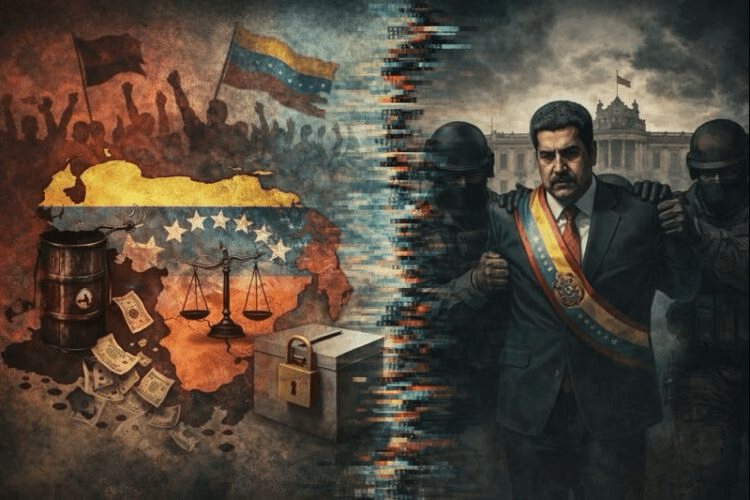
That regime, for its part, has adapted and accommodated itself to the new circumstances. The US strategy has been announced as stabilisation of Venezuela, followed by reconstruction and transition, the date of which is still unknown. The US administration believed it could replicate this operation in Cuba and also in Iran. However, part of the reason it worked in Venezuela was that the Chavista leadership betrayed Maduro. Iran and Cuba present different challenges, Gamarra and Ojeda Revah agree.
Why such haste on the part of the American administration?
Professor Gamarra points out that “Trump cannot be re-elected. This helps to understand, to some extent, why the President acts as he does. In fact, it is already clear that in the mid-term elections in November 2026, his party could lose in both houses of Congress.”
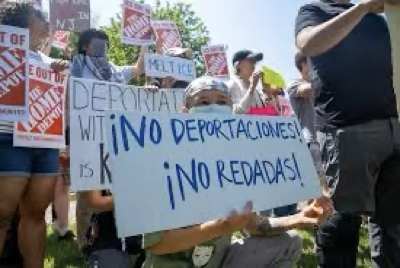
Since 2025, polls have shown that disapproval of the Republican administration exceeds approval. On 13 April 2026 Professor Gamarra presented the results of a survey he conducted in 12 US states, which show that Latino voters overwhelmingly disapprove of Trump’s Administration. Even among the Cuban community, historically supportive of Trump, approval has declined. Independent voters, not just Democrats, also largely reject the Republican Administration.
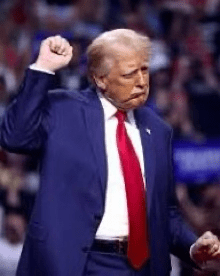
By the end of April 2026 sixty days have passed since the US and Israel launched their war on Iran. Trump is more unrestrained than ever. He has threatened to destroy Iranian civilization, used grotesque and vulgar language, and diminished the dignity of the office he holds. The image and credibility of the United States have been severely damaged.
Despite its claims of victory, the United States is losing its war on Iran because winning it requires much more than tactical victories. Iran and China, on the other hand, have benefited, and are gaining ground on the international political stage. China achieves this without much effort, and Iran in spite of itself.
The Shield of the Americas (Escudo de las Américas)
In early March, the Summit of the Shield of the Americas was held in Miami. Twelve regional leaders, ideologically aligned with the Republican US President, attended.
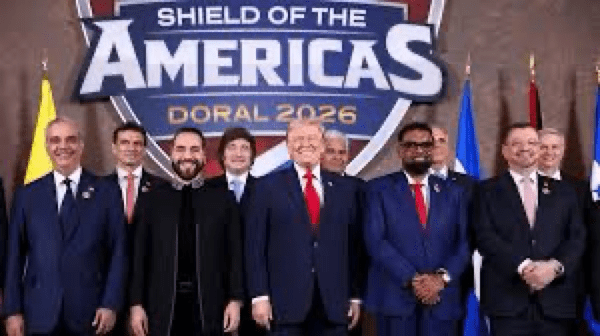
The Summit agreed to create a regional military coalition against drug cartels and organised crime. It also declared its intention to address mass irregular immigration and reach agreements with participating countries for the reception of immigrants deported from the United States. A third objective is to prevent China from establishing its sphere of influence in the region.
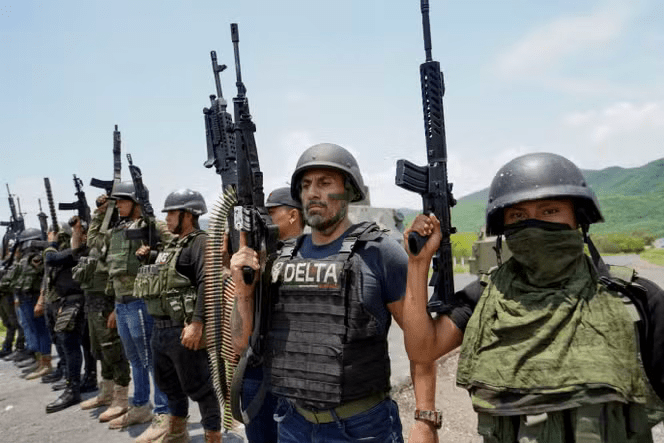
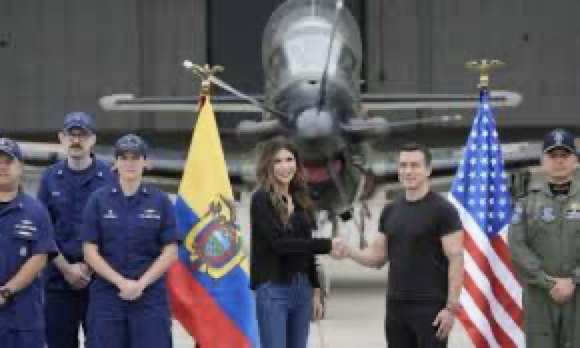
“We agreed to use lethal military force to destroy these sinister cartels and their terrorist networks,” President Trump announced, thus anticipating more joint operations like those that have taken place in Ecuador involving U.S. forces.
Mexico, Colombia, and Brazil, with their populist left-wing governments, were absent from the Summit, despite the major contribution of at least the first two mentioned to the drug trade and the criminal groups that have emerged in those territories and expanded across the region.
Professor Gamarra points out that this Shield of the Americas initiative aligns with the U.S. National Security Strategy and is consistent with the so-called Donroe Doctrine. It may also be an ideological response to the socialist-leaning initiatives and blocs that Latin America has experienced in recent years. It also has the distinction of having the backing of the United States, the world’s leading military superpower. It is a regional military coalition, as evidenced by the meeting of Defense Ministers held prior to the Summit, where it became clear that if the region does not act decisively against the threats posed by drug-trafficking and transnational crime, the United States will.
Both professors Gamarra and Ojeda Revah regard the asymmetries among Latin American countries as a crucial factor in this new alignment under the ‘Shield’. Their military, technological and intelligence capabilities, as well as their political and historical contexts, crises, and collapses all influence and help to understand their current predicaments and priorities, as well as their need for strategic alignment with the United States.
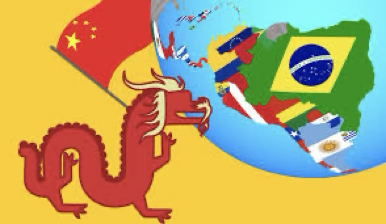
Expelling or isolating China from Latin America, as the United States desires, will not be an easy task due to the positioning and presence acquired by the Asian power in several countries of the region in recent decades, when the United States was paying less attention to Latin America and the Caribbean. This circumstance—the Chinese presence—complicates attempts to strengthen relations between regional countries and the United States after the era of 21st-century socialism.
Professor Ojeda Revah comments that in Mexico there was criticism in some sectors of President Claudia Sheinbaum not being invited to the Summit. “Mexico and the US are neighbouring states with a cordial but somewhat tense relationship. As far as the Shield of the Americas is concerned, the ideological leanings and affinities of the attendees made it difficult to invite the Mexican president, and would have made it difficult for her to attend.”
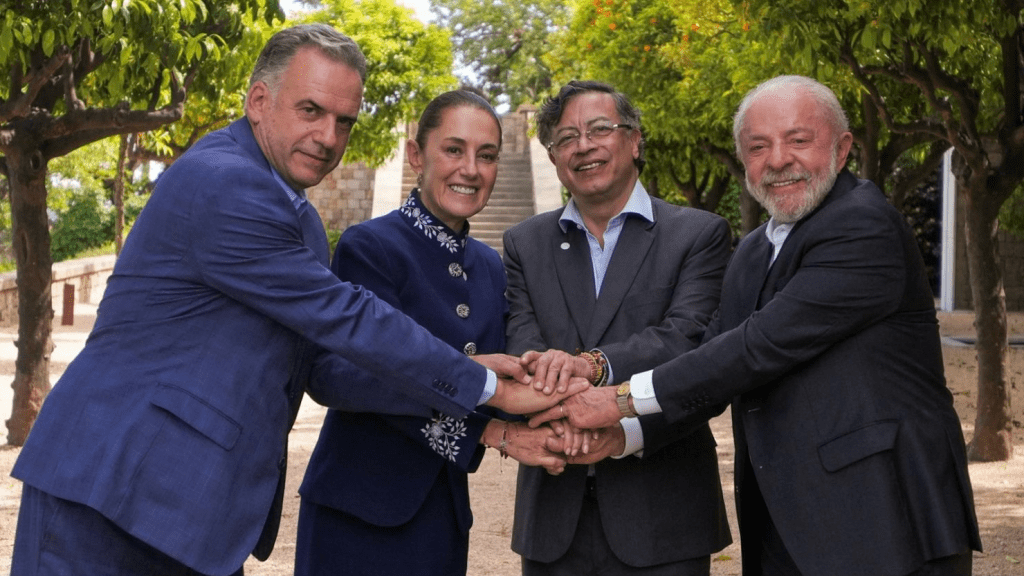
However, the UNAM professor adds, “Looking at those ignored or not invited, especially Sheinbaum, Lula, and Petro, they all have a propensity for outdated rhetoric. They speak to their base rather than to the citizenry or the country as a whole. But, it must also be said, Trump has actually influenced Sheinbaum and Petro, beyond the rhetoric they use for their supporters and sympathisers.” Similarly, Gamarra notes that each government may have its own narratives, priorities, objectives, and interests, but they are all aware of the inadvisability of entering into open conflict with President Trump.
Ojeda Revah concludes the interview on the borderline between comedy and horror, observing that the obscenities uttered by President Trump, whether speaking of his friends, as in the recent reference to Saudi Crown Prince Mohammed bin Salman, or of his enemies, the Iranians, are a kind of evocation of Abdalá Bucaram, the once vulgar and loquacious Ecuadorian president. Bucaram’s brief presidency ended with his removal from office in 1997 for ‘mental incapacity.’ A Bucaram in the White House, leading the most powerful country in the world, would not be good news.
Clara Riveros, Americas Bureau Chief, published author, journalist, opinion columnist, anchor and consultant. BA degree in Political Science from the National University of Colombia (Faculty of Law, Political and Social Sciences). A keen traveller, who has over the past ten years lived in the Americas, southern Europe and North Africa.

