Dr Azariah Alfante, Lecturer in Hispanic Studies at the University of Glasgow
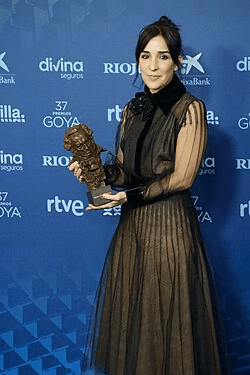
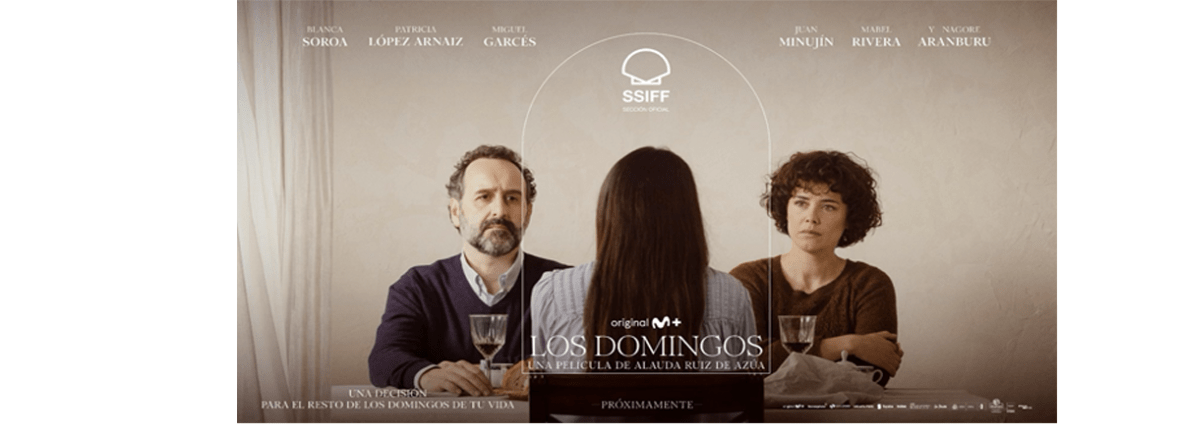
At the 40th Goya Awards ceremony in February 2026, Basque filmmaker Alauda Ruiz de Azúa’s film Los domingos (2025) reaped five major awards: Best Picture, Best Director, Best Screenplay, Best Actress (Patricia López Arnaiz), and Best Supporting Actress (Nagore Aranburu).
This film was one of a kind, boasting a terrific script and featuring renowned actors and a promising new star, Blanca Soroa, in her film debut. Ruiz de Azúa previously won a Best New Director Goya for Cinco lobitos (2022), another great film set in the Basque Country about the relationship between a mother and her daughter.
A film about cloistered nuns? The last such one I saw was The Nun (2018). And that was a horror movie. A fresh and more accurate addition therefore to contemporary cinema, Los domingos tells the story of Ainara (Soroa), a seventeen-year-old high school student, who is pondering what to do with her life. She’s normal. She has friends. They hang out. They sing in the school choir. She likes a guy called Mikel. He also sings in the choir.
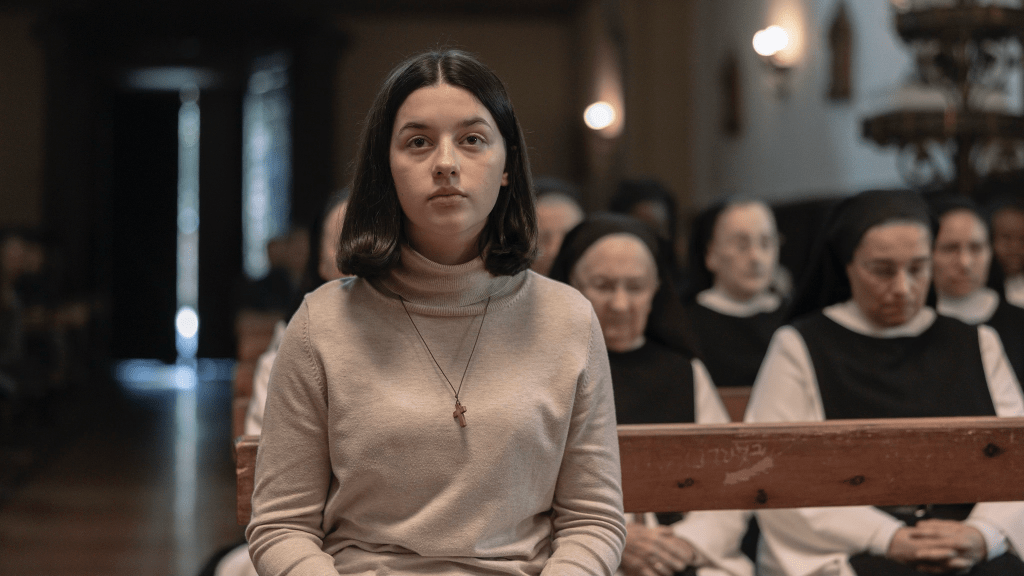
At the start of the film, Ainara rises early one morning during a religious youth retreat to watch the nuns sing the Divine Office in the church. Her heart is set on joining them and she quietly prepares herself to be a part of this tight-knit community.
Her aunt, Maite (López Arnaiz), and her father, Iñaki (Miguel Garcés), disagree with her plan to enter the convent for various reasons, chief amongst them being that no girl in her right mind would join a group of elderly, cloistered nuns. “Parece una locura,” the mildly anticlerical Maite tells her brother, later suggesting that Ainara see a psychologist. Both mean well, despite their disapproval; after all, Maite has watched over Ainara ever since the death of the latter’s mother, when she was very young.
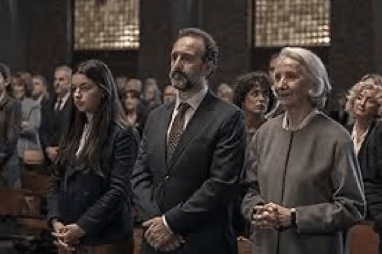
Their misunderstandings mirror modern-day stereotypes and prejudices towards Catholic practices and consecrated life. Ainara acknowledges the nearness of the Virgin Mary by wearing her medal, a gift from her mother before her death; Maite, however, regards this as an attempt to cope with loss. First Communions, funerals, hymns and prayers all feature in the family’s life to varying degrees, from religious devotion for Ainara to cultural observance for the likes of Iñaki and Maite. The story thus serves as a prism that presents societal and familial perspectives that conflict with Ainara’s dream.
In her interviews, Ruiz de Azúa highlights the process of trying to understand how practising believers view love and faith, coming from a non-religious perspective herself. The film’s title encapsulates the encounter of the spiritual and the worldly, as familial, platonic, romantic, and religious expressions of love cleave and clash. The secular and religious music in the soundtrack blend well. The depiction of daily, family life adds a dose of humour.
Ruiz de Azúa’s depiction of proximate spaces speaks volumes; the apartment, the church, and the school are the main sites where the drama unfolds. When Maite attempts to convince Ainara of the world of dazzling experiences that awaits her outside the cloister—university, friends, travel, relationships—Ainara asks her if she could describe her love for her partner, Pablo. Maite is taken aback. It’s as if she can’t answer – or possibly there is more to this love than she can explain to her young niece.
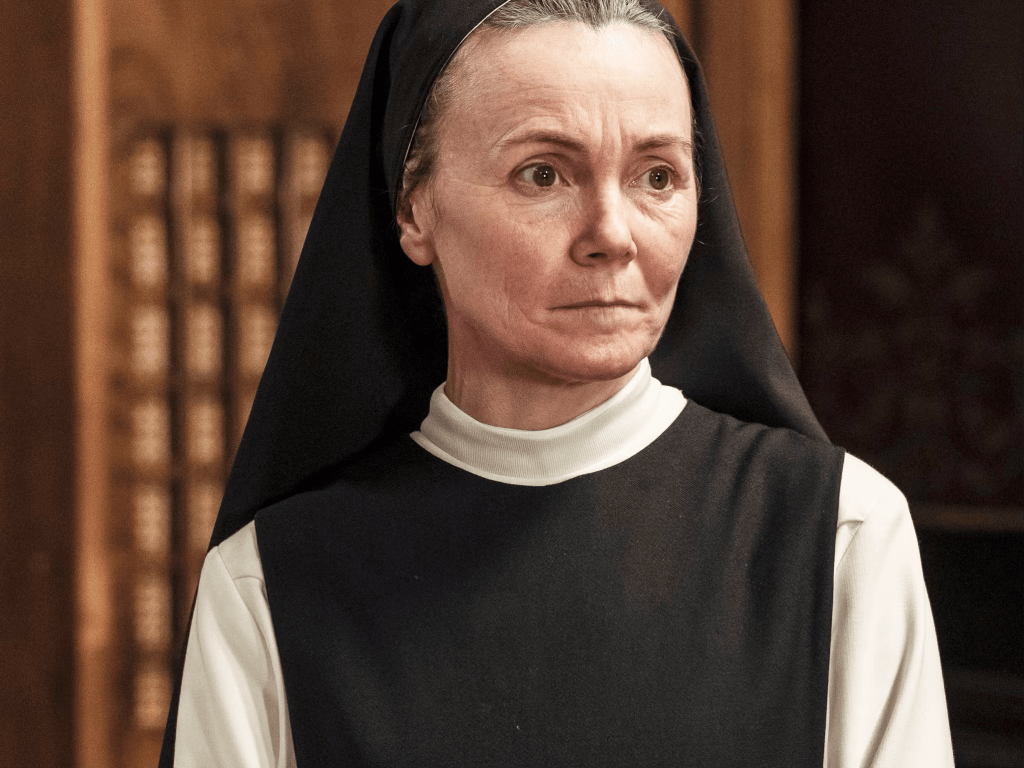
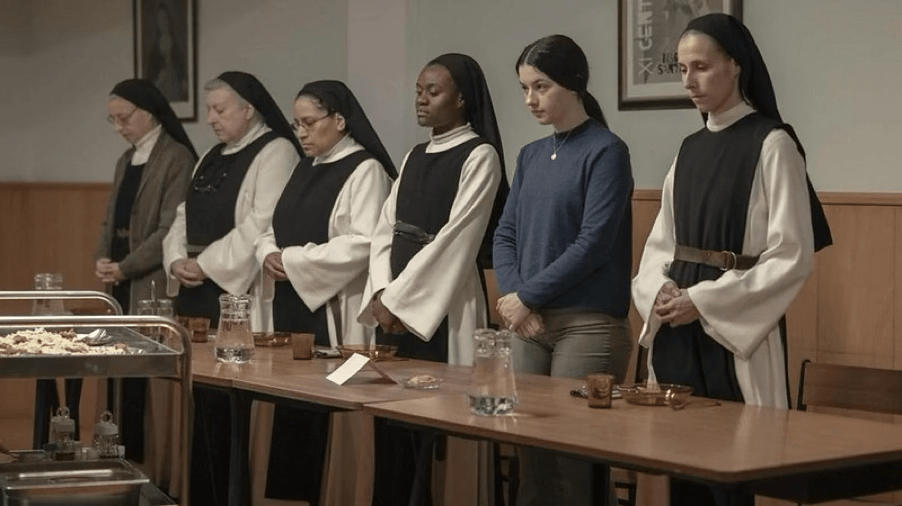
During her period of discernment at the convent, where she lives alongside the Mother Prioress Isabel (Aranburu) and her fellow Sisters, Ainara learns about the duties of consecrated life and its emphasis on love for God and love for one another. “Este amor no existe,” Maite warns Ainara, yet an aged nun tells Iñaki and Maite that she entered her vocation in her late teens and has lived it ever since.
What stands out is the film’s focus on multiple perspectives and questions of faith. Ruiz de Azúa thereby prompts us to ponder the impact of faith on present and future generations. After all, while a 2025 survey showed that 53% of Spain’s population is Catholic, only 17% of the population practises the faith (EFE).
The careful characterisation of Ainara reflects the similarities and differences between herself, her peers, and her immediate and extended family. At her grandmother’s funeral, Ainara prays earnestly to God at the altar. Her father and aunt watch her silently, struggling to understand, but seeking to love, too – illustrating, perhaps, that dealing with barriers between people who love one another is all part of a process of personal and spiritual development.
Secondary Sources
Alauda Ruiz de Azúa y Blanca Soroa (‘Los domingos’) se sienten ya ganadoras, https://www.rtve.es/play/videos/la-noche-de-los-goya-con/alauda-ruiz-azua-blanca-soroa-domingos-ganadoras/16959366/ 28 February 2026.
EFE, “Casi el 53 % de los españoles se declara católico, pero solo el 17 % es practicante,” https://efe.com/espana/2025-05-09/casi-53-espanoles-se-declara-catolico-solo-17-practicante/ 9 May 2025.
El amor y la vocación según Alauda Ruiz de Azúa, directora de la película Los domingos, https://www.youtube.com/watch?v=JxaqkggifJY 27 October 2025.
Entrevista a Alauda Ruiz de Azúa, directora de ‘Los domingos’ https://www.youtube.com/watch?v=w1M8kHmv3ow 21 October 2025.
LOS DOMINGOS, comentario de Mons. Munilla, https://www.youtube.com/watch?v=BDPfittfN0Q, 27 October 2025.

