Colin Harding
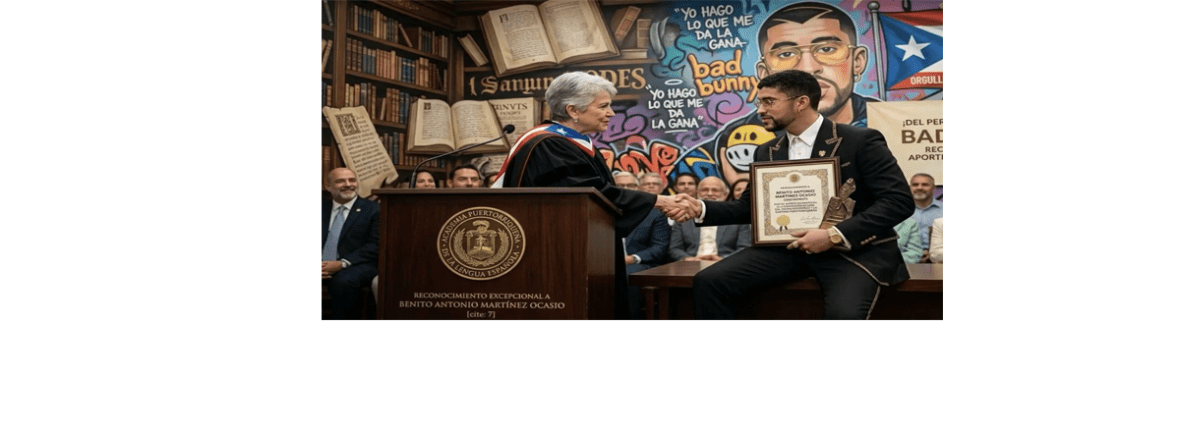
The onward march of Spanish as an international language continues, with Bad Bunny leading the way. In the above photograph he is seen receiving an award from the Puerto Rican Academy of the Spanish Language for ‘projecting the Puerto Rican dialect, with all its idioms and urban cadence, on an unprecedented transcontinental scale, overcoming prejudices and stigmas towards the communication forms of young people and popular communities, and demonstrating that language is a living organism that beats in the street’.
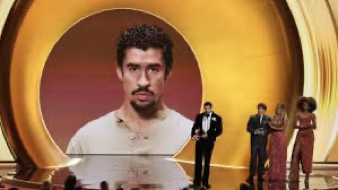
On 1 February 2026 the 31-year-old Puerto Rican rapper and reggaeton star (real name: Benito Antonio Martínez Ocasio) made history at the Grammy awards in Los Angeles, when his Debí tirar más fotos [I should have taken more photos], entirely in Spanish, won Best Album of the year. His acceptance speech was almost all in Spanish, too. “No existe nada que no podamos lograr [There’s nothing we can’t do],” he told his wildly applauding audience.
That’s not all – far from it. The following week Bad Bunny headlined the half-time show at the Super Bowl in Santa Clara, California. The Super Bowl is said to be the most-watched annual sporting event in the world, broadcast in more than 130 countries. His 13-minute performance was almost entirely in Spanish, again for the first time, and was a breathtakingly audacious celebration of Puerto Rican, and latino, history and culture.
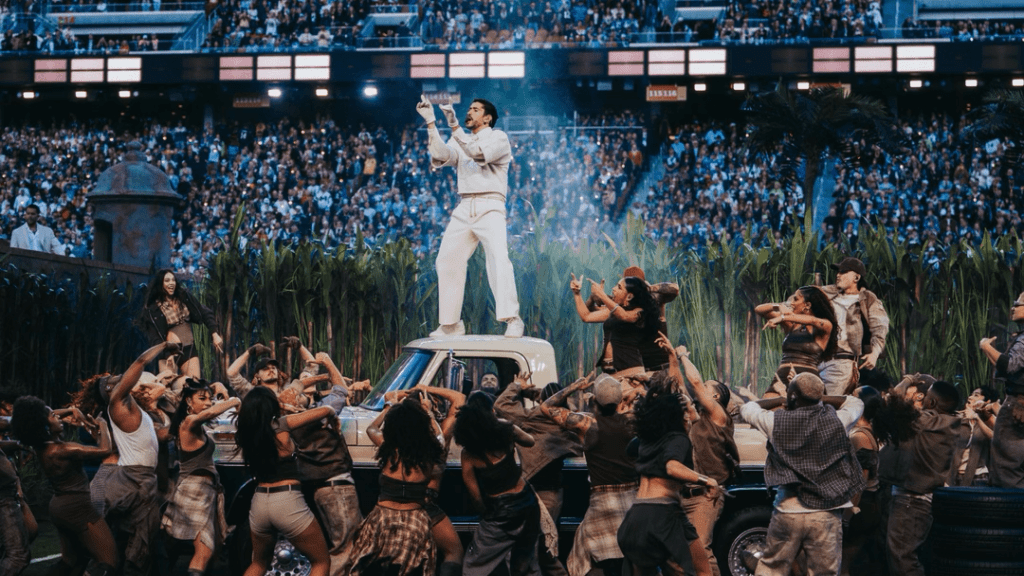
As the Miami Herald commented: “Bad Bunny’s half-time show reminds the world there is more to ‘America’ than just the US”.
In addition to Best Album, Bad Bunny also took home from the Grammys the award for best Música Urbana Album of the year (Debí tirar más fotos again). His reggaeton number Eoo was proclaimed Best Global Music Performance.
This is not the first time that Bad Bunny has won an award for Spanish-language albums at the Grammys. He won the Música Urbana category for Un verano sin ti (2023) and El último tour del mundo (2022), and the best Latin pop album for YHLQMDLG (2021). In case you’re wondering, YHLQMDLG stands for Yo Hago Lo Que Me Da La Gana [I do what I feel like].
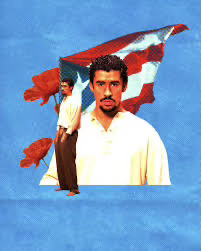
The rise of Bad Bunny, a boricua1 (ie Puerto Rican) nationalist and outspoken critic of President Donald Trump’s immigration policies, has predictably caused uproar in MAGA circles. Trump complained on Truth Social that “the Grammy Awards are the WORST, virtually unwatchable”. The monolingual President was equally outraged by Bad Bunny’s Super Bowl performance (which he did not attend), describing it as “one of the worst EVER”, and claiming that “nobody understands a word this guy is saying” – except, perhaps, the millions of US citizens whose first language is Spanish or who learn it at school. Trump had earlier said that “I don’t know who he is. I don’t know why they’re doing it. It’s like, crazy.”
The conservative pressure group Turning Point USA (founded by assassinated right-wing commentator Charlie Kirk) put on an “alternative half-time show” for “underserved” English-speaking Americans, featuring Kid Rock and a trio of country musicians. It was streamed on YouTube at the same time as Bad Bunny’s Super Bowl act, and was watched by between five and six million viewers, according to most estimates. Bad Bunny, whose show also featured Ricky Martin and Lady Gaga, was watched by more than 128 million.
In March 2025 Trump had signed an executive order declaring English to be the official language of the United States, shortly after the White House had taken down the Spanish-language version of its website. Until then, throughout its history, the US government had avoided adopting an official language.
The former editor of Rolling Stone magazine, Noah Shachtman, commented: “English is no longer the lingua franca of culture in the US”. Bad Bunny has a global impact: he was the most-streamed artist in the world on Spotify last year. On 18 February he was ranked fifth-most popular artist in the world in 2025 by global music-industry body IFPI.
So the Puerto Rican’s popularity goes way beyond the growing number of Spanish-speakers in the US. The online language-learning site Duolingo says that almost 49 million people worldwide are learning Spanish.
Another indication that the President and his supporters may be fighting a losing battle was a poll taken shortly after the Super Bowl show: more of the 1,700 adults questioned by Yahoo/YouGov said that Bad Bunny represents the US better than Trump – 42% to 39%.
Spanish is the biggest minority language in the US, with about 13-14% of the population speaking Spanish at home. Not only that, according to some estimates the United States now has the second-largest Spanish-speaking population in the world. The World Population Review puts the number at 65.5 million, surpassing Colombia, which has 53.1 million. Mexico is the most populous Spanish-speaking country, with 138.1 million.
The number of Spanish speakers in the US has increased more than fivefold in the last 40 years, from about 10 million in the early 1980s.
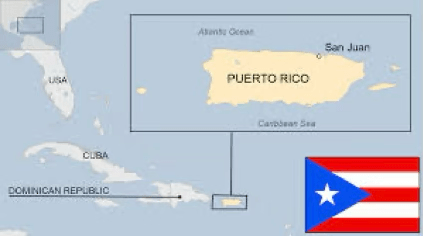
Puerto Rico was a Spanish colony for more than 400 years. It has a population of about 3.2 million, most of whom speak Spanish. Only 22% of Puerto Ricans claim to speak English “very well”, according to the most recent census. Puerto Rican Spanish can be tricky for non-boricuas, and has its own vocabulary, including pichear (to ignore) and janguear (to hang out).
The island changed hands at the end of the brief Spanish-American War of 1898. In 1917 it was declared a territory of the United States, and in 1952 became a commonwealth (estado libre asociado), with its own constitution. Puerto Ricans’ status has been uncertain under US rule: they were granted US citizenship in 1917 and can be drafted into the US armed forces, but cannot vote in US general and presidential elections.
The issue of whether Puerto Rico should remain a commonwealth of the US, become a full state of the Union or achieve independence is still a hot topic. The current governor, Jenniffer González-Colón, is pro-statehood, and aligns with the US Republican Party.
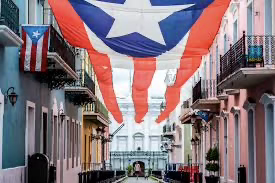
Puerto Rico is much poorer than the poorest US state (Mississippi), with a 40% poverty rate. Hurricane Maria in 2017 devastated the island, destroying some 80% of its power transmission and distribution lines. Puerto Rico is still suffering from regular power cuts – a point underlined in Bad Bunny’s Super Bowl show, part of which was performed from the top of a utility pole. The Trump administration has cancelled most of the federal funding earmarked for strengthening the island’s power grid.
- boricua derives from the name given to the island by the indigenous Tainos, who were almost completely wiped out by the Spanish. ↩︎

