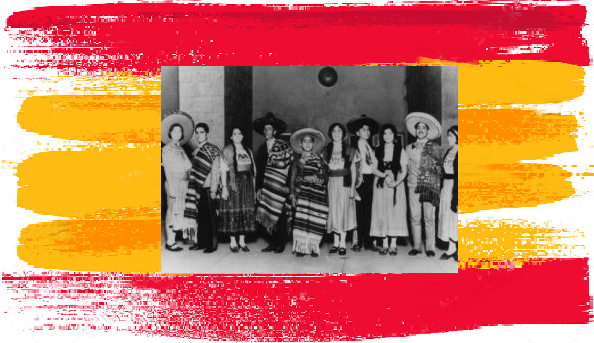

Essay Competition
15 September: the Essay Competition deadline. Anonymised versions of the entries are sent to the judges, who start working their way through them, making notes that are later sent as personalised feedback to all competitors.

Once this process is complete, the judges set about trying to balance the qualities of each submission against the others to produce some sort of rank order.
At this stage the Senior Editor reviews the judges’ work, often playing ‘devil’s advocate’ to test how far they are prepared to defend particular judgements. A revised rank order emerges, is slept on, and eventually takes final form. It’s clear when the team has reached the right conclusion, because at that point the urge to cross-examine abates, and all relevant evidence has been aired.

This year the winning entry sifted out by this process was the work of Aliza Shah, who wrote about the Barcelona-based rapper Morad. Congratulations also to our Singapore-based runner-up Sasha Parashar and the writers of the five commended entries, all of whom have received certificates attesting to their achievement.
In this edition you can read the essays placed first and second by our judging panel. Both are published unedited, with our choice of illustrations.
All other contestants have been offered the chance to develop their essays further in coming months, working with BAS editors towards a publishable final draft. We look forward to seeing some of them in print in due course.
All who took part, and their ‘support teams’, deserve credit. We do not underestimate how much work goes into preparing these essays: they are all significant achievements. A competitive format such as this can bring out the best in aspiring writers. Unfortunately, it is in the nature of competition that not all can be placed. We can at least ensure that all participants receive encouragement and advice for future endeavours.
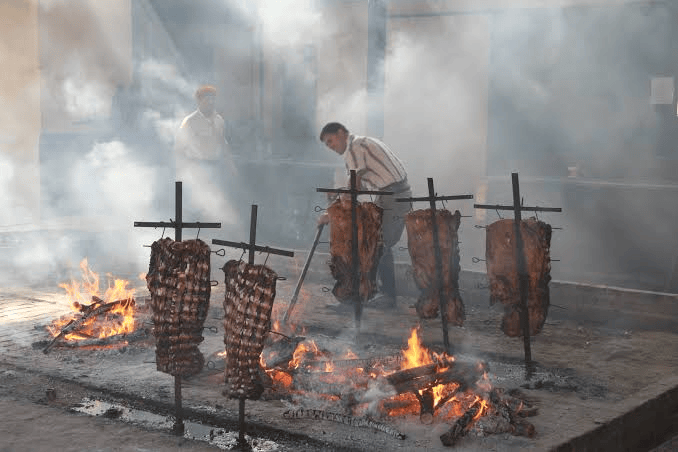
In the five years of this competition we have consistently been impressed by the range and originality of topics explored. This year these included the Argentine asado tradition (the term ‘barbecue’ doesn’t do it justice); Peruvian guano (‘bird poo’ doesn’t do that justice either…); Spain’s only colony in sub-Saharan Africa, Equatorial Guinea; and the origin of mobile blood banks in the Spanish Civil War.
An original and unfamiliar topic is a shrewd tactical option in a competition where contestants are trying to stand out from their peers. Judges are certain to have long experience of the Spanish-speaking world: it is likely that they have already heard most of what can be said about Moorish architecture, Spanish football, or over-tourism. Which is not to say that these topics can’t win – it’s just that it can be harder to come up with an original line on them, and to avoid the essay looking like a Sixth Form writing assignment.
One unusual feature of this year’s selection was that no literary topics were offered, despite two of the four previous competition winners having chosen such themes.
On the technical side, the judges commented that most entries need ‘more balance and work in terms of measure and flow – in particular, when it came to paragraphing and internal organisation’. Structure, internal signposting of the arguments and clarity of expression were all mentioned. ‘If candidates can improve in these areas, their essays will make more of an impact.’
This year’s competition rules set a maximum length of 900 words, and asked participants not to choose topics covered in recent editions of the Bulletin. Some entries neglected these stipulations. Others made errors warned against in previous judges’ reports, eg forgetting to give the work a title. For more specific tips, see our 2025 Judges Report via the Essay Competitions tab under the Index menu, or by clicking on https://bulletinofadvancedspanish.com/wp-content/uploads/2026/02/bas-9.1-archive.pdf#page=12 .
Now enjoy the winning entries – one in Spanish, one in English.

