BAS Editor Stephen M. Hart
In this essay I intend to focus on the interplay between the technique of magical realism and the way in which political events are portrayed in the Netflix dramatisation, released in August 2026, of Gabriel García Márquez’s classic novel Cien años de soledad (1967).
Firstly, we need to look at some examples of magical realism in the Netflix show. My assessment is that the three best technical exempla are:
- the scene in which the pots, pans, tongs and braziers hurl themselves through the air as a result of Melquíades’ statement about the magic powers of his magnets;1
- the sequence in which a taciturn Armenian turns himself in a puddle of pitch-tar, after which he (or, the puddle) states what has happened to Melquíades;2 and
- the scene in which Remedios la Bella ascends to heaven.3
The first scene is portrayed effectively in the Netflix version. We see Melquíades’s dramatic revelation of his magical talismans (the magnets), we witness the crowd’s fascination and we then see their awe and horror when the various metal utensils and tools begin to propel themselves through the air.
The second example is also performed in a cinematically successful way; we see the taciturn Armenian “vanish” before our eyes as he disappears into a puddle of smoking pitch-tar.
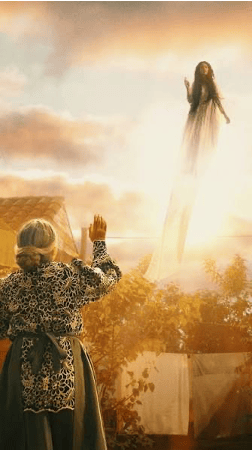
The third exemplum draws on a precisely articulated temporal graduation of the movement upwards into the sky of Remedios la Bella’s body. Some of the original features of the event in García Márquez’s novel – such as the preliminary portrayal of hanging the sheets out on the line, as well as the comment made by Remedios la Bella, “nunca me he sentido mejor” (“I have never felt better”) – differ from the original event as depicted in the novel in that these are introduced earlier in the Netflix show. This allows the cinematic portrayal of the ascension to have our undivided cinematographic, visual attention in the Netflix version.
In all three cases the cinematography articulates effectively the convergence that is necessary in magical realism, that is, the depiction of the magical event as if it were real or empirical.
What happens, though, if we use a more sensitive critical barometer, that is, one that measures and assesses the degree to which the technique of magical realism becomes an appropriate vehicle for a political message? We certainly do find examples of this in the original novel, Cien años de soledad. Indeed, the best example of this snug fit between politics and magical realism is the phantom of José Arcadio Segundo in the original novel. On the one hand, the ghost is the pièce de résistance of magical realism because it seamlessly blends ocular thereness with the supernatural and magical realms, while, on the other, it encapsulates the political resilience of the Colombian people – essentially, because the ghost never gives up.4

Elsewhere I have argued that the politics underpinning Gabriel García Márquez’s Cien años de soledad (1967) is articulated most effectively when it shines through in the magical realism.5 Thus, the political point about the Colombian State’s massacre of workers in the main square of Ciénaga, Colombia, on 6 December 1928 – a real historical event – is dynamically expressed through the metaphor of the ghost, whose “testimony” is the magical-real alternative to the cold-hearted assertion of the Army and the State that nobody was killed.
The question to be addressed here, though, is as follows: does that tight fit between the magical realism and the political meaning – which works extremely well in the novel – also function effectively in the Netflix dramatisation?
The Netflix version of the political unrest depicted in Chapter 15 of Cien años de soledad – that is, Episodes 5-7 of the second Netflix series –offers an interesting test-case. As we shall see, the melding of politics and magical realism works well in some segments but not so well in others.
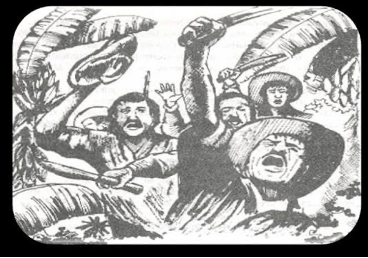
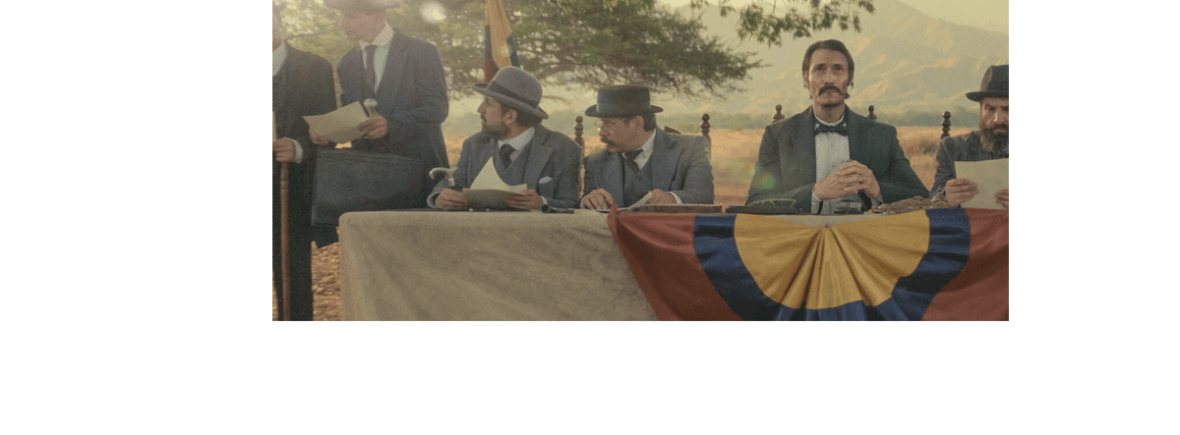
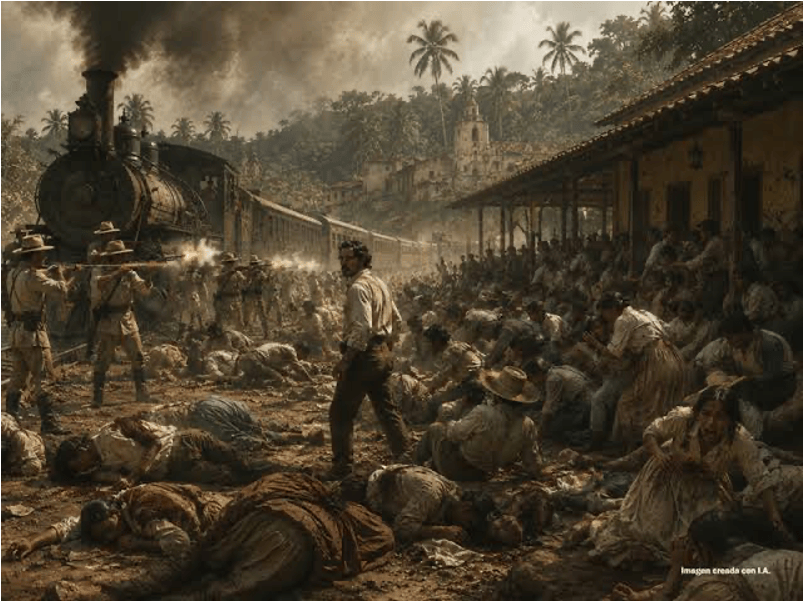
In those episodes we see the escalation of violence between the authorities of the United Fruit Company and the plantation workers. After some union members are ruthlessly attacked on leaving a clandestine meeting to plan their protest, the plantation workers decide that their only option is to revolt. They invade the property of the UFC, seize articles and distribute them to the workers, and even resort to blocking the train and burning down the banana plantations. The army is ordered to take over by the Colombian government, and the 3,000 workers are invited to a meeting in the main square of Macondo (Ciénaga), which rapidly descends into a bloodbath when the General Carlos Cortés Vargas orders the army to shoot.
At this point we have an excellent use of the language of magical realism to express the political shock underlying the deliberately callous execution of the strikers as they are corralled in the main square. The depiction of the silent, pregnant pause before the strikers realise they are being gunned down, and the strangely hallucinatory depiction of the bodies falling to the ground, are excellent examples of the exploitation of magical realism to enhance the brutality of the Army’s political action. The film subsequently cuts to a powerful sequence of images of the dead bodies on the trains which are travelling at high speed through the night towards the coast. José Arcadio Segundo “wakes up” – even though we as viewers may suspect that he is now a ghost rather than a living survivor – sees all the bodies, and then jumps off the train, before making his way back to Macondo.
Particularly important in this context is the scene in Episode 7 in which we see José Arcadio Segundo having a conversation with a woman who assures him that nothing has happened in Macondo and that Macondo is a peaceful town. The novel had introduced the suspicion that José Arcadio Segundo is a ghost, even if he is not aware of this fact:
Buenos – dijo exhausto –. Soy José Arcadio Segundo Buendía.
Pronunció el nombre completo, letra por letra para convencerse de que estaba vivo. Hizo bien, porque la mujer había pensado que era una aparición al ver en la puerta la figura escuálida, sombría, con la cabeza y la ropa sucias de sangre, y tocada por la solemnidad de la muerte. (…)
José Arcadio Segundo no habló mientras no terminó de tomar el café.
Deben ser como tres mil – murmuró.
¿Qué?
Los muertos – aclaró él -. Debían ser todos los que estaban en la estación.
La mujer la midió con una mirada de lástima. “Aquí no ha habido muertos”, dijo.6
José Arcadio Segundo then takes refuge in the family home in Macondo. The Army soon arrive at the Buendía residence, and demand to carry out a search of the property. The Captain uses his torch to search the room in which José Arcadio Segundo is hiding and – despite shining his torch directly into José Arcadio Segundo’s eyes – is unable to see him, proving that José Arcadio Segundo is, in fact, a ghost.
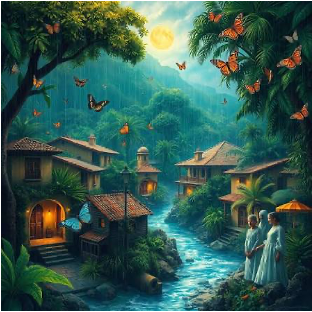
The depiction of this event – which is mysterious in the novel – lacks mystery in the Netflix version. José Arcadio Segundo does not have a magical-real feel. He doesn’t look like a ghost. In fact, he just looks normal, if a bit the worse for wear.
We should recall that, in the original novel, José Arcadio Segundo, after the execution of his fellow strikers, became a liminal figure existing midway between life and death, a desaparecido who has come back to haunt us with his story. He is a “political” ghost, and his political character is an intrinsic feature of the novel. He stands for the people, the subaltern that the State and the Army refuse to acknowledge, or even to “see”. José Arcadio Segundo is, thus, a ghost who has been rendered invisible by the State.
Given his importance in the plot of the original novel, José Arcadio Segundo should have been presented more obviously as a ghost-like figure in the Netflix show. This is an example of how, at crucial junctures of the dramatisation, the decision was made to drain out the magical realism that was in the original novel. Indeed, my estimate is that, in the 16 episodes of this series, there may be as little as 15 minutes of “visible” magical realism in total.
This is a pity. After all, magical realism was, and is, the key quality that made García Márquez’s novel famous. It also led to him being awarded the Nobel Prize for Literature in 1982.
At times, in the Netflix show, the voice of the magical-real is lost within the hubbub of Colombian politics, history, violence and sex. The producers and directors made a decision to downplay the magical realism while foregrounding the story of national politics:
Lo que teníamos claro es que el realismo mágico, más allá de ser un elemento “mágico”, nos hablaba de la intención de Gabo de mostrar como en nuestra región del Caribe Colombiano conviven y se yuxtaponen la belleza y la poesía con la violencia, la barbarie y la oscuridad del hombre.7
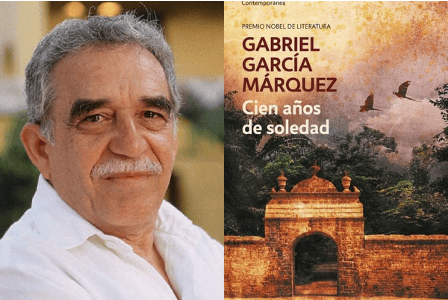
For all the qualities of the TV adaptation, it could be argued that the film-makers’ interpretation of “magic realism” in thematic terms, as related to violence, barbarism, and the “darkness of man”, blunted the sharpness of its vision. The Netflix dramatisation brings out a specifically Colombian reading of the novel. However, when García Márquez’s novel was published in 1967, it was not read that way. Cien años de soledad was seen as a work of genius, expressing a new vision of the world that encapsulated the voice of magical realism. That voice had a political agenda that resonated with writers around the globe.
The Netflix version expresses the energy, atmosphere and excitement of that voice, but it needed more magical realism to make it feel magical as well as real.
Footnotes
- Cien años de soledad (dir. Alex García López), Netflix; First Series, Episode 1: 40:40-41:38. ↩︎
- Cien años de soledad (dir. Alex García López), Netflix; First Series, Episode 2: 29:50-30:20. ↩︎
- Cien años de soledad (dir. Alex García López), Netflix; Second Series, Episode 4: final sequence. ↩︎
- See Stephen M. Hart, “Resilience in Gabriel García Márquez’s One Hundred Years of Solitude”, in Resilience and the Humanities: Critique and Testing, ed. Stephen M. Hart, Camila Gatica Mizala and Nicolas Lema Habash (Rochester: University of Rochester Press, 2026), pp. 173-189. ↩︎
- “Magical Realism in the Americas: Politicised Ghosts in One Hundred Years of Solitude, The House of the Spirits, and Beloved”, Journal of Iberian and Latin American Studies, 9.2 (2003), 115-23. Re-published in Gabriel García Márquez, ed. Harold Bloom (New York, NY: Chelsea House, 2006), pp. 83-93. ↩︎
- Gabriel García Márquez, Cien años de soledad (Barcelona: Plaza y Janés, 1999), pp 367-368. ↩︎
- Kevin Aragón, “Así se escribió el guión de Cien años de soledad para la serie de Netflix”, El Sol de México (1 December 2024). ↩︎

