Colin Harding looks back on a peripatetic but fulfilling career in Spanish.
Oxford 1966: I am in my final year as a Modern Languages undergraduate, and starting to wonder, in desultory fashion, what happens next.
Then I hear about an interpreters’ course at the brand-new Bath University. Jetting around the world to UN conferences sounds glamorous: I apply.
In the event, I was accepted on the course – but my college tutor talked me out of it. Living out of a suitcase and parroting other people’s words wasn’t all it was cracked up to be, he said. I took his word for it.
So I finished the year with a decent degree and no concerns about finding something interesting to do. If it wasn’t to be interpreting, an academic career seemed the obvious alternative. After all, what else was there for a languages graduate outside some form of teaching?
Quite a lot, as it turned out. But nothing was straightforward.
First off, I spent a rather aimless year in Oxford, trying in vain to find a subject for post-graduate research. When I discovered that a new advanced degree course on Latin America was to begin the following year, based at St Antony’s College, I jumped at it: I had a grant for two more years (those were the days!), and I had become keen to find out more about what seemed to me an intriguing and exotic part of the world, after reading a few novels as part of my undergraduate course.
By the time the two years were up, and the BPhil course was about to finish, I had made up my mind that I wanted to go to Latin America. I just wasn’t sure how I was going to get there.
The solution presented itself when the Rector of a private university in Lima visited Oxford, and offered me a (rather ill-defined) job. When I eventually arrived in Peru – it took a while to get him to confirm his offer and organise a visa – I assumed that I would be teaching English in some shape or form. The Rector had other ideas: there was a vacancy on the university’s staff for a sociology lecturer, and it was that or nothing.
I had acquired a smattering of sociology from the BPhil course and, fortunately for me, I had a sociologist friend back in England who kindly agreed to help me (by airmail) devise a course of lectures, so sociology it had to be.
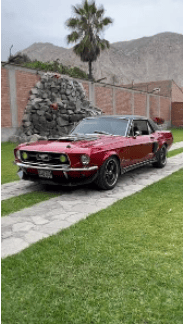
I managed somehow to get through a semester on a wing and a prayer, in the course of which I acquired the useful skill of thinking on my feet in Spanish. The students were pretty undemanding, which helped. They tended to turn up for lectures in red Ford Mustangs, and seemed destined for jobs in public relations or the family business.
As the end of the session approached, I decided that I needed to find something less stressful to do if I was to avoid having to return to England with my tail between my legs. Ignominy was to be avoided at all costs. Fortunately, a possible option suggested itself when I found out there was an English-language weekly published in Lima, the Peruvian Times.
Not that I had any journalistic experience. I had shown no interest in the student newspaper, Cherwell, while I was at Oxford, and the only “journalism” I had done, ever, was a termly “Letter from Oxford” for my old school magazine during my first year. The English master who supervised this publication had assured me that I could write, so I contacted the editor of the Peruvian Times, confident that there would be something for me there when my semester as a university lecturer came to an end.
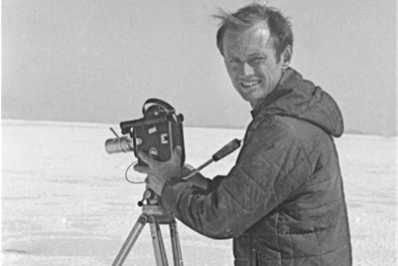
He turned out to be a genial Englishman of Russian descent named Nick Asheshov, a former features writer on the Daily Sketch in London. He invited me in to the paper’s offices in downtown Lima for a chat. It didn’t take him long to twig that I knew absolutely nothing about journalism, but he kindly agreed to give me something to do on a trial basis: I was to fillet a report prepared by experts from the University of Iowa on the land reforms being pushed through by Peru’s military government, and turn it into a series of articles for the Peruvian Times.
This was by no means a simple task for me. I first had to learn to type – something that hadn’t occurred to me before. As a student I had, as was usual in those days, written essays and a thesis in long hand, which the departmental secretary had typed up for me. Nick showed me to a tiny windowless room equipped with a small desk and an ancient cast-iron typewriter, and told me to teach myself. I somehow managed this – an undertaking complicated by the worn, and in some cases blank, keys on the old Remington machine – and the articles I laboriously produced must have been satisfactory enough for Nick to offer me more work.
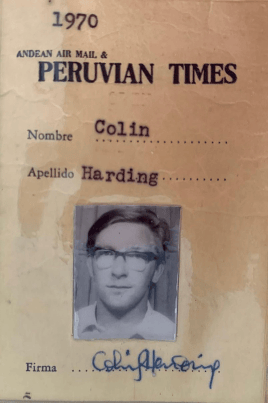
I soon found myself dashing around Lima, interviewing business leaders, ministers and political pundits, and loving every minute of it. It was stimulating, immediate – I could see the results in print every week – and a very far cry from standing in a classroom holding forth on a subject that was almost as unfamiliar to me as it was to my teenage students.
After I had spent a few months learning the journalistic ropes and finding my way around the Peruvian capital, a devastating earthquake hit the north of the country, causing thousands of casualties in the Andean highlands. This provided me with my first experience of reporting on a breaking story. I was even lent an expensive camera to take some pictures (not a success). However, I was good enough at the reporting bit for Nick to offer me a staff job, and later to pass on to me one of the “strings” he had accumulated during his time in Peru. These involved acting as the local correspondent of British newspapers, and offering, or responding to, occasional story ideas. That was the theory, anyway, but Nick was always too busy to do much for them, so he was happy to donate the Financial Times string to me.
This could, perhaps should, have been my big journalistic break. The Peruvian military, who had seized power from an elected civilian government in 1968, had, against all expectations, embarked on a programme of radical nationalistic reforms, including taking over foreign-owned businesses. Among them were oil companies, railways, sugar plantations and mines.
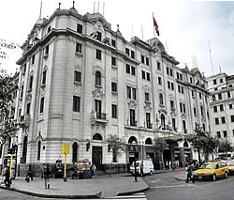
The FT had an insatiable thirst for news on all these developments, and I was soon sending regular stories to London. This involved typing up my copy and crossing Lima’s main square to the grand Hotel Bolívar, where the telex operator transmitted my stuff to the FT. He didn’t speak a word of English, but rarely made a mistake. (The same went for the workers who typeset and printed the Peruvian Times every week.)
Things were going well. I picked up more strings, and also did some commercial translating – mainly connected with shipping insurance claims – on the side.
After a couple of years I decided I should return to England. When I told the FT I was resigning, the Foreign Editor sent me a letter praising my work and saying I had transformed the paper’s coverage of Peru. Back in London he invited me to lunch at the paper. If I had played my cards right who knows what might have happened? But I told him I was going to Cambridge University for three years, so that was that.
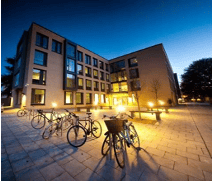
How come? I had decided – inexplicably, in retrospect – to apply for university posts back in England as a way of returning home, and, thanks to the intervention of my old supervisor at St Antony’s, I managed to land a three-year research post at Cambridge’s Centre of Latin American Studies.
I had never completely given up my academic connections while in Peru, and had spent a couple of terms lecturing at Lima’s Catholic University while still working at the Peruvian Times. However, my stint at Cambridge merely confirmed what should have been obvious: academic life was not for me. A research project languished uncompleted, and I spent much of my time editing a volume of book reviews for Latin American Newsletters (LAN), a small London-based publishing company for which I had acted as Lima correspondent. I finally decided, once and for all, that journalism was what I should be doing.
In 1974 I joined LAN full-time, and worked there for eight years. During this period I was a regular guest on BBC World Service radio programmes, commenting, in both English and Spanish, on the news from Latin America. I had never done any broadcasting before.
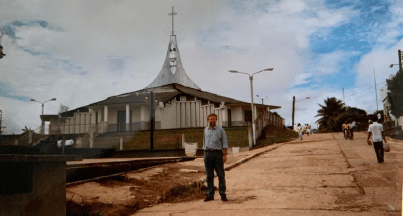
I moved to The Times foreign desk in 1982, thanks to a contact that I had made during a press trip to Colombia a few years earlier. That was how things worked in those days: you used personal connections to secure a few shifts on a paper, and if they went well you might eventually be offered a full-time job.
I was at The Times for five years, working mainly as a sub-editor on both the foreign and home news desks, but also contributing quite regular Latin America-related material to different parts of the paper, such as features and book reviews, as well as news stories. When The Independent was founded in 1986 I applied for a job on the foreign desk, which eventually came through the following year.
At The Independent I worked as a sub and assistant foreign news editor, eventually becoming Latin America Editor and making several reporting trips to the region. I also contributed to other parts of the paper, and began to write regular obituaries of Latin American notables. But by the early nineties the good times were over at The Independent and I, like many others, found myself out on the street and wondering what to do next.
All was not lost. I had developed a number of options over the years in London, one of which was to return on a freelance basis to LAN, editing and contributing to a series of weekly and monthly publications. I also produced regular pieces for an Oxford-based consultancy, wrote a couple of books – which made no money – and made regular television appearances for the likes of Al Jazeera, France24 and, in the last few years, TRT World, the rapidly-expanding Turkish foreign news channel. I was even offered (but declined) a job interpreting for one of Arsenal’s monolingual Spanish stars…
Conditions for languages graduates now are tougher than they were in the 1960s. The decline of language teaching in English state schools is narrowing the options for aspiring linguists, and they often need great determination to keep going. As journalist Cindy Yu has remarked, “we are too cloistered by the privilege of speaking the lingua franca”.
Nonetheless, opportunities are still there to be seized. Businesses will always want people who speak foreign languages: if the UK school system can’t provide them, those businesses will hire them in from elsewhere.
I never earned as much as a freelance as I did on the newspapers, but I have never been short of work and have adapted happily enough to a somewhat reduced income. My only regret is that I did not abandon my academic illusions sooner. However, making the most of my language and writing skills has provided me with a fulfilling career.

