BAS Senior Editor Robin Wallis
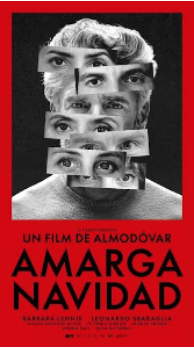
Pedro Almodóvar has been making up stories all his life. His latest film, Amarga Navidad (2026 – ‘Bitter Christmas’), asks whether a writer can ethically draw on real people’s life stories on which to base their fiction.
The film’s protagonist Raúl (a filmmaker modelled on Almodóvar) has written a script about a female cineasta called Elsa. As the action moves between them in their separate narrative arcs, both Raúl and Elsa find themselves rebuked by a colleague or friend after casually mentioning that their new screenplay includes plot lines modelled on the life of that person.1

Not everyone objects. Raúl’s long-time companion Santi assures him that he is glad to serve as an inspiration in this way. Even when Raúl faces the fury of his former PA and confidante Mónica, and Elsa’s friend Patricia likewise expresses her disapproval, their objections are met with assurances that the version of their lives going into the screenplay is fictionalised. They can amend and critique it before it is turned into a film.
At first sight, the scriptwriters’ supposed transgression in Amarga Navidad seems more a matter of professional etiquette or tact rather than the kind of existential dilemmas that confront the protagonists of such Almodóvar classics as Todo sobre mi madre or Volver. Amarga Navidad does not therefore pack the same kind of dramatic punch. It is instead “an elaborately nested reflection on creative license, story ownership and art imitating life imitating art”, according to Guy Lodge in Variety magazine.
Lodge goes on to say that Amarga Navidad is “Almodóvar’s second film in seven years, following 2019’s celebrated Dolor y Gloria, to indulge in self-portraiture while pursuing themes of creative inspiration and decline… and so a law of diminishing returns applies”.

This critique (that we’ve seen this type of content before from Almodóvar) is understandable. The comparison with Dolor y gloria is valid, given that the lead male in both is a film director who looks and behaves like Almodóvar himself. However, Dolor y gloria has a different tone and a darker hue, focusing on physical infirmity, drug addiction and broken relationships from the past. The ethical question raised in Amarga Navidad is different.
For me, the film’s most striking feature is its complexity. A few years back Cambridge Pre-U candidates in the UK were set an exam question asking whether Almodóvar’s films had to be seen more than once to understand them, and if so, whether that was a good thing. For Amarga Navidad, my answers would be ‘yes’ and ‘maybe’. Almodóvar has created what The Guardian’s film critic Peter Bradshaw calls a ‘life-v-art auto-metafiction’2: “it feels slightly muddled”, he remarks, “as Almodóvar directs a director directing a director”.
Muddled in parts, I would agree. While this film offers much to please Almodóvar devotees, some of its ingredients take a lot of chewing to digest. A maximalist critique might argue that the third quartile of the film could have been scaled back to reduce the profusion of what Lodge calls ‘first-drafty’3 characters fussing over each others’ states of mind. The soundtrack, evocative as ever in Almodóvar’s films, was for some critics over-used, hinting perhaps that the director is uncertain whether his script is powerful enough to stir his viewers without some heavy prompting from the musical score.

Despite all this, Lodge points out that “there’s much fun to be had in Amarga Navidad’s ripe and lively performances, its characteristically splashy paintbox visual design, and its twin-tracked, heavily metatextual narrative of artists following their bliss, sometimes to toxic effect.”
Almodóvar has said that in Amarga Navidad “hay mucha ficción, pero ningún invento” (there’s plenty of fiction, but nothing made up). Thus he gently makes fun of the way in which his alter ego Raúl is beset by offers of prizes and appearance fees that, for him, are disproportionate to his relatively modest achievements of late. Raúl also voices Almodóvar’s dilemma that whatever film he makes will be unfavourably compared with his earlier work, and risks being seen as going back over old ground. Almodóvar seems to relish using Raúl to face these criticisms head-on.
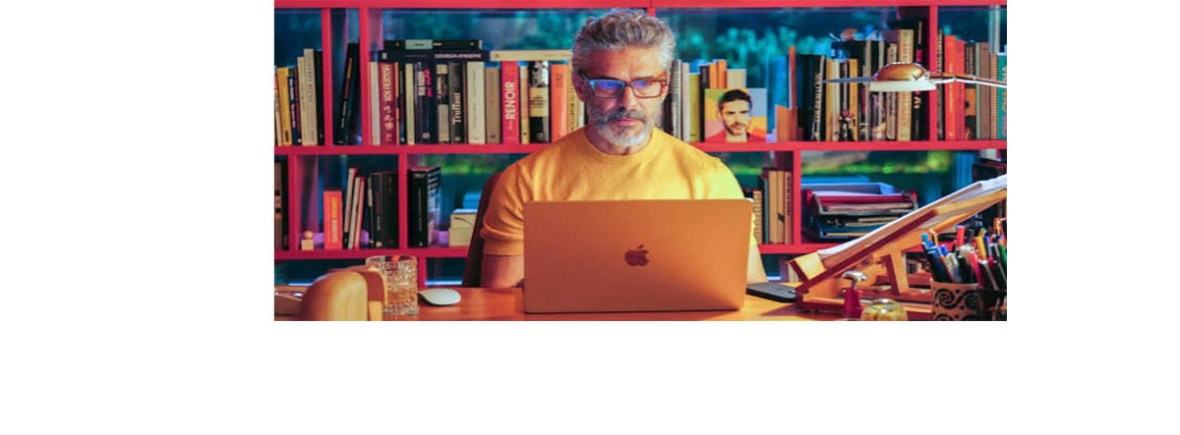
The film also takes Almodóvar’s interest in la autoficción to a new level of complexity. We are frequently shown, from the perspective of the computer screen, the fictional character Raúl typing the script for his film – called, of course, Amarga Navidad – and deciding what will become of each character. With half an hour of the film remaining, Fin (‘The End’) appears on the screen, only to be deleted via Raúl’s keyboard and replaced with another caption (Unos días después…’ / a few days later) as the scriptwriter decides to prolong the narrative to explore new plot lines. At one point the camera cuts away to show two of Raúl’s characters (Elsa and Natalia) observing him dispassionately as he ponders the final draft.
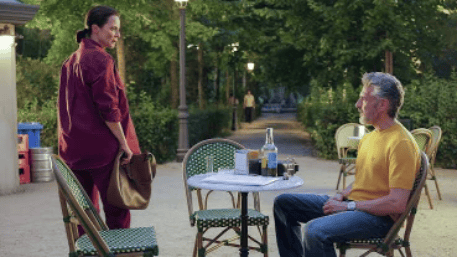
The film’s most riveting moments come in the last ten minutes, in a two-scene confrontation between Raúl and Mónica over both the quality of the film that we are watching (based on the first-draft script that Raúl has lent her) and the way in which Raúl has reworked events from the lives of those around him (including Mónica) for the storyline. Almodóvar told Antonia Blyth of Deadline magazine, “as Mónica is challenging Raúl, yes, she’s challenging me as a director. And I found the experience of displaying that both liberating and amusing because it did become a process of criticising myself.”
According to Jonathan Holland of Screen Daily, “this courageous, clear-eyed critique by the late-period Almodóvar of his own work signals a thematic move into new territory for him”. Therein lies this film’s achievement. Even in his 23rd feature film, Almodóvar is still making up new stories. Watch Amarga Navidad (more than once…) and you’ll see what I mean.

Amarga Navidad: the moving parts
Students of Almodóvar soon come to appreciate that his films interlink to form a coherent body of work, as befits an auteur filmmaker. The recurrent aspects of this include hommage (paying respect to the influence of other artists), cross-referencing and mixing of genres.

Hommage: three Chavela Vargas songs are heard in the film, one of which gives it its title. In Vargas’ Amarga Navidad she urges her departing lover to get on with abandoning her by Christmas so she can be free from his cruelty by New Year. The relevance to Almodóvar’s film is not immediately apparent, but Almodóvar’s delight in Vargas’ daring, transgressive style is well established.4
Cross-references: Almodóvar makes his loyal viewers feel connected to him by including in his work cross-references to his earlier films that they, as cognoscenti of his work, will recognise: for example…

(i) the high overhead shot of Elsa and Patricia lying alongside each other on a black-sand beach as the waves wash in is reminiscent of the evocative juxtaposition of reclining female characters in The room next door (2024) and Hable con ella (2002).
(ii) female characters’ reliance on Temazepam (a sedative) is a nod back to 1988’s Mujeres al borde de un ataque de nervios
Mixing of genres: Almodóvar has put on record that ‘me gusta mezclar los géneros‘ (I like to mix genres).5 Melodrama is the overarching genre for his work, but with a healthy leavening of comedy. In Amarga Navidad…

(i) the early scene of Elsa and Bonifacio in the hospital is ripe for melodrama, but instead we get comedy as the doctor talks to her patient not about her medical condition, but rather about the definition of cult cinema and a hen party.
(ii) towards the end of the film, Raúl and Mónica thrash out their differences at a bar: at one point the two of them, facing each other and thus in profile to the camera, bracket the alarmed face of the barman, all of a sudden comically and unwittingly embroiled in their dispute.
As Guy Lodge noted in his Variety magazine review, comedy has a particularly crucial role in this film: “Pedro Almodóvar’s work is so wrapped up in his own highly singular imagination, personality and, lately, even specific first-hand experience, you could accuse it of self-reverence if not for a healthy sense of humour and irony.”6
In the end, Lodge concludes, Amarga Navidad works because “so many of the usual hallmarks and collaborative pleasures of his filmmaking are present, correct and running smoothly”.

Footnotes
- The irony is that Almodóvar has based his script for this film on his own (real) life. As he told Álex Vicente of El País in March 2026, in Amarga Navidad “estoy absolutamente presente y totalmente ficcionado” – adding modestly, “si hiciera una película hablando de mí, sería muy aburrida. La ficción es necesaria siempre”.
↩︎ - By metafiction, we mean that the story is self-consciously aware of its status as a work of fiction. ↩︎
- https://variety.com/2026/film/reviews/bitter-christmas-review-pedro-almodovar-1236753260/ ↩︎
- eg http://www.chavelavargasfilm.com/blog/pedro-almodover (sic) ↩︎
- https://elcomercio.pe/luces/cine/pedro-almodovar-siempre-estoy-mis-peliculas-me-escondo-mis-personajes-noticia-1598976/#google_vignette ↩︎
- https://variety.com/2026/film/reviews/bitter-christmas-review-pedro-almodovar-1236753260/ ↩︎

