For Spanish version, click here.
The failings of the Colombian left paved the way for the triumph of a right-wing outsider, says Clara Riveros, head of our Latin American bureau.
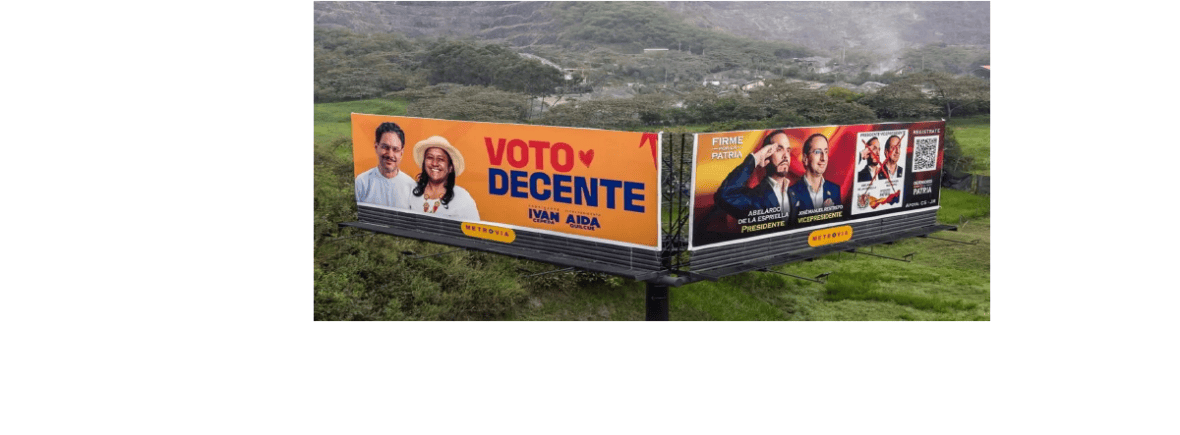
On 21 June 2026 the right-wing outsider Abelardo De la Espriella won the Colombian presidential elections by the slender margin of 1% of votes cast, defeating the leftist candidate Iván Cepeda.
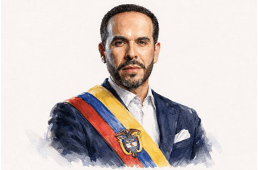
Colombia’s new president secured 49.7% (12,959,515) in the second round of voting, compared to Cepeda’s 48.7% (12,708,695). Cepeda gained almost three million extra votes compared to his showing in the first round on 31 May, while De la Espriella’s tally rose by more than two and a half million. The turnout of 63% was the highest in Colombia’s electoral history.
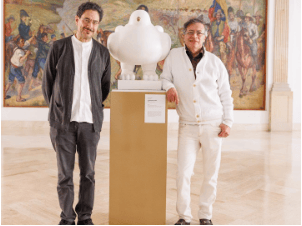
Throughout the campaign the outgoing President Gustavo Petro flagrantly breached electoral rules to support Cepeda. Petro stirred up, and continues to stir up, rumours of electoral fraud, without producing evidence to back his allegations. By contrast, local and international organisations, and numerous prominent figures in Colombian politics, have vouched for the integrity of the Colombian electoral system as one of the most professional and reliable in the region.
By choosing to be sworn in in Calí rather than in the nation’s capital, De la Espriella not only broke with tradition but also sent a clear message about his commitment to decentralisation. He intends the national government to have headquarters in different cities around the country and to maintain a close dialogue with mayors and governors. Members of Congress were not slow to remind the president that they, as representatives and senators, already serve as a bridge to dialogue with the regions and the local authorities.
The setting for the president’s first speech, at a military base, was no coincidence. De la Espriella chose this location as a show of support for the Armed Forces and a first step toward restoring their morale. Security is the main preoccupation of most Colombians, and largely explains De la Espriella’s election victory, given that it was a central theme of his campaign.
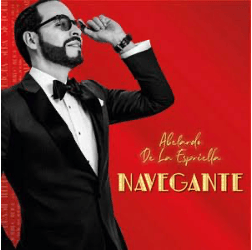
The presidential inauguration reflected De la Espriella’s projection of himself more as a showman than a politician (as his choice of emblem – “The Tiger” – suggests). In terms of symbols and words, he appears quite comfortable ignoring Colombia’s status as a secular state and adopting a messianic and even millenarian tone. Then again, former President Petro was a liberation theologian and practitioner of Santería who also struck a messianic tone on occasions, so De la Espriella’s dabbling in religion almost seems like a new normal.
The opposition, naturally, will not miss an opportunity to exploit the excesses of the new administration. However, the task will be harder given that the Petro administration left office with its ethical and moral authority in tatters. Each new day seems to bring a new revelation of Petro-related corruption, revealing the kleptocratic model that prevailed in his entourage. High-ranking officials in his administration and even the presidential family have been implicated.
Challenges for the new administration
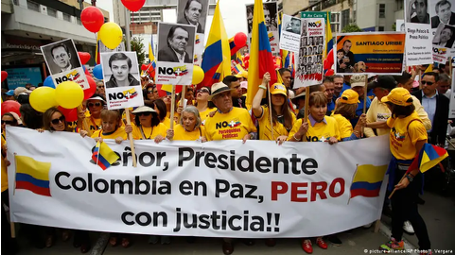
“Total peace,” the flagship policy of Gustavo Petro’s government, proved a resounding failure. The leftist government abdicated its responsibilities over the control and monopoly of force, the safeguarding of national territory, and the protection of citizens, while criminal groups expanded their power and increased their presence throughout the country. There were concessions, leniency and illicit pacts with criminals, while massacres, kidnappings, extortion, coca cultivation and drug trafficking increased. The new government will have to regain control over territory, as well as make progress in matters of cooperation and intelligence in the fight against transnational crime. The new government believes that its participation in the Trump administration’s Shield of the Americas initiative will be key to this objective.
The economic crisis, deficit, and excessive public spending under the Petro administration have led to a situation comparable to the pandemic period. Excessive bureaucracy and its resulting burden of corruption weigh heavily on public finances. The new administration is relying on attracting private investment to stimulate domestic consumption and mitigate the impact of the upcoming austerity measures.
The healthcare crisis is another major concern for Colombians today, alongside corruption and insecurity. The left-wing government presided over the implosion of the healthcare system, which, while not perfect, had survived for three decades. Petro’s strategy included the financial strangulation of healthcare providers in order to replace them with a public system. The timely scheduling of procedures and treatments, as well as the delivery of essential medications, are priority issues to make healthcare functional again.
Furthermore, Colombia must prepare for the onslaught of extreme weather events. The gap between the Petro administration’s rhetoric and reality regarding the energy transition has been enormous. Shortages of water and gas, blackouts and electricity rationing are predicted, with the most critical period likely to be the first quarter of 2027.
De la Espriella’s first weeks in power
Three days after the presidential inauguration, at 7:34 am on Monday 10 August, a 7.4 magnitude earthquake shook several regions of the country.
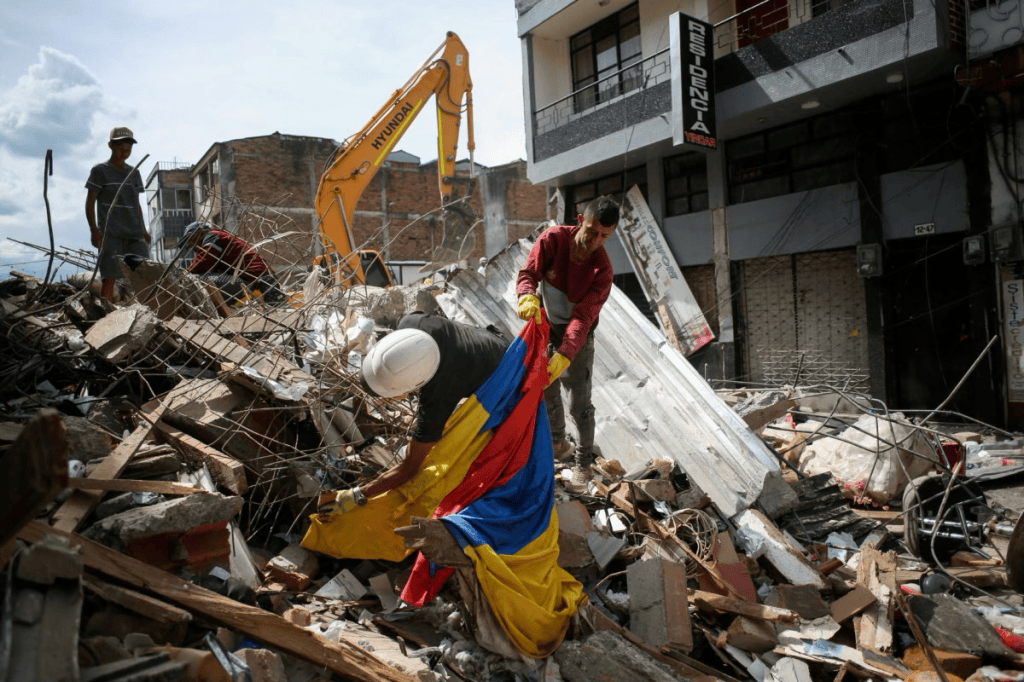
The Colombian government has been praised by some for its swift response, while others question why international search and rescue teams were restricted from entering the country. Analyst Manuel Camilo González, interviewed by France 24 , believes the President’s prominent role was, to some extent, an obstacle for municipal and regional governments. However, mayors and governors have praised the new administration’s management and response, eg Federico Gutiérrez, mayor of Medellín, admired the President’s leadership in managing reconstruction planning in the worst affected departments, which are also the poorest. Gutiérrez commended the promise to maintain a close dialogue with mayors and governors, welcoming the contrast between De la Espriella’s approach and that of his predecessor.
Regarding De la Espriella’s main campaign promise—restoring security and burying Petro’s “total peace”—the paradigm shift is striking, even in the first few weeks since the new government took office. For the current president, peace will be achieved through the law or by force, without spurious negotiations or agreements that benefit criminals. For him, the only choice is between submission or the full force of the state.
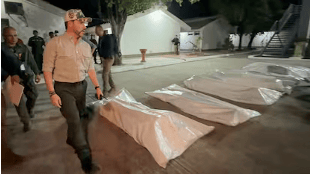
The new president is wielding power with a focus on achieving and showcasing results. Some have already been quite spectacular, though they have also generated criticism and questions. This was the case with the images of him walking around body bags of slain criminals; or, towards the end of September, patrolling Santa Marta with a pistol strapped to his waist after the city had been placed under martial law due to the threat of violent crime.
De la Espriella pledged, both during his campaign and at his inauguration, to respect press freedom, but in recent weeks there have been several dismissals at Colombian media outlets. This has led to speculation that the government wants to control the narrative and is engineering the departure of some journalists who are critical of the government and denounce irregularities, despite having done the same with former President Petro.
Foreign policy decisions
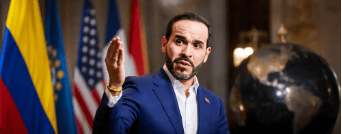
Former President Iván Duque stated a couple of months ago that Colombia needs a foreign policy that is not at the service of ideologies. Prior to his inauguration, De la Espriella announced a diplomatic break with the dictatorships of Cuba and Nicaragua, with which Petro maintained close relations. Relations with Israel, severed during Petro’s administration, have been restored. The change of course under De la Espriella in the bilateral relationship between Colombia and the United States is evident. For this reason, the White House’s decision to maintain its decertification of Colombia in the fight against drugs for the second consecutive year has generated some unease in Bogotá. However, there are some highly professional appointees in the government team, starting with Vice President José Manuel Restrepo, a charisma-free technocrat who will endeavour to dignify the institutions of the State and improve the climate of bilateral relations with some key partners in the Americas.
In summary…
Former President Petro was a class-struggle warrior. He handed over a country more divided than the one he inherited four years ago. De la Espriella, despite his rhetoric of unity, may find it hard to end Colombia’s political polarisation. The new administration will have the difficult task of managing a deeply divided country with enormous problems inherited from its predecessor.
Clara Riveros is our Americas Bureau Chief, published author, journalist, opinion columnist, anchor and consultant with a special interest in the promotion of universal human rights, equality and individual freedoms. She holds a BA degree in Political Science from the National University of Colombia (Faculty of Law, Political and Social Sciences).

