BAS/UoG Sixth Form Essay Competition Winner 2026
For Spanish version, click here.
Our 2026 winner, Aliza Shah, is a London-based Year 13 student studying Spanish at A-level, alongside Psychology and Sociology. She writes: “my interest in Spanish began through music, which has been part of my exposure to the language from a young age. Morad’s music has played a major role in developing my interest in Spanish and the cultures surrounding the language. I became particularly interested in the influence of the Moroccan diaspora on the music and youth culture of Spain and wider Europe. Writing about Morad was my way of exploring this further.”
When thinking about urban music in Spanish, international artists linked to reggaeton and pop tend to stand out.
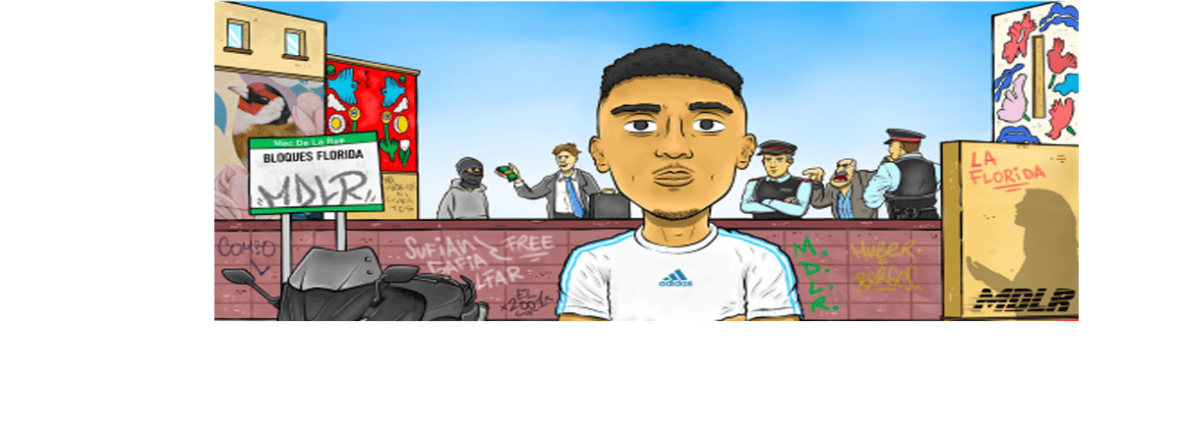
Morad represents a different trajectory. Raised in the La Florida neighbourhood of Barcelona’s L’Hospitalet de Llobregat district, he has built an international career while still staying firmly rooted in his home area. Through the MDLR concept and lyrics about ambition, loyalty, inequality and authority, he has connected with young people inside and outside Spain. His influence shows that urban music can be entertainment, social representation and a pathway to mobility.
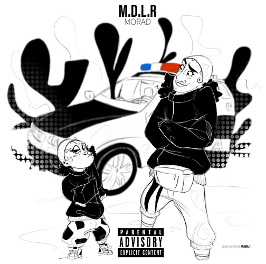
To understand its impact, one must first understand MDLR. The acronym comes from the French expression mec de la rue (street boy), but that term has come to represent more than that. In an interview with El Periódico Morad explained that an MDLR does not have to be a criminal; it can also be a young person from the neighbourhood who studies or works. This is how he questions the stereotypes associated with working-class neighbourhoods. In addition, a study by Sara Ahmed González highlights authenticity, collective identity and shared experiences of social exclusion. Being an MDLR has thus become a form of belonging that represents pride in one’s origins and the ambition to progress without forgetting them.
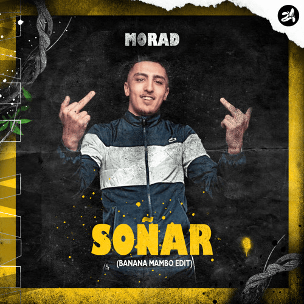
One of the main reasons for Morad’s success is the authenticity of his lyrics, which combine social realities with universal emotions. In Soñar (Dreaming) he presents success as a path scattered with obstacles. Although he talks about stumbling and falling, he ends by stating that he has been able to traverse it. Progress is not presented as something easy, but rather a reward for perseverance.
The track M.D.L.R. from the album of the same name shows that not everyone manages to overcome these obstacles. The phrase “Él quería ser Messi, y acabó en comisaría” (he wanted to be Messi, and ended up in the police station) contrasts a childish aspiration with a reality marked by juvenile delinquency and a lack of opportunities. By describing these young people as “pobres pero no pobrecitos” (resource-poor but not poor in spirit) Morad acknowledges the economic difficulties without presenting them simply as victims. His lyrics thus reflect experiences of marginalisation and the prejudices that can affect young people from working-class neighbourhoods.
However, his music is not limited to social issues. Loyalty and distrust constantly appear. In No me duele (It doesn’t hurt), he claims that out of “a hundred friends” many failed him, showing how success can reveal which relationships are true. This vulnerability also appears in Manos rotas (Broken Hands), where he admits that he no longer knows whether to “believe in love”. Although his music is born from the daily reality of urban life, ambition, betrayal, loneliness and heartbreak allow him to connect with young people who have not lived out these same experiences.

Morad’s impact in Spain is not measured solely by its commercial success, but by the visibility it has given to certain youth experiences. Before his rise, this sound influenced by French musicians occupied a more limited space within the Spanish music scene. Morad helped to bring it to a wider audience without leaving La Florida. According to El Periódico, the term MDLR came to be used even among students from more affluent areas of Barcelona. An identity born in a working-class neighbourhood thus became part of a broader youth culture. However, its influence is not simply to make the neighbourhood trendy. His success encouraged other young people from La Florida to make music, giving them an ‘escape valve’ from their straitened circumstances. His career therefore offers recognition and a possible pathway to expression and progress. Perhaps its greatest impact has been through its ability to take root in mainstream popular culture without hiding the language, experiences or environment that had previously kept it on the margins.

Its impact is not limited to Spain either. Morad has worked with Central Cee and other European rappers in Eurovision, he has collaborated with the Belgian-Moroccan artist DYSTINCT and, more recently, with the British group D-Block Europe. In addition, his tours of France, Italy, Germany, and the United Kingdom show that his audience extends beyond Spain. This outreach has been achieved without him needing to abandon his roots; his lyrics still refer to Spain, La Florida and the MDLR identity. Morad has thus turned his local experience into something internationally recognisable. His music’s authenticity, instead of limiting his scope, has helped to expand it.
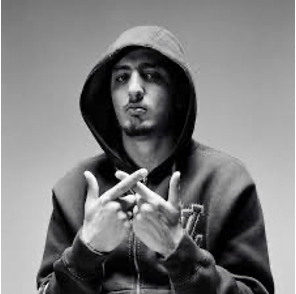
In short, Morad’s influence goes beyond commercial success. By encapsulating the realities of La Florida in his music, he has given visibility to a world inhabited by many young lives, while his expression of universal themes such as ambition, loyalty, loneliness and love reaches an audience that crosses social and geographical boundaries. In Soñar, Morad depicted a road full of obstacles that he finally managed to traverse. Perhaps therein lies the paradox of his success: Morad managed to leave the neighbourhood precisely because, through his music, it always stays with him.
Bibliography
Academic and journalistic sources:
Ahmed González, S. (2024). «Autenticidad, colectividad e identidad: el drill M.D.L.R. en España». TRANS: Revista Transcultural de Música, n.º 28.
Fortuny, I. (2019). Morad, la veu del carrer. El Periódico, 11 de mayo de 2019.
Fortuny, I. (2022). Expedient Morad: el raper, més enllà de la fitxa policial. El Periódico, 24 de julio de 2022.
García Bueno, J. (2021). Morad: el inesperado triunfo del “chico de la calle”. El País, 26 de septiembre de 2021.
Novoa, R. (2025). Morad: “La gente me dice mucho marroquí… ¡si pago todos mis impuestos en España!”. El País ICON, 1 de noviembre de 2025.
Song lyrics:
DELLAFUENTE y Morad (2023). «Manos Rotas». Manos Rotas. MAAS.
Morad (2019). «M.D.L.R.». M.D.L.R. M.D.L.R.
Morad (2021). «Soñar». Soñar. M.D.L.R.
Morad (2024). «No Me Duele». No Me Duele. M.D.L.R.

