Spaniards weren’t talking to each other in October 2017 – at least, not the ones who needed to. They were instead broadcasting past each other as though inhabiting two different telenovelas.
Prime Minister Rajoy took to the television screens on the evening of 1 October to announce that no referendum had taken place that day. Legality and constitutional order must be upheld, and the voting in Catalonia did not qualify on either count. Catalan President Puigdemont went before the cameras to proclaim a victory for democracy and a mandate for independence.
Both sides were in denial. Rajoy failed to acknowledge the aspirations of a large sector of the Catalan population, just as his party has used the courts to chip away at Catalan autonomy for the past decade. Puigdemont neglected that his movement, growing though it may be, had not yet demonstrated enough support across Catalan society to justify a contested, overnight secession. Sensible countries require supermajorities, eg two-thirds of the legislature, for far-reaching constitutional reform. Here in the UK we are all too aware how problematic it is to push through major change on the basis of an unconvincing majority.
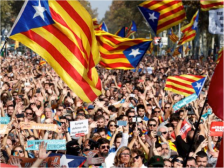 More practically, the soberanistas lacked the institutional framework for a sovereign state. Once the Catalan parliament had declared independence, they ran out of script, despite the masses howling approval in the street. The consellers either handed themselves over to the Spanish courts or absconded, lending an unexpected note of bathos to the end of a dramatic month.
For independentista Catalans, it would be comforting to assume that there is a master plan. Perhaps the Generalitat always knew that its referendum and declaration of independence would not really bring about a new republic, but went through with them to highlight the case for self-determination and to polarise Catalan opinion, generating a pro-independence surge in new elections. This in turn would morally oblige Madrid to discuss constitutional reform, opening a legal and legitimate path to ‘Catalexit’.
Time will tell.
 The argument against independence rests on the principle that Spanish unity is a core element of the 1978 Constitution – the pact which enabled all factions in Spain to sign up to the new democracy. The Constitution represents a delicate balance between the demands for regional identity – quashed by the Franco regime – and the unitary state. The regions became autonomías, but they could only change their constitutional status with the consent of the Spanish parliament.
To its proponents, this pact has delivered peace, democracy and prosperity. By contrast, on the streets of Barcelona in October 2017, many Catalans embraced independence as a way of asserting their personal and collective identity. Younger protestors in particular seemed eager to cock a snook at a Spanish central government associated with heavy-handed conservatism and corruption.
Why is Catalonia so essential to Spain when, for example, the British were nonchalantly prepared to contemplate Scotland breaking away? This may be partly historical: the centuries of warfare needed to unite Spain are still commemorated at village fiesta level (moros y cristianos), giving the concept of national unity particular resonance. Spain was born of the alliance of Castilla and Aragón: Catalonia’s departure would break that alliance. There is also the fear that, if one Spanish region breaks away, others may follow, undermining a more fragile economic and political system than that of the UK.
Beyond those practical considerations, many Spaniards resent the Catalan push for independence. The soberanistas are suspected of a self-serving agenda: an urge to self-aggrandisement, or to prevent Catalonia’s relative wealth from being shared with the rest of Spain. Some accuse Catalan schools of cultural intolerance and indoctrinating pupils – a leyenda negra for these times.
October ended without violence. The soberanista leadership emphasised the need for protest to remain peaceful and, in practice if not in principle, accepted Madrid’s authority to impose direct rule. The Spanish security forces had learned from their 1 October public relations debacle and exercised restraint. The political leadership on both sides was careful to act in a gradual and predictable manner. Everyone remembers where civil violence got Spain in the past, and no one wants to go back there.
 Nonetheless, the crisis brought a reminder of the tradition of intolerance in Spanish politics and society. Under Hapsburg rule (and beyond) this was embodied in the Inquisition, which policed what some consider Europe’s first totalitarian state. The 19th century was bedevilled by crispación between reformers and conservatives that generated both civil war and coups, prefiguring the breakdown in Spanish society of the 1930s. Even now, the acrimony in televised leaders’ debates at election time or exchanges in parliament is sharper than the UK equivalent.
Earlier this year I found an antidote to such tensions in the admirably even-handed displays in the Museum of Catalan History in Barcelona. I was struck by the recurrent historical accidents – dynastic convulsions, foreign influence, political intrigue, etc – that had, often at the last moment, frustrated the formation of an independent Catalan state or kingdom, just when conditions had seemed to favour it.
The question this autumn has been whether 2017 constituted another such opportune moment to form an independent Catalonia. Or should the 21st century be, as Joaquín Sabina recently declared, “el siglo de borrar fronteras en lugar de hacer fronteras nuevas”?
One thing is certain: the aspirations of pro-independence Catalans cannot be met while their region remains a part of Spain. The 21 December elections will determine what proportion of the electorate shares those aspirations.
By BAS editor Robin Wallis
 The history of repression in Catalonia is long, but the history of its people is even longer; it starts centuries before the formation of the Spanish state, with a Catalan Constitution dating back to 1283 (the Spanish one can be traced back to 1812). After the War of the Spanish Succession (1702-1714), Catalan institutions
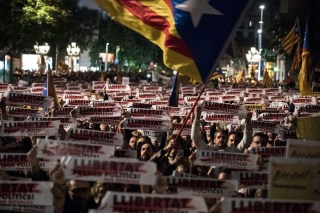
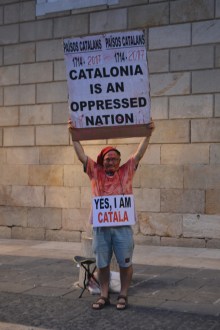 Many Catalans would have liked nothing more than to be able to vote in a referendum that was not blocked by Spain through the confiscation of letters on voting procedures, shutting down of websites, censorship of media and police brutality, amongst other things. Yet, despite these measures, the people managed successfully to organise and carry out the referedum of 1 October.
 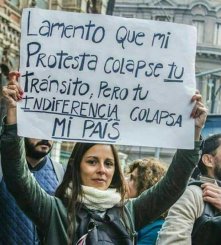 In other words, Catalans were put in the situation of choosing between declaring independence unilaterally or losing all of their autonomy. That choice cannot be condemned, especially when faced with a state that represses people, abuses the justice system and manipulates the media. The Catalan question is not an internal problem; it is an international one, which requires the combined mobilisation of people worldwide. So far, solidarity protests have been staged all over the world and (inter)national committees are being set up to put pressure on governments to condemn Spanish repression and recognise the Republic of Catalonia. In the same vein, this article has sought to provide an analysis of the current situation in Catalonia to an international audience, with the aim of explaining the case for international understanding and solidarity.
 Se ha escrito mucho sobre los orígenes históricos, políticos y culturales de la crisis catalana actual. No tengo mucho que añadir a ello, por lo tanto he decidido simplemente explicar cómo he vivido yo la identidad catalana y la relación conflictiva entre Cataluña y España en mi vida personal.
 El 23 de octubre de 1977, el presidente de la Generalitat (el gobierno catalán), Josep Tarradellas, volvió a Cataluña después de un exilio de casi cuarenta años. Ese día escribí en mi diario: “Día histórico. He visto por televisión el reportaje en directo sobre el regreso de Josep Tarradellas. Ha sido muy bonito, emocionante y gozoso.” Yo tenía doce años.
 A pesar de mi amor por la literatura castellana, me incliné por estudiar Filología Anglogermánica en la Universidad de Barcelona. Mis años de adolescente y de universitaria coincidieron con los 80. Fue la primera década de Jordi Pujol, que presidiría la Generalitat durante 23 años. El autogobierno catalán y la democracia en España no me parecían una realidad nueva sino algo estable y consolidado. No me gustaba mucho oír a la gente mayor hablar de la guerra civil o del franquismo: para mí eran períodos lejanos y tristes que sólo podía imaginar en blanco y negro. Yo era hija de la democracia, la libertad y la tolerancia; no quería pensar en épocas trágicas que consideraba definitivamente enterradas. Qué inocente era!
 Ahora el gobierno y la justicia españolas (que parecen ser lo mismo), al encarcelar a dos líderes sociales pacíficos y a varios miembros del gobierno catalán elegidos democráticamente, está criminalizando a una gran parte de la ciudadanía catalana. Y al tomar el control directo del gobierno catalán, está perjudicando a todos los catalanes, incluídos los unionistas, la mayoría de los cuales no vota al Partido Popular. El gobierno español me insulta y no me escucha. El gobierno español me considera una ilusa y una golpista. El gobierno español me ha metido en la cárcel.

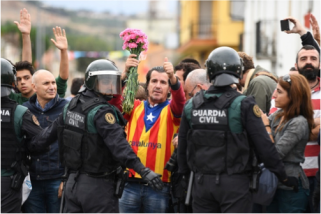 The world bore witness to this brutality which brought denunciations from Amnesty International, Human Rights Watch and the UN Commission for Human Rights. Central government, supported in all areas by the state-wide Opposition, claimed the violence to be “proportionate” and “legitimate”. Caucuses in Spain labelled those casting a ballot as “Nazis”, “fascists” and “demophobes”. For the less confused, these epithets are more commonly applied to those who use intimidation to prevent the exercise of democracy.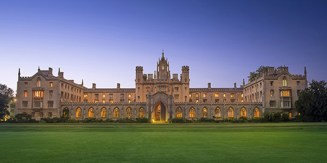
 I applied to study Spanish and Portuguese (ab initio) at St John’s college. All MML applicants through to this stage have two interviews – one subject-specific and one general – as well as a written exam. First for me was the subject interview, conducted by a professor of Portuguese, a Spanish lecturer and the college’s head of Modern Languages – all of us on sofas in the professor’s study.
 Bulletin of Advanced Spanish