BAS Editor Stephen Hart
President Trump’s re-making of the world got 2026 underway with a bang this year.
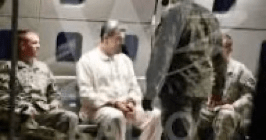
On 3 January, in a surreal ‘VIP-in-pyjamas’ grab, the U.S. Navy kidnapped the President of Venezuela, Nicolás Maduro, and his wife Cilia Flores and flew them to New York, where they were charged with crimes relating to drug-trafficking, money-laundering and international terrorism.
At first sight, the event appeared to be an implementation of the Monroe Doctrine articulated by President James Monroe in 1823 to deter European powers from meddling in the Americas:
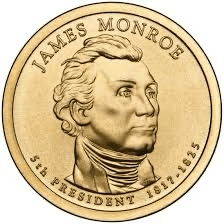
“With the existing colonies or dependencies of any European power we have not interfered and shall not interfere. But with the governments who have declared their independence and maintained it, and whose independence we have, on great consideration and on just principles, acknowledged, we could not view any interposition for the purpose of oppressing them, or controlling in any other manner their destiny, by any European power in any other light than as the manifestation of an unfriendly disposition toward the United States.1”
The US incursion into Venezuela can be understood in terms of this Doctrine. After all, Russia (a European power) was helping the Maduro regime stay in power.
However, there are additional factors at play here, as signalled by Donald Trump’s invention of the new term, the “Donroe Doctrine” – Donroe being a fusion of the Monroe Doctrine with Donald Trump’s policy of asserting “American predominance in the Western hemisphere”2.
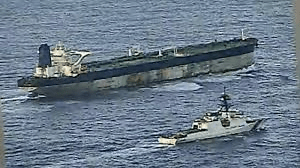
‘Donroe’ also entails a new US approach to global maritime power, including “policing” the high seas. Thus, on 8 January 2026, U.S. forces impounded a rogue vessel in the Atlantic Ocean: “US forces swooped by helicopter and boarded the Marinera – now empty, but accused of sanction-busting oil deliveries from Iran and previously linked to illegal Venezuelan oil shipments”. 3
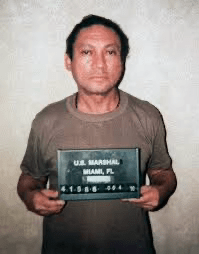
The arrest of Nicolás Maduro on 3 January 2026 has been compared to a similar operation that occurred in mid-December 1989 when US President George H.W. Bush ordered his troops to invade Panama and depose President Manuel Noriega. Coincidentally, Noriega surrendered on 3 January 1990, that is, exactly 36 years before Maduro was kidnapped.4 The motivation was similar – Noriega was accused, like Maduro, of drug-trafficking – but in 2026 there is one major difference: China.
Whereas China was hardly on the horizon in 1989, by 2026 China had become a major trading partner and political ally of a number of Latin American countries. Trade volume between China and Latin America grew 26-fold between 2000 and 2020, and some economists expect it to more than double by 2035, which means it will exceed the level of $700 billion”.5 This has led to a heightening of tension between China and the U.S., with “specific implications for Latin America as well – a region historically influenced by the United States, which is now increasingly present in China’s economic orbit.”6
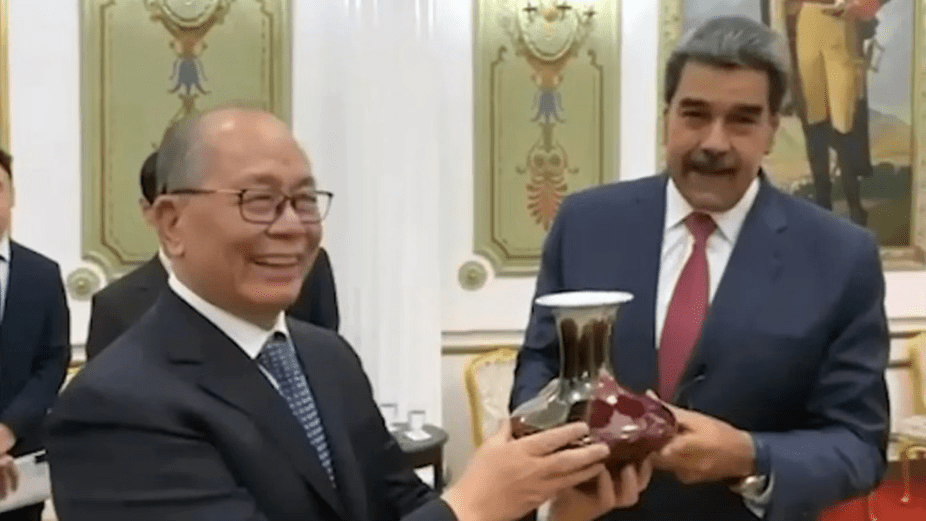
It is ironic, indeed, that just a few hours before the US raid on Caracas, Maduro had met an official delegation from China led by Qiu Xiaoqi, Beijing’s special representative for Latin American affairs. At the meeting both leaders re-affirmed the importance of continuing strategic ties between China and Venezuela, while committing to build a “multipolar world of development and peace”.7 Commenting on the meeting the next day, President Trump remarked “I have a very good relationship with Xi, and there’s not going to be a problem. They’re going to get oil.”8
The struggle between China and the US for the minds and the markets of Latin America has spanned the last 15 years or so. In some ways the US strike on Venezuela can be seen as the ratcheting-up of the trade war between the two powers that came to a head when the Port of Chancay was opened in Peru (14 November 2024). Barely a month later, President Trump – stung into action by what he perceived as a threat to the US’s trade relations with Latin America – accused China of trying to take control of the Panama Canal, and threatened to “take it back”. As a result, Panama agreed to withdraw its membership of China’s Belt and Road initiative, which it had signed up to in 2017.9
It is also striking that Trump has justified his push to acquire Greenland in terms of resisting Chinese (and Russian) expansion into the western hemisphere – a further indication that the 21st century Donroe Doctrine, unlike the 19th century Monroe Doctrine, is mainly about China.
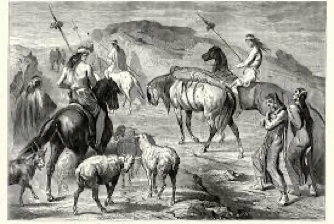
One other factor should be mentioned. Recent research in the field of genomics has suggested a close similarity between the DNA of indigenous peoples of Latin America and those of Asia, including China. Archaeological research has proposed that the Chinese may have travelled to the Americas before Christopher Columbus. Some historians have suggested that the Fusang of Ancient China may have been the place nowadays known as the Yucatan Peninsula. Museologists have pointed to a similarity between the culture of the Mayas and that of ancient China.10 The evidence is not incontrovertible, but it does suggest that new ways of looking at the world are emerging.
Are we seeing the birth of a radically new geopolitics?
- https://www.britannica.com/event/Monroe-Doctrine ↩︎
- https://en.wikipedia.org/wiki/Donroe_Doctrine ↩︎
- Gergana Krasteva, “Trump Seizes Tankers in New Show of Force: Splash & grab”, The Metro (6 January 2026), p. 5. ↩︎
- “Manuel Noriega and the 1989 U.S. invasion of Panama’, 60 Minutes (18 September 1994); https://www.google.com/search?q=youtube+60+minutes+manuel+noriega&rlz=1C1GCEA_enGB1155GB1155&oq=youtube+60+minutes+manuel+noriega+&gs_lcrp=EgZjaHJvbWUyBggAEEUYOTIHCAEQIRigATIHCAIQIRigATIHCAMQIRigATIHCAQQIRigATIHCAUQIRigAdIBCTEyNjQxajBqNKgCALACAQ&sourceid=chrome&ie=UTF-8#fpstate=ive&vld=cid:1ddc51fc,vid:bAGXo6DrDcU,st:0 ↩︎
- Joanna Goclowska-Bolek, “Shifting China’s Investmnet Strategy in Latin America: The Case of Peru”, International Relations, 5.15 (19 June 2025), p. 3; file:///C:/Users/uclssth/OneDrive%20-%20University%20College%20London/Desktop/60f550cd-3e30-44cd-a126-37a786f4dafd_17920_-_joanna_goclowska-bolek.pdf ↩︎
- Joanna Goclowska-Bolek, “Shifting China’s Investmnet Strategy in Latin America: The Case of Peru”, International Relations, 5.15 (19 June 2025), p, 4. ↩︎
- https://www.foxnews.com/world/maduro-met-chinese-envoy-hours-before-us-capture-from-caracas-beijing-slams-operation ↩︎
- https://www.foxnews.com/world/maduro-met-chinese-envoy-hours-before-us-capture-from-caracas-beijing-slams-operation ↩︎
- Stephen M. Hart, The “Hidden Story of Latin America and China (Newcastle-upon-Tyne: Cambridge Scholars, 2025), pp. 1-15. ↩︎
- Stephen M. Hart, The “Hidden” Story of Latin America and China, pp. 23-77. ↩︎
 Bulletin of Advanced Spanish