
Alastair Maynard, currently at Eton College and hoping to study Modern Languages and Economics at university.
The Camino de Santiago (The Way of Saint James) is one of the most famous pilgrimage routes in the world, leading to the Cathedral of Santiago de Compostela in north-western Spain. The Cathedral is said to house the remains of the Great Saint James, one of the twelve apostles of Jesus. The pilgrimage began in the ninth century, following the supposed discovery of the tomb of the saint in Galicia.

The deeply religious roots of the Camino are evident in its creation. According to tradition, St James, following the crucifixion of Jesus, made a pilgrimage to the Iberian Peninsula to spread his teachings. On returning to Judea, he was beheaded by King Herod Agrippa I in 44AD. This is detailed in Acts 12 in the New Testament of the Bible: “King Herod extended his hands to harm certain ones from the church. He killed James the brother of John with the sword. Seeing that it pleased the Jews, he proceeded further to arrest Peter also.” (Acts 12, Modern English Version)
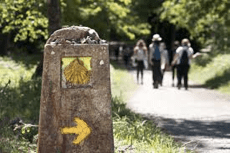
After being martyred at the hands of Herod, Saint James’ remains were transported from Jerusalem to Spain’s northwest, where they were allegedly washed ashore covered in the scallop shells that are found in abundance along the Galician coast. These shells have since become a ubiquitous symbol of the pilgrimage, marking the route on roadside signs and carvings. Pilgrims traditionally display the shell on their hats and rucksacks to indicate the completion of their pious undertaking. Some even believe that the many grooves in the shell reflect the various paths (caminos) all leading to the same end point – Santiago de Compostela.
Having arrived in Galicia, the Saint’s body was carried some 77 km inland and buried in a field. It was here that the light of a star (una estrella) shone on the field (campo), inspiring locals to describe the place as Campus Stellae (“Field of Stars”), a name that eventually evolved into “Compostela” as we know it today. This revealed to the Iberians the final resting place of the Saint and so, inspired by the remarkable story, a magnificent Cathedral was built on the site to venerate him and hold his remains.

The first pilgrim to journey along the Camino was King Alfonso Il of Asturias, or Alfonso the Chaste, in the 9th century. He left his palace in Oviedo and travelled about 350km south-westwards, over mountains, to the field where the star had shone. In doing so, he was the pathfinder for the route that is now known as the Original Way (Camino Primitivo).
Later, in the 12th century, Pope Callixtus Il announced the Compostelan Holy Year and declared the Camino de Santiago to be one of the three major pilgrimages of Christianity, alongside the Holy Land and St Peter’s in Rome. If you were a practising Christian in the Middle Ages, you were expected to undertake at least one of these in your lifetime.

Due to its unrivalled historical and spiritual connections and its relative accessibility to Europeans, the Camino de Santiago has become the supreme pilgrimage to undertake for religious believers seeking personal reflection, a deepened connection with God, or even to honour Saint James himself. However, many would argue that in the modern age, where the number of religious believers is declining, pilgrimage has evolved into something encompassing much more than religion. Something that can benefit everyone, religious or not.
With the hustle and bustle of modern-day life, it is easy to get caught up in an endless cycle of screen-time, emails and enslavement to social media. What feels like a constant bombardment from the outside world can sometimes build up to such great lengths that our angst and stress become all too much and we either take a step back to recharge, or we break entirely. For many, the Camino de Santiago can provide that period of peace away from the demands of everyday life.
Many secular pilgrims find the solitude and meditative aspects of the Camino refreshing and fulfilling. Some say that it has breathed new life into them and that they came home new people. One contributor to the Camino forum suggests, ‘For the first time in many years I felt a freedom and aliveness I’d forgotten existed.’[1] Another member of a Reddit Camino forum states, ‘It teaches you resilience, compassion, gratitude, generosity & empathy. You feel like a better person after the Camino.’[2] These values are as meaningful to a secular life as to a religious one.

If undertaking the Camino from Porto (along the Portuguese coastal way), the journey takes about two weeks to complete. During that time you are disconnected from the stress and noise of everyday life, your only goal to complete the 35km walk you set yourself at the start of the day. With nothing but wildlife and the rugged Atlantic coastline to accompany pilgrims on their way towards Santiago, the calming rhythm of walking and the immersion in the picturesque landscape dramatically improves the pilgrims’ state of mind and mental health. This is reiterated on the UWalk.ie website which also explains that ‘exposure to natural light and the physical activity involved in the walk can significantly boost mood, releasing endorphins, known as the body’s natural ‘feel-good’ chemicals.’[3] The long, contemplative walk encourages pilgrims to think introspectively, reflecting on their lives, which can lead them to greater emotional clarity. The Camino also provides pilgrims with a huge sense of achievement and accomplishment on completion, boosting self-esteem and imbuing a renewed sense of purpose.

To provide a physical record of their efforts, pilgrims can fill out a ‘pilgrim passport’ which verifies that they have completed the requisite 100km for their Camino Compostela. Pilgrims collect at least two stamps daily from churches, town halls, or other official establishments along the route. Once in Santiago de Compostela, if you show your stamped Camino Pilgrim Passport to the Pilgrim Office, you can claim a Camino Compostela certificate. In recent years the office has seen a larger increase of non-religious pilgrims walking the Camino with 446,072 undertaking the endeavour in 2023. Consequently, they have introduced a new Certificado de Distancia for these secular pilgrims.
Again, this is testament to the Camino becoming less of a religiously motivated experience and more of one encompassing personal growth, mental well-being, and accomplishment – important life goals for everyone, and particularly venerated by Gen Z. Moreover, the Camino’s newfound popularity could also be due in part to the 2010 Emilio Estevez film, ‘The Way’, which no doubt boosted interest in the pilgrimage.

Those looking for a health-focused holiday are also discovering the benefits of walking the Camino. Many pilgrims returning from their journey say that not only their mental health improved but their physical health too, with some suggesting that they were in the best shape of their lives on return. This is no surprise, as repetitively walking long distances improves cardiovascular health and lowers blood pressure.
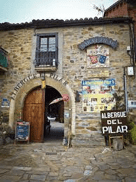
One aspect of the Camino de Santiago that sets it apart from other pilgrimages, and why it is one of the most popular in the world, is the companionship and sense of community it fosters. One unique way of meeting and connecting with fellow travellers would be staying in Albergues, hostels which are budget-friendly, dormitory-style, community-orientated resting places for pilgrims. They provide only the essentials – a bed, a shared bathroom, and potentially a kitchen – but it is precisely these spartan conditions that foster camaraderie and companionship amongst pilgrims as they exchange stories, cook meals together, and share their experience of their own personal journey.
Another binding factor between pilgrims is the shared purpose of reaching the cathedral in Santiago de Compostela, meeting with strangers from other countries, walking beside them, learning about their lives, and providing moral support and encouragement. This creates potent and unique bonds among pilgrims that can last a lifetime, involving annual reunions and correspondence. Some have even gone on to get married.

The international flavour of the Camino also makes it a unique and eye-opening experience. Andrew Yarrow mentions in his article on the Camino that “hikers come from virtually every country in the world, although about three in seven who get their Compostela certificate are from Spain. In 2019, another 8 percent were from Italy and Germany respectively, 6 percent from the United States, 5 percent from Portugal, and just under 3 percent each from France and Britain. Some 18 percent were students and 19 percent were over 60 years old.” I think this perfectly sums up the eclectic mix of different ages, countries and cultures that makes the Camino community so fascinating. I believe that meeting interesting people is one of the primary motivations for pilgrims to walk the Camino.
Reflecting on his Camino, Yarrow says “Many conversations revealed sadness or reflection, particularly among solo travellers. There was the California woman whose husband had recently been institutionalized with dementia, the Israeli woman who was ill herself and the German man who seemed to be escaping something.”[4]
While walking the Camino many pilgrims confide in each other about the inspiration for their journey. Maybe pilgrims journey on behalf of loved ones who can’t, because soon they themselves might not be fit enough, or to contemplate difficult situations they are facing? Whatever the case, hearing these moving and sentimental conversations can be healing for pilgrims as they learn from the struggles of others, building deeper and more meaningful connections between themselves. For some, these conversations might inspire an introspective look into their own lives and relationships.
For others, hearing stories from other cultures and getting a taste of different places and lifestyles might expand their own horizons, inspiring new adventures to visit the places they have heard about from fellow travellers. Even though they may not be connected in language, culture, or nationality, pilgrims are connected by their common purpose and shared Camino experience. For me, the international nature of the Camino seems to be one of its most enriching and self-developing aspects. Yet another reason why one should do the Camino even without any religious or ‘spiritual’ motives.

Something can certainly be said about the interface and slightly blurred lines between the religious and secular experience of humanity during the Camino. I think this connection between religion and ‘spirituality’ is perfectly encompassed in the experience of Jack Haighton (a linguist and tutor at my school) documenting his journeys and the discovery of what he calls ‘grace’ on the Camino. I was fascinated by what had twice motivated him to complete the pilgrimage.
Having finished his first Camino still searching for a ‘faith that had eluded [him]’, Haighton was determined to try again. It was on this second Camino that ‘certain things happened that [he] began to reflect on more keenly’. ‘There was a moment early on where I slipped … and cracked my head open on a rock. I was dazed, confused, and blood was streaming down my face. Fortunately, I was near a village where a family was enjoying alfresco Sunday lunch in their garden. They immediately leapt to my assistance, took me into their home, washed and dressed the wound and offered me food and drink.’

Perhaps his most perplexing encounter on his journeys were the ‘Canine Sherpas’. He says, ‘I’d get to a point in the path where it would trail off suddenly and become less obvious which way to go, and there would be a dog. As I approached, it would get up and start walking slowly forwards, almost beckoning me to follow, only to suddenly stop and turn back once we had reached a more well-trodden part of the track.’ Angels? Or simply, local dogs pacing the pilgrim path hoping for a few titbits?
Further on in his journey, having reached the end of a gruelling hill climb without water, dehydrated and with four more hours to go, he was suddenly waved over by a couple enjoying a remote picnic. They immediately pulled two bottles of ice water from their picnic bag and gave them to him. He saw no other human beings for the rest of that day’s walk. Another example of divine intervention?
For Haighton, these experiences prompted an internal dialogue within him: ‘I started to question if I would have done the same thing and invited a complete stranger, bleeding from the forehead, into my home?’ It was while continuing his journey and pondering these strange encounters that he realised he had found what he had ultimately been looking for. ‘I had suddenly stopped thinking about myself and my own issues and instead was thinking deeply about what it meant to help other people, of how I could be of better service to others, to strangers, to my fellows.’ [5]
Were Haighton’s experiences rooted in the Christian teaching to love your neighbour? Or are they a reflection of natural humanity and deep regard for others that arises from the connections between walkers on the Camino? I would say this shared experience of fellowship on the Camino provides a space where values and ideas can be explored from different perspectives. Taking time to consider these questions is a noble enterprise for all, religious or not.
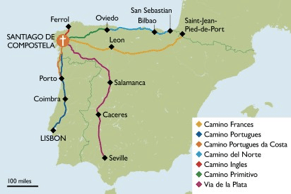
One thing all pilgrims mention about the extraordinary experience of the Camino de Santiago is the breathtaking scenery and landscapes through which the various routes pass. So much so that pilgrims often return from the Camino with a much greater appreciation for and heightened sense of connection to our natural world. Whether pilgrims journey along the Camino Francés, through the heart of the Pyrenees, or along the Basque coastline during the Camino del Norte, their first-hand encounter with nature often sparks a renewed sense of wonder and responsibility, making them more open to preserving and protecting the environment.
I hope that I will experience something of all these aspects of the Camino when I make my own pilgrimage this year. I have chosen the Camino del Porto for the magnificent scenery of the Portuguese coastline, quaint villages, and traditional architecture. I am hoping for a more authentic cultural experience than you might get in traditional tourist hotspots, with the opportunity to develop my Spanish and sample many local dishes along the way. I would also like to benefit from the meditative aspects of the Camino. Most importantly, I am hoping to make many friendships with a diverse range of people and enjoy the special camaraderie between pilgrims.
Whilst for many this pilgrimage remains an act of religious devotion; I hope to have highlighted the numerous benefits of undertaking a secular pilgrimage. Whether seeking a deeper connection with yourself and others, temporarily disconnecting from modern life, or simply improving one’s mental and physical health, the Camino de Santiago provides food for the body, mind, and spirit.
[1] Dave Evans, Camino de Santiago Forum, Jan 31, 2024
[2] PilgrimPaul, r/CaminoDeSantiago, 2022
[3] UWalk.ie,The Camino and Mental Health – 7 Potential Benefits, February 29th, 2024
[4] Andrew L. Yarrow: The Euros and Prayers of Camino de Santiago, September 6, 2022
[5] Jack Haighton: During a presentation about his Camino journey, 2023
 Bulletin of Advanced Spanish