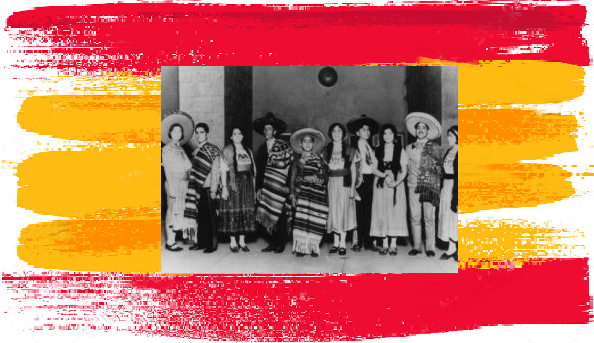

The first in a three-part series on the visual by BAS editor Nathanial Gardner.
Over the past few years Hispanism, among other disciplines, has embarked on what some describe as a visual turn.

The idea of society cosying up to the visual is not that new. The philosopher and cultural critic Walter Benjamin signaled this shift almost nine decades ago in his writings on society and photography The Work of Art in the Age of Mechanical Reproduction (1935). With the internet, mobile devices, streaming platforms, and social media making the visual ever more present in our lives, students and teachers increasingly turn to it in their studies of language and culture.
Yet studying the visual can be more complex than you might expect. Here I suggest a few guidelines that may help you reconsider how you engage with visual material. The goal of this is to help you think about the visual in new ways and consider how to interact with it in greater depth.
Immerse yourself
It is not uncommon for a student to attempt to write an essay on a film or a piece of art (photography, or another still medium) after viewing it just once – a task easy to complete, given that the average film can be watched in about an hour and a half to two hours. The reading of a photobook from cover to cover does not usually take the same length of time than one would need to read La casa de Bernarda Alba, much less La tía Julia y el escribidor.

Yet analysing the visual takes time and a certain saturation of the senses in the material. So, watch a film two, three or four times (or more!) before you decide your approach. Review a photobook or a collection of art several times before committing to a certain analytical line of thought. By that time, new and more nuanced ideas will have penetrated your mind, and you will be better prepared to engage with the piece. To drive home this point, I often ask how long it took a student to read the last novel they read. Then I suggest that they spend at least that long on the visual piece they are studying.
Interrogate

As you immerse yourself in a visual corpus, interrogate it. This is not unlike something you would do with a written text. Why is the light important? Why has this scene been foregrounded? What type of materials or mediums were used to create it? What was the artist trying to tell us with these images? All these questions are relevant. A friend of mine, studying a collection of photojournalism images in Mexico, began to ask why so many young people wore clothing with USA icons such as the ‘Dallas Cowboys’ or the ‘Oakland Raiders’, or other cultural references. He concluded that this was an example of the ever-present cultural influence the northern neighbour exercises on the Aztec nation. Your questions will begin to draw out the analysis that your visual narrative needs.
Contextualise
For historians of the visual, contextualisation is a major thrust. To know where your images come from, and why they are important (or less important), is to know the priority to give the information you are seeing. Contextualisation can be the analysis in and of itself, especially if prior to your working with the image, no significant context was known. To give you a brief example, once I was working with a series of photographs of a perhaps relatively insignificant social gathering, and I realised that one image in the series of photographs was taken by the renowned photographer Manual Álvarez Bravo. How was this possible?
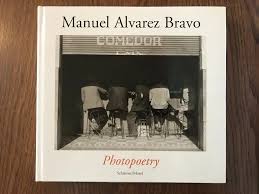
Contextualisation was the key. I noted that in this series of images one person was taking several photographs of friends at a closed event. Then suddenly Álvarez Bravo was gone from the group, being replaced by the regular photographer (and then he was back in the group photograph again). While this is not earth-shattering information, it shows that contextualisation and a careful eye for detail can lead to significant updating of our understanding and clarification of the historical record. Contextualisation will help you keep the facts straight and know how to engage with your studied material in a credible manner. Reading images with their history and their series is key to knowing their significance. Improve your knowledge of local history and culture. Look at information such as contact sheets, directors’ cuts, screenplays, or directors’ interviews. All of these can help to build your sense of context.
Decontextualisation

The opposite of contextualisation is also useful. Sometimes the best way to find new approaches is to look from different angles. Any manner in which you abstract an image from its base can help you to see it in a new light and reveal details that were always there, but that you had not seen previously. There are many ways of abstracting an image. You can look at it in black and white if you have only ever seen it in colour. You can look at it upside down, under a magnifying glass, or under a piece of red acetate. You can cover up pieces of the photograph and only look at one or two different fragments at a time. Abstracting, or decontextualising the image, can help you to see it in a different way, and to observe details within the visual narrative that were simply not obvious to you previously.
Remove the noise
A friend once told me that one of the best ways to execute a close reading of a film is to turn off the sound (and subtitles). This, of course, forces us to experience and think about the film in ways that we probably never would otherwise. This is because cinema is primarily an audio-visual medium. If you extract the linguistic element, then you are forced to concentrate on the visual. This is perhaps a more intense technique, so if you are not prepared for a full film on silent, then maybe consider just watching the scenes you have selected for your analysis – to see if there is anything you might have missed. But how does this suggestion apply to a medium that is already silent? If the image is part of a series, take the image out of it. If it is part of a book, take it out of the book. Look at the image in isolation because photography and other forms of 2D imagery are often such a part of our quotidian experience that they blend into it, becoming afterthoughts or mere illustrations of a text. Remove the linguistic or visual noise that surrounds it, and you will find that your ability to engage with the image critically may be increased.

These five suggestions are simply introductory thoughts. You need not apply all of them to every visual text you encounter, but I do suggest that you attempt some of them, at least at your early stages of analysis. In the next of our series, I will offer a deep reading of one photograph so that you can see what is possible when some of these analytical approaches are put into action.
 Bulletin of Advanced Spanish