
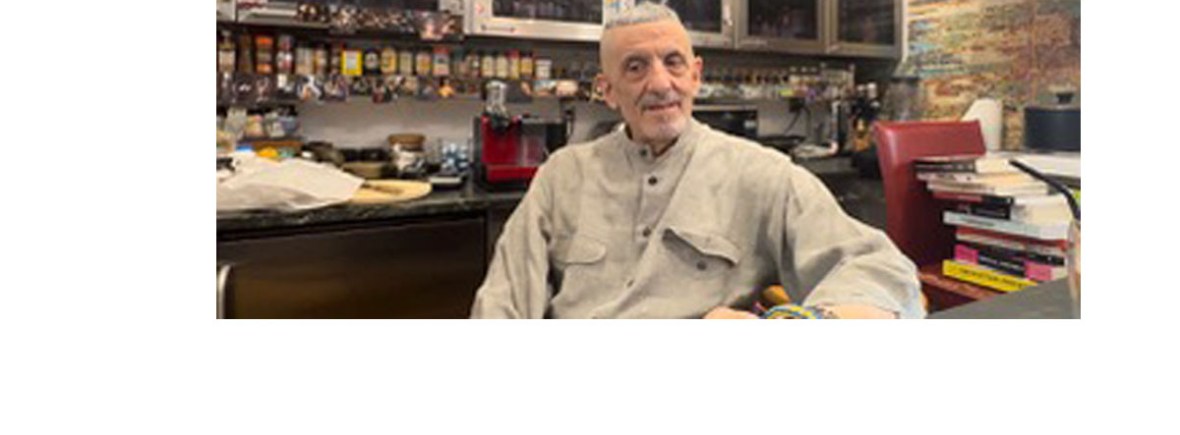
Clara Riveros talks to David Rieff about our perilous moment in history.
For the Spanish version of this article, click here.
David Rieff (Boston, 1952) is a writer, historian, essayist, political analyst, cultural critic, and one of the deepest, sharpest and most perceptive thinkers about our world today.
Rieff has the knack of unsettling his audience and engaging them viscerally with the subject matter he broaches. In his extensive professional career he has been a journalist, editor and war correspondent. His most recent book, Desire and Fate, has just been published1. In it, he looks in detail at the woke movement and its implications for democracy and fundamental freedoms, like free expression. Incisive, unforgiving and pessimistic, Rieff’s insights demand a hearing.

I came across him 10 years ago, when I read an interview with him in the Argentine press about that chaotic but fondly regarded country (which has also been part of my life story). Years later, I had the opportunity to interview him online about populism in America and Islamic extremism in Europe. Finally, at last, circumstances allowed me to catch up with him in person in New York at the end of 2024.

David Rieff divides his time between New York, Kyiv, Madrid and Buenos Aires. Regarding the latter, he says: “Argentina is such a strange country. It’s hard to explain why I feel so at home there when the place is such a terrible mess. On the one hand, it has this amazingly strong culture, but on the other, it has such cretinous governance.” He is in the process of writing a book about Argentina, though its completion has been delayed by events in Ukraine. He plans to finish writing it in Buenos Aires, just as he wrote his book on Miami in Miami, and writes on Ukraine from Ukraine.
Rieff prefers to write in English, because he does so faster. He also writes in French, a language he learned as a child, and in Spanish – mostly short articles. When writing essays and longer texts he prefers to be translated. He speaks Spanish fluently, having lived in close proximity with the language since his youth. “It’s a language that has always been in my life,” he says: firstly, because he grew up among exiles, especially Cubans; then, because he spent time in Cuernavaca (Mexico) with the philosopher and activist Iván Illich; and finally, because in the past 15 years he has spent long periods in Buenos Aires, and is a regular visitor to Madrid.
I caught up with him in his New York home, which is as full of books as you would expect when visiting a writer. There were also a lot of spice jars around the kitchen, which I don’t think were solely decorative. He brewed up some coffee and we set about taking stock of the world, starting with the United States.
The American dilemma: the new iteration of Trump and the crisis of masculinity
The polarisation of American politics is “a tangible sign of the moral and intellectual crisis of a country that doesn’t know where it stands, and which is seeking a new narrative. It can be traced back to the end of Obama‘s administration, and is there to be seen in the rise of Trump, the reaction to George Floyd’s murder, and the demonstrations taking place on university campuses”.
He points out that Obama – a politician of great charisma, intelligence and symbolic importance – was nevertheless a mediocre president. By comparison, he rates Biden more highly, even if his public standing nose-dived in his final year in office. Biden‘s goals were those of the Washington establishment, and there were no great surprises in his foreign policy. Donald Trump, by contrast, personifies cynicism and hunger for power. He has shown himself capable of mutating from liberalism, in the US sense of the word, to the far right. Today’s Republican party has been radicalised, and is not the same as that of George W Bush (2001 – 2009).

Rieff warns of a ‘crisis of masculinity’ that became apparent during the US election cycle. Trump embodies the fantasy of power with impunity, a dizzying blend for many, especially a certain type of young male. This heady brew is not unique to the right of politics, however: it was also there in the Clinton era, with scandals involving sexual harassment by the then president. Feminists at that time said nothing about it.
“The hard right’s reasoning is that ‘Trump is a monster, but he is our monster’. That’s why they can look the other way when his scandals and excesses come to light. Their support for him is rational, given that he promotes their ideological interests”. This applies, for example, to his alignment with the gender politics of many on the so-called Christian Right.
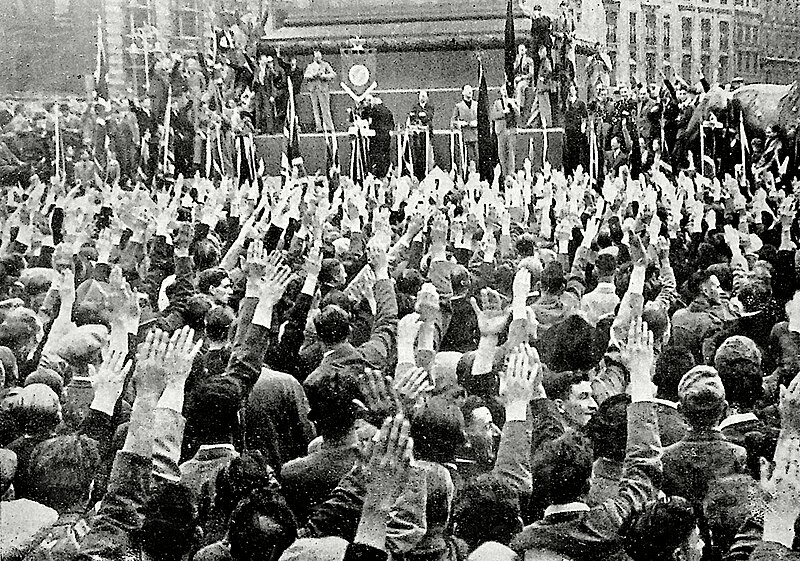
The polarisation of politics is not unique to the United States: “I spend a lot of time in Argentina, and the Milei phenomenon there also represents the failure of traditional politics, even though he is governing with the support of the traditional party of the right2.”
“The same is true in parts of Europe, where the political system is collapsing. After the Second World War people in Europe and North America thought that war would come to an end, and for 50 years it did become less frequent. We mistook that for a fundamental shift, but now we’re going back to the status quo ante of a world at war. Latin America is different: it has violence, terrorism, guerrillas, but not the kind of war we see in Sudan, Ukraine, Myanmar or Israel-Palestine.”
A return to war: the Ukrainian experience

‘I’ve worked in many war zones. I’m now 72 years old, and I’m planning to spend my remaining years somewhere a little calmer,” he says, half joking. “I never imagined that I’d go back to covering wars. Being a war correspondent isn’t a matter of courage or virtue, but rather a question of temperament. The problem is that Ukraine’s is a just war – and there aren’t many of those: Bosnia, Bangladesh’s fight for independence, the ANC in South Africa…”
Rieff went to Kyiv hoping to contribute, in some way, to sustaining civil society there. Among his activities in Ukraine, he teaches a course on media at the university of Kyiv, and gives a workshop on essay writing – “not a strong tradition in Ukrainian academia”. He is also going to teach a class on North American literature – “it wasn’t my idea, but I didn’t know how to say no”. He calls to mind Carl von Clausewitz’s Vom Kriege, where the expression ‘the fog of war’ originated: there is no sign yet of how the war started by Russia in February 2022 is going to end.
Hamas, Israel and the university campus protests

Rieff sees the pro-Palestine or pro-Gaza protests on US university campuses as linked to the radicalisation of students taking arts and humanities courses. He regards the demonstrations as grounded in opposition to US imperialism: part of an anti-imperialist trend, which sees Israel as the ultimate colony of Western imperialism.
Why do US students not take the same interest in other conflicts around the world? Why don’t they mobilise against the crimes of left-wing regimes? There are no protests against what is going on in Venezuela or Cuba, for example: “but then, they would say that the crisis in Cuba is a result of the blockade. Venezuela doesn’t interest them, neither does Colombia“. Rieff says that the only day he noticed Twitter activity about Colombia was when President Petro issued his condemnation of Israel.
Miami: ‘the capital of Latin America’
Rieff lived in Miami, “the capital of Latin America”, for two years, and wrote two of his books there. “Many cities have a large Hispanic population, but Miami is the only one in the US where Hispanics are in charge.” They speak English, but, because they hold the reins, others must learn to communicate with them on their own terms – which means recognising the need to know some Spanish. “In Los Angeles, even where Hispanics are a majority, they are mostly poor and doing low level jobs. In Miami, not so.”

In politics, Florida was traditionally a swing state between Democrats and Republicans. But it has now become a bastion of Republicanism and the right, largely, Rieff explains, because of the migration there of many people who have direct experience of communism in Latin America. “There are more snowballs in hell than liberal Hispanic people in Florida,” he chuckles. “The Jewish liberals of Miami Beach are left wringing their hands – they can’t make head or tail of it.”
Latin America and the siren song of populism
With the exception of Chile and Uruguay, Rieff observes, Latin American countries are going through the same process as in western Europe. Traditional parties have failed and don’t know how to reinvent themselves. By contrast, the populists have plenty to offer.
Cuba is a lost cause, he says. “They should turn out the lights and move to Miami. It’s an extreme case. But despite all the migration, they’re still a talented people. Fidel Castro‘s successors have dreamt of Cuba becoming a new China – an authoritarian, state-run version of capitalism – but they haven’t worked out how to get there”.

In Argentina, Milei’s election represents the failure of the traditional right. “In every country, populism is always a matter of the people searching for a saviour. What happened in Argentina is that they turned their backs on the whole political system. Don’t forget that Peronism is the ideology of searching for a saviour – just like Petro in Colombia.” The conventional parties have no answer. Moderation is out of fashion.
“Bukele in El Salvador has shown that totalitarianism can work. But for the Salvadoran people, Bukele has represented security: the methods he uses are secondary to them. The same methods worked for Fidel Castro, but he didn’t know how to adapt to the end of the Soviet era. Many people were on Fidel‘s side until that point. And then there is Venezuela – a great tragedy, visible on the streets of every city in Latin America, Spain and the USA because of the huge exodus from the country.”
The sceptic

Rieff is sceptical about ideologies and power. He is a world away from intellectual militancy, unlike so many intellectuals swept up in grand revolutionary ideas, especially in Latin America. Why so? “Because I am a pessimist. My only ideology is anti-utopianism. Objectively, that is a bulwark against the left, because the left has to be utopian or it is nothing. I don’t think of myself as being on the right, but obviously there are people on the right who are not utopians, and that could not happen on the left. With all due respect, progressive ideas have always been utopian. My political party consists of just two people: the English political philosopher John Gray and me. Two is better than one. That is why, as an adult, I have not been an activist”.

During his youth, and the Vietnam war, he did become an activist, “but even then, without much enthusiasm. I don’t believe in history as a story of progress. That is a left-wing notion in its secular form, with Christian overtones of ‘waiting for the saviour’s return’. I prefer the Greeks’ cyclical view of history. With that outlook, I can’t be progressive. I think that’s what has saved me.”
- Desire and Fate is published by Eris (https://eris.press/Desire-Fate) and will be translated into Spanish and published by Penguin Random in Spain and some countries of Latin America. Rieff has published several books: Slaughterhouse: Bosnia and the Failure of the West, At the Point of a Gun: Democratic Dreams and Armed Intervention, A Bed for the Night: Humanitarianism in Crisis, The Reproach of Hunger: Food, Justice and Money in the 21st Century, Los Angeles, Capital of the Third World, The Exile: Cuba in the Heart of Miami, Failure of the West, Against Remembrance, among others. ↩︎
- In 2024 he wrote for Letras Libres about the victory of Javier Milei, and also for Liberties, a Washington publication. ↩︎
 Bulletin of Advanced Spanish