
BAS Editor Serena Thandi

Spain and the United Kingdom, both constitutional monarchies, offer distinct yet comparable political systems shaped by divergent historical, legal, and institutional trajectories. While both nations operate within the framework of parliamentary democracy, their systems exhibit unique features that reflect their respective constitutional evolutions, decentralisation models, and party dynamics.
Constitutional Foundations
The United Kingdom is characterised by an unwritten constitution composed of statutes, common law, and constitutional conventions. The UK parliament is composed of the House of Commons, the House of Lords, and the Crown (Bogdanor, 2009). The government is drawn from parliament, ie ministers are mostly members of parliament, and exercises political and legal sovereignty in and through Parliament. The principle of parliamentary sovereignty implies that no Parliament can bind its successor, and there is no higher legal authority than Parliament itself.

By contrast, Spain possesses a codified constitution, ratified in 1978 during the country’s transition to democracy following the Franco dictatorship. The Spanish Constitution enshrines national sovereignty, the separation of powers, and the decentralisation of state authority through autonomous communities (Gunther et al., 2004). It also explicitly protects civil rights and establishes a constitutional court to oversee constitutional interpretation.
Head of State and Government
Both the UK and Spain maintain constitutional monarchs as ceremonial heads of state—King Charles III and King Felipe VI, respectively. Their roles are largely symbolic and devoid of executive authority, affirming the primacy of democratic governance.

Executive power in both nations resides with the head of government: the Prime Minister. In the UK, the Prime Minister is the leader of the political party or coalition with majority support in the House of Commons and is formally appointed by the monarch. In Spain, the Prime Minister (Presidente del Gobierno) is nominated by the monarch following parliamentary elections and must secure a vote of investiture from the Congress of Deputies, the lower house of the Cortes Generales (Field, 2016).
Legislature and Electoral Systems
The UK Parliament is bicameral, comprising the elected House of Commons and the unelected House of Lords. Members of Parliament (MPs) are elected using the first-past-the-post (FPTP) electoral system, which tends to produce single-party majorities and is often criticised for its disproportionality (Curtice, 2020).
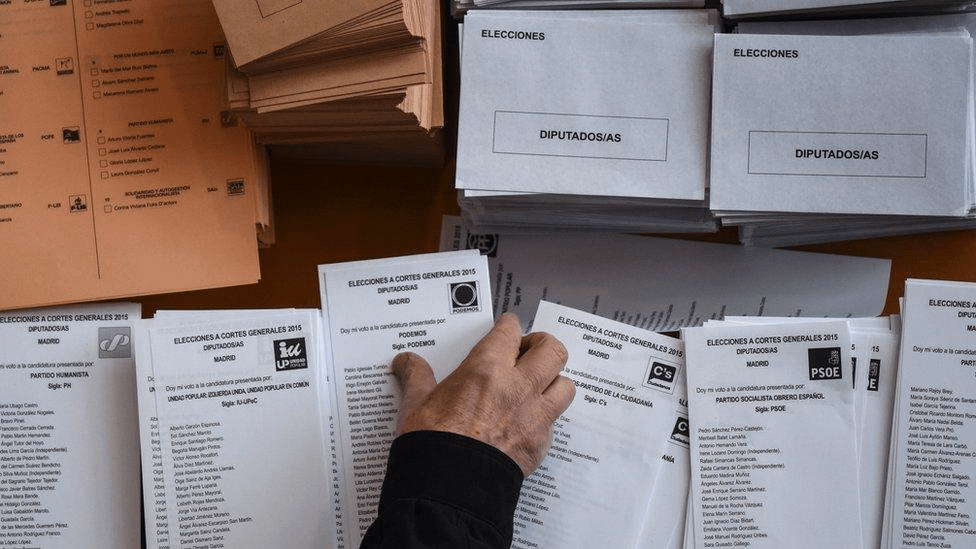
Spain’s legislature, the Cortes Generales, is also bicameral, consisting of the Congreso de los Diputados (lower house) and the Senado (upper house). The Congreso is elected through a proportional representation system using the D’Hondt method in multi-member constituencies, favouring larger parties but still allowing for greater plurality than FPTP (Hopkin, 2005). The Senado, although nominally representing Spain’s 17 regions, has weaker legislative powers compared to the Congreso, and is partly appointed by regional legislatures.
Decentralisation and Regional Autonomy
One of the most salient contrasts between the two systems lies in their approaches to territorial governance. The UK features a form of asymmetrical devolution, with Scotland, Wales, and Northern Ireland each possessing varying degrees of legislative and administrative autonomy. However, England lacks its own devolved legislature, rendering UK devolution uneven and constitutionally fragile (Keating, 2009).
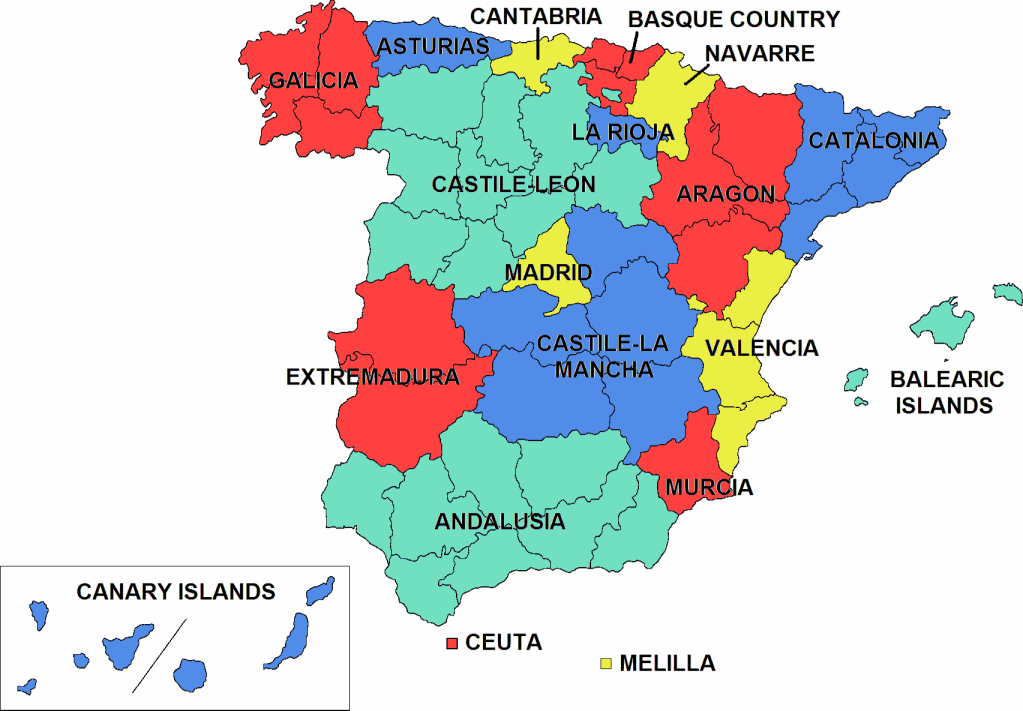
Spain, conversely, is constitutionally structured as a decentralised unitary state, with 17 autonomous communities and 2 autonomous cities. Each region has its own statute of autonomy, legislature, and government. Each is responsible for education and health in its territory, while the Basque Country and Catalonia have their own police forces (Moreno, 2001). Nonetheless, tensions persist—particularly in Catalonia and the Basque Country—regarding the adequacy of autonomy and aspirations for independence.
Political Parties and Governance
Both systems are characterised by multi-party politics, though their party landscapes differ. The UK traditionally features a two-party dominant system (Labour and Conservative), although recent decades have seen increased support for smaller parties such as the Liberal Democrats, Scottish National Party (SNP), and the Green Party, as well as Reform. However, FPTP inhibits their parliamentary representation (Curtice, 2020).
Spain operates a multi-party system with regular coalition or minority governments, especially since the fragmentation of the two-party dominance of the Spanish Socialist Workers’ Party (PSOE) and the People’s Party (PP) in the 2010s. New actors such as Podemos, Vox, and Ciudadanos have contributed to greater political volatility and complex government formation processes (Orriols and Cordero, 2016).
Conclusion/ Takeaway
In sum, while the United Kingdom and Spain share commonalities as parliamentary monarchies, their political systems diverge significantly in their constitutional structures, electoral mechanisms, and territorial governance. The UK’s uncodified, centralised tradition contrasts with Spain’s formalised decentralisation and constitutional oversight, offering fertile ground for comparative political analysis.
References
Bogdanor, V. (2009). The New British Constitution. Oxford: Hart Publishing.
Curtice, J. (2020). ‘The electoral system: does FPTP still deliver?’ in British Social Attitudes 37. London: NatCen Social Research.
Field, B. N. (2016). Why Minority Governments Work: Multilevel Territorial Politics in Spain. Palgrave Macmillan.
Gunther, R., Montero, J. R., and Botella, J. (2004). Democracy in Modern Spain. Yale University Press.
Hopkin, J. (2005). ‘Spain: Proportional Representation with Majoritarian Outcomes,’ in M. Gallagher and P. Mitchell (eds.), The Politics of Electoral Systems. Oxford University Press.
Keating, M. (2009). The Independence of Scotland: Self-Government and the Shifting Politics of Union. Oxford University Press.
Moreno, L. (2001). The Federalization of Spain. Routledge.
Orriols, L. and Cordero, G. (2016). ‘The Breakdown of the Spanish Two-Party System: The Upsurge of Podemos and Ciudadanos in the 2015 General Election’. South European Society and Politics, 21(4), pp.469–492.
 Bulletin of Advanced Spanish