Colin Harding
When the post-graduate course in Latin American Studies was getting off the ground at St Antony’s College, Oxford, in the late 1960s, revolution was in the air. Radical students attracted to the college’s brand-new Latin American Centre (LAC) by the prospect of learning from Fidel Castro’s Cuba and guerrilla movements all over the continent were surprised to discover that Malcolm Deas, a leading member of the (very small) teaching staff, who was only a year or two older than them, was sceptical about their enthusiasms and scornful of the general ignorance about the complexities of a vast and little-studied continent. His subtle and nuanced understanding of politics and historical circumstances did not lend itself to rhapsodising about popular heroes and fashionable trends.
Malcolm was, nevertheless, always happy to debate with his student critics. Relations were invariably cordial, and the Centre flourished and grew. He remained a leading member of the LAC until his retirement in 2008, when he was made an Emeritus Fellow of St Antony’s. One of Malcolm’s many accomplishments over the years was to bring a stream of Latin American, and particularly Colombian, graduate students to the Centre. One of them, he later confessed, ended up in prison, but others achieved great things in the political and intellectual life of their country. Among the most notable Colombian imports to the LAC was Alvaro Uribe, a former governor of Antioquia department who was later a highly controversial President of Colombia from 2002 to 2010. Malcolm came to know him well during his time as a visiting fellow and remained in touch with him thereafter.

Malcolm Deas was born in Dorset in 1941, the son of a British army officer, who died when he was five. This background may help to explain his life-long fascination with wars and military matters in general. He first went to Colombia in 1963 as a young Prize Fellow of All Souls, with the vague idea of studying civil wars, of which that country had had several since independence from Spain in the early nineteenth century. I recall a seminar he gave us post-graduate students on the ‘military organisation of New Granada’ (as newly-independent Colombia was known for several years), and later being invited to his house to admire an ancient rifle and other memorabilia he had collected from the time of the War of a Thousand Days (1899-1902), a civil conflict that led to the separation of Panama from Colombia in 1903.
The choice of Colombia as his main focus of research owed a lot to chance. As a young graduate casting around for ideas on what to do and where to go next, he decided that Mexico sounded like an interesting destination. But when he discovered that 20 million American vacationers headed there every year, he changed his mind and opted for somewhere, as he later remarked, where there were few foreign visitors, especially from his own country.

He spent two years in Colombia, reading voraciously and travelling widely, and his youthful preoccupation with civil wars was soon superseded by a broader interest in Colombia’s nineteenth and twentieth-century history. His field of study later extended to neighbouring Venezuela and Ecuador, the other two countries that made up the short-lived Gran Colombia federation, which broke up in 1833. Malcolm’s bibliography of more than 130 pieces of work included articles and chapters of books on all three countries. He also wrote prolifically for many non-academic publications in Britain, ranging across the spectrum from the New Statesman to the Spectator. He also wrote leaders on Latin America for The Times in the late 1990s. One item conspicuously missing from this list was the definitive history of Colombia, which he was certainly capable of writing. This was apparently a deliberate decision: his temperament seemed better suited to writing to deadlines.

Malcolm’s works in Spanish, including a wide-ranging collection of essays, Del poder y la gramática y otros ensayos sobre historia, política y literatura colombianas (1992), were not just influential with international students and academics but were also greatly admired in Colombia. In the words of Sergio Jaramillo, who designed the peace process that finally ended Latin America’s longest guerrilla war in 2016: “Malcolm spent his life helping us Colombians to understand ourselves.”
This was no mean feat for a foreigner, and his achievements were recognised with many academic awards, including honorary doctorates from the Universidad de los Andes in Bogotá and the Universidad del Norte in Barranquilla, on Colombia’s Caribbean coast – an institution to which he bequeathed much of his massive collection of books and documents.
He also found time to advise both the British and Colombian governments on various occasions. Many politicians, diplomats and journalists in both countries benefited from his wise counsel; one such was President César Gaviria (1990-94), who sought his advice on dealing with a challenging public order situation in Colombia, where high levels of political and social violence were endemic. His contribution, which included recommendations on modernising the national police and keeping the military off the streets, was recognised with the award of Colombia’s highest honour, the Cruz de Boyacá.
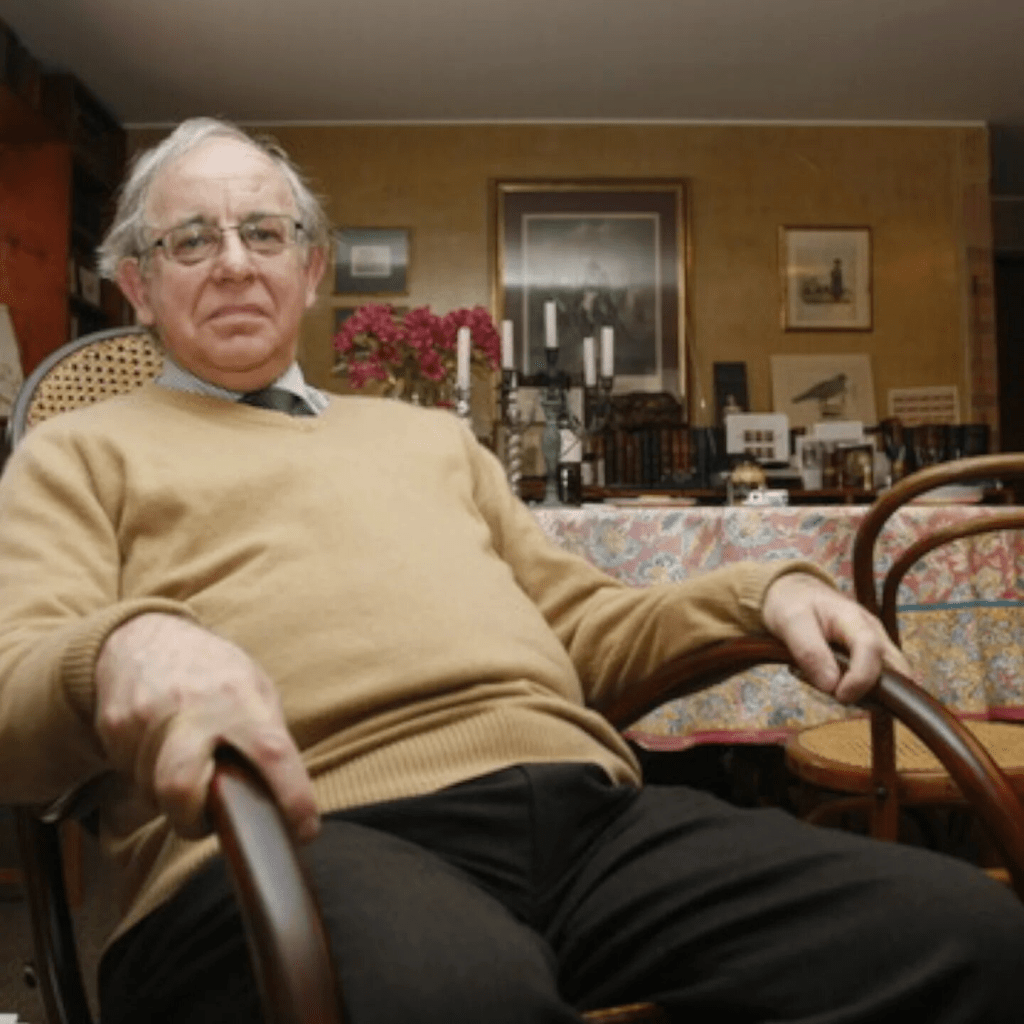
His long involvement with Colombia was finally crowned with the granting of Colombian citizenship in 2008. The high regard in which he was held in Colombia was reflected in the obituaries and appreciations carried by all the major media outlets as soon as his death (in Oxford) was announced – which was not the case in Britain (with the honourable exception of the Financial Times). El Espectador hailed him as ‘el historiador inglés con corazón colombiano’.
In Britain his expertise came in handy at the time of the Falklands conflict (1982), when he gave evidence to the House of Commons Foreign Affairs Committee on the origins of the sovereignty dispute with Argentina. He was awarded an OBE by the British government, and later expressed ironic satisfaction at the prospect of being a footnote in future histories of Britain under Margaret Thatcher.
Malcolm was for many years an active member of the South Atlantic Council, a London-based pressure group set up in the wake of the Falklands War, and he wrote a magisterial summary of its achievements and pending issues when it was finally wound up in 2022, only a year before his death at the age of 82.
As befitted a Colombian citizen, Malcolm came to speak fluent Spanish, but always with the same idiosyncratic delivery and educated accent with which he spoke his native language; he apparently never tried to do anything about this. He married a Colombian, too, though that did not last very long, and he divided his time in later years between his house in Oxford and an apartment in Bogotá, where he remained much in demand in academic and government circles.
Latin America in general and Colombia in particular may have been lifelong interests, but Malcolm’s attention sometimes wandered much further afield.. On one occasion he found a battered Chinese painted scroll in an old house owned by St Antony’s in Oxford, and by happy chance he had recently met a young Colombian who had just qualified as a restorer of ancient artefacts. The scroll, which measures some three metres by one, is destined to hang on the wall of the Senior Common Room at his old college as a permanent memorial to its distinguished fellow.
Colin Harding is a journalist who has been writing about Latin America for more than 50 years.
 Bulletin of Advanced Spanish