Trish Henderson

All three main exam boards (AQA, Edexcel, and WJEC) allow the study of either a text and a film, or two texts. A film can be a good starting point before moving on to the study of literature, as it’s usually more familiar territory and might be an easier introduction to essay-writing before tackling the analysis of a literary text.
Let’s look at the four films and texts that are common to all three boards. Unsurprisingly, these tend to have more ready-made materials available to buy, such as study guides. Indeed, three of the four texts and films have been the subject of student-friendly analysis in past editions of this Bulletin – accessible via the Index tab above. (Réquiem and Laberinto are the exceptions, but not for much longer…)
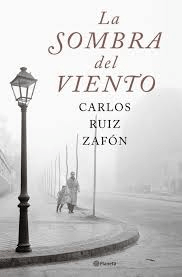
The literary texts (one play and three novels) are relatively short. AQA also offers La sombra del viento; at 550 pages, it might be a good choice for enthusiastic and confident readers. Edexcel’s list of prescribed texts and films is quite extensive, with some interesting and less common titles, such as Borges’ Ficciones and films like La historia oficial and Machuca – a good starting-point for a Sixth Form reading list.
Literature
La Casa de Bernarda Alba (Federico Garcia Lorca, 1936) is an iconic work. As a tragedy, it offers a critique of repression, authoritarianism, and the strict gender roles of rural Spain in the early 20th century. Its intense, claustrophobic atmosphere, strong female characters and powerful symbolism make it ideal for in-depth analysis at A-level. It also resonates historically, reflecting the tensions in Spanish society leading up to the Civil War, and it’s not uncommon for a production to be available on stage.

Réquiem por un campesino español (Ramon J. Sender, 1953) also explores the prelude and aftermath of the Civil War. It’s a relatively short narrative that explores themes of guilt, religion, and social inequality through the relationship between a priest and a progressive campesino. Its moral ambiguity allows students to examine the impact of war on individuals and communities.
Moving beyond Spain, Crónica de una muerte anunciada (Gabriel Garcia Marquez, 1981) introduces students to Latin American literature and magical realism. It offers fertile ground for discussing fatalism, honour, and the blurred line between fact and fiction. It challenges traditional narrative structures, making it a popular stylistic/structural analysis choice.

Como agua para chocolate (Laura Esquivel, 1989) is an accessible text set against the backdrop of the Mexican revolution, with a film version (albeit now aged – from 1992) that can help students to ingest and understand the novel. It blends elements of magical realism with romantic tragedy, interweaving food, emotion, and cultural tradition. Each chapter begins with a recipe, which serves as a literal and symbolic entry into the story’s exploration of female agency, repression, and the conflict between duty and desire.
Film
Volver (Pedro Almodóvar, 2006) is a favourite. It is a vibrant film that explores themes of motherhood, death, and female resilience. Almodóvar’s distinctive visual style, use of colour, and focus on women’s stories provide rich material for textual analysis and discussions about representation and auteur cinema, as well as the theme of rural life in modern Spain.

Another frequently studied film is El laberinto del fauno, directed by the Mexican filmmaker Guillermo del Toro (2006) but set in post-Civil War Spain. A fantasy drama, it follows a young girl as she escapes into a mythical world to cope with the violence around her. It’s so rich in allegory and symbolism that it can be a perfect gateway into the world of analysing techniques, blending fairy-tale tropes with the brutality of Francoist repression. The striking visual effects, haunting soundtrack, and layered themes make it ideal for exploring how cinema can comment on history and politics.
From a more contemporary and realistic angle, Mar adentro (Alejandro Amenábar, 2004) deals with the real-life narrative of Ramón Sampedro, who campaigned for the right to end his life after being paralysed in a diving accident. The film explores themes of dignity, freedom, and the ethics of euthenasia. It is a profound human story that encourages debate and reflection on moral issues and is perhaps all the more relevant given the relatively new laws on assisted dying in Spain. The cinematography is subtle and, therefore, may be a little harder to explore than other films in terms of technique.

Lastly, También la lluvia (Icíar Bollaín, 2010) offers a meta-narrative about filmmaking, colonialism, and modern-day activism. Set in Bolivia during protests over water privatisation, the film parallels the historical exploitation of indigenous people during colonial times with contemporary injustices. Its film-within-a-film structure and social commentary make it particularly valuable for discussions about representation, resistance, and the power of storytelling.
 Bulletin of Advanced Spanish