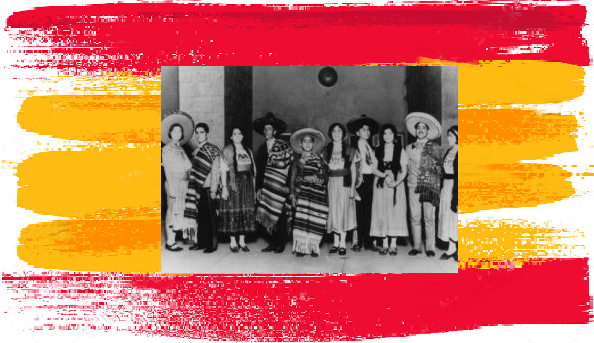

Erika Leiva explains why she had to get out of El Salvador.
This is my story.
I am a 21-year-old woman from El Salvador.
First I want to tell you about my country, because there are many things to say about it.
El Salvador is small in size but great in its people.
Let’s go back a few centuries, to when El Salvador was colonised by Spain. That’s why our main language is Spanish. Some people still speak Nahuatl and Lencan, which are indigenous languages. Growing up in my home, my family just spoke Spanish.
At school they taught us that the Conquest was a historical event which completely changed America. Thanks to colonisation we had been able to make progress in areas such as education and civilisation. In my personal opinion, there is a downside to this, given that Spain used the discovery of America to seize the gold and other forms of wealth that they found during their conquest. Colonisation wasn’t as positive a process as they taught us.
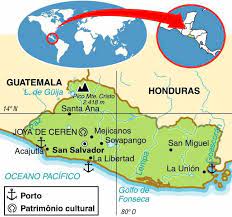
El Salvador has a wealth of natural beauty – a great range of flora and fauna, volcanoes, rivers, lakes, lagoons, and great beaches lining our Pacific coast. There are many laws to protect the natural environment, but those laws are not obeyed.

The current president is Nayib Bukele. He has done great things for the country. Crime has decreased dramatically during his presidency. Since 2022 he has used the state of emergency to arrest thousands of drug gang members, who will spend the rest of their lives in prison.
President Bukele has also built Surf City, which draws visitors from all over the world. It’s a very ambitious project which has made El Salvador the epicentre of Central American surfing competitions. We also hosted Miss Universe in 2023. It’s amazing how far our country has come on – it’s a huge change.

El Salvador’s most famous dish is the pupusa. It’s a corn tortilla stuffed with puréed beans, cheese and loroco (a herb), served with pickles and tomato sauce, although you can add whatever else you want, such as pork, chicken, beef, etc. If you come to El Salvador, you mustn’t leave without trying this delicious delicacy.
That’s enough about my country. Now for my own personal story.
My name is Erika Leiva, and I was born in San Vicente, El Salvador. I have two older sisters and I lived with them and my parents all my life until January 2022, at which point events in my life and the situation in my country led me to leave and emigrate to England.
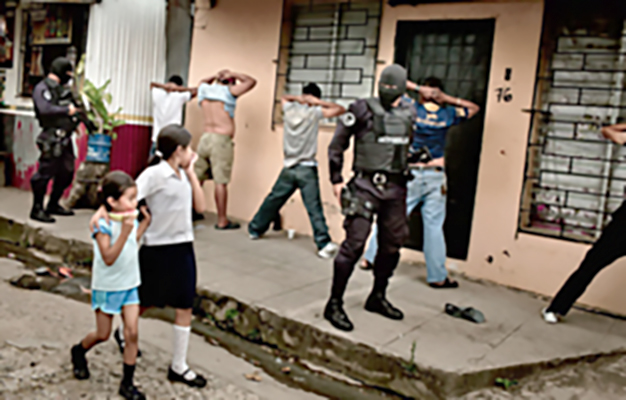
Crime in El Salvador was terrible. You would go out on the street and see men carrying weapons and harassing women. It was a very difficult situation, made worse by my father being an army officer, which gave the gang members even more of a reason to intimidate me.
I was studying marketing and economics at university. I had to use public transport every day to get to my classes: my journey back and forth on public transport involved some very difficult situations. It was an easy hunting ground for men who wished to abuse women. I don’t want to go into details, but it led to me becoming a refugee – that’s my story.
The best decision I ever made was to leave El Salvador. I love my country and its wonderful people, but no woman should have to put up with harassment and abuse.
I decided to emigrate to England. I honestly can’t say why I chose this country, but I think God always has a plan, and for me, that meant coming to England. I arrived in January 2022. Arriving somewhere where a different language was spoken was a huge shock. I knew a few words of English then, but I remember listening to people speak and thinking, what language is that? That’s not English, it must be Russian or French. So it was very difficult to adapt to the change, the language, the food, the climate, and to learn to live alone.

Being alone was the most difficult part – not having my family with me. Naturally, I stay in touch with them – me being alone makes them worry about me and vice versa, so we are constantly talking to each other despite the six hour time difference.
Life in England is difficult for an immigrant. I’ve had a number of encounters with racism and discrimination. It’s a complex topic which you would not expect to find in 2023, but it still occurs.

Being alone in a new country has led to moments of depression and anxiety, but fortunately I have met people who have made my life happier and more agreeable. I’m a hypersensitive person – my emotions can go from one to 100 in a matter of seconds – so my friends are an essential part of my life. I want to use this opportunity to thank those friends who make my life complete – thank you for being part of my happiness, for taking my hand when I most needed it: Isai, Neftalí, Astrid, Jennifer and Sarah – people I greatly admire and respect. I would also like to thank my mother: in spite of everything, she has always supported me in all I do.
I want to keep on studying and get a professional qualification. I’m not yet sure what I want to specialise in, but the first step is to learn English to give me confidence and enable me to express myself clearly enough for there to be no language barrier holding me back.
So that’s my story. I hope that it has given you some insight into El Salvador, my life, and what it’s like to be an immigrant.

Monument to the Divine Saviour of the world – El Salvador’s iconic national landmark.
Translation by BAS editor Robin Wallis.
 Bulletin of Advanced Spanish