
Robin Wallis
To earn top marks, we need to explain not only what the author does, but also why s/he does it.
For example, in La casa de Bernarda Alba, we might write that Bernarda’s imposition of an extreme period of mourning reveals the inhumanity of her traditional values. She enforces her rules despite the harm they do to her fellow women, most notably her daughters.

Why, though, has Lorca dramatised this bleak phenomenon? Here we might refer to his progressive values and ideological vocation. He sent out his acting troupe (La Barraca) to perform his plays in rural communities partly to raise awareness of such injustice. Bernarda is a stark representation of the ‘morales viejas o equivocadas’ that he wanted his work to expose and challenge.
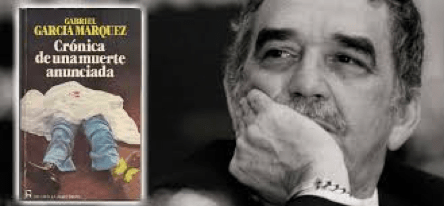
This ‘what + why’ analytical framework might look as follows when applied to the world of another popular exam text, García Márquez’s Crónica de una muerte anunciada.
Level 1: selection of evidence
The inquest into Santiago’s murder opens with local people ‘sin ser llamada, ansiosa de exhibir su propia importancia en el drama’. During the hearing the judge, ‘abrasado por la fiebre de la literatura’, jots literary marginalia on his report. Years later, all that remains of his report is the portion found by the narrator in a flooded public archive, without even a record of the judge’s name.
Level 2: interpretation: what has GM revealed here?
The evidence selected above epitomises the irony that infuses the text (deluded people, whimsical judge, inept governance). The inquest shows how ineffectually the authorities respond to the tragedy (cf the mayor, the autopsy). Human foibles cloud understanding: 27 years on, the cause of the crime remains a mystery.
Level 3: why? The author’s purpose.
GM uses the novel to reveal insights into the Latin American psyche that go beyond conventional analysis. The townspeople’s inability to take responsibility or convey information leaves them vulnerable to what they perceive as fate. Some find premonitions and hallucinations more revealing than rational enquiry. We can infer that GM sees this as a fatal flaw in Latin America’s social order. The novel raises awareness of this trait.

 Bulletin of Advanced Spanish