BAS editor Helen Laurenson
On 8 January 2025, under the slogan of ‘España en Libertad’, Spanish Prime Minister Pedro Sánchez marked 50 years since the death of Franco with a speech in Madrid’s Reina Sofía Museum, home to Picasso’s Guernica.
“No hace falta ser ni de izquierdas ni de derechas para mirar con tristeza y terror los años oscuros del franquismo y temer que ese retroceso se repita. Basta con ser demócratas,” he declared. [You don’t have to be left-wing or right-wing to look back with sadness and terror on the dark years of Franco’s regime and fear that this regression will be repeated. It is enough to be democrats.]
What might have seemed like a sober historical commemoration was not without controversy. The right-wing opposition accused Sánchez of diverting attention from the issues besetting his minority government after the inconclusive snap general election of July 2024. Both the conservative Partido Popular (PP) and the far-right Vox stated that they would not participate in any commemorative events planned for 2025.
In addition, King Felipe’s absence, due to a ‘scheduling clash’, raised eyebrows. With increasing support for Vox after October’s extreme weather events (DANA) and the PP’s pledge to repeal the 2022 Ley de Memoria Democrática, the old guard of the Spanish left would be turning in their graves at some aspects of the ‘new’ Spain.
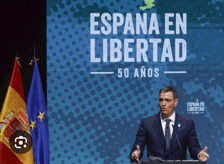
Sánchez was categoric in his affirmation of freedom, reminding his audience that 1 in 3 Europeans and 26 million Spaniards were subject to fascist rule in the last century: ‘Si la historia nos ha enseñado algo, es que la libertad nunca se conquista de forma permanente’. [If history has taught us anything, it’s that freedom can never be permanently extinguished.]
In a clear denunciation of the political interference of Elon Musk, Sánchez went on to defend democracy in the light of a new generation of Spaniards unaware of the realities of Francoism:
‘porque cuando uno ha pasado toda su vida bajo su velo protector es fácil olvidar las enormes fortalezas de la democracia y dejarse seducir por quienes prometen a la gente orden, seguridad, riqueza, a cambio de arrebatarles lo más preciado de una persona, de un individuo, que es el poder elegir el destino de uno mismo’.
[because when you spend your whole life under the protective shield of democracy, it’s easy to overlook its strengths and merits, and to let yourself be won over by promises of order, security and wealth in exchange for having that most valued possession of each individual – the ability to choose one’s own path in life – taken away.]
Powerful words indeed, which recognise that the new fascists don’t wear jackboots or goose-step. The world has changed and the inexorable march of time has camouflaged the black shirt with suits, AI and fake news:
‘también en España [la internacional ultraderechista], liderada en este caso por el hombre más rico del planeta, ataca abiertamente a nuestras instituciones, azuza el odio y llama abiertamente a apoyar a los herederos del nazismo en Alemania’.
[even in Spain the international far-right, in this case led by the wealthiest man on the planet, is openly attacking our institutions, fomenting hatred and encouraging support for those who perpetuate the legacy of Nazi Germany.]
Sánchez’s warning is reminiscent of Almudena Grandes’ final novel Todo va a mejorar [Everything will get better], published in 2022, one year after her untimely death, in which she imagines a dystopian Spain devoid of democratic institutions and hidebound by populism and hypercapitalism. Her prescient work serves as a warning in an increasingly commodified global society where denouncing fake news can cost one’s life.
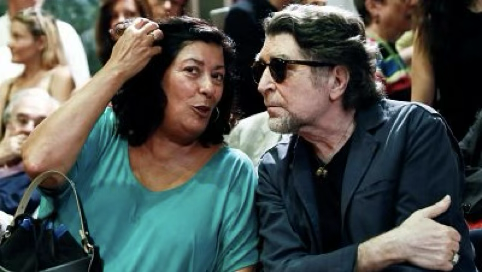
Grandes is one of the many illustrious writers and intellectuals of the Spanish left, whose legacy can be traced back to Antonio Machado, Rafael Alberti and García Lorca. Joaquín Sabina’s ‘De Purísima y oro’ was to have been played at her funeral, had it not been changed at the last minute to his ‘Noches de Boda’ so as not to offend any anti-bullfighting sensibilities. It is no surprise that ‘De Purísima y oro’ would appeal to the author of Episodios de una guerra interminable [Episodes from an endless war], given the way that Sabina’s lyric encapsulates the essence of life under Franco.
The lyric is replete with complex meaning as it interleaves through fragmented and self-referential vignettes the baseness and brutality of Franco’s Spain as played out in 1947’s Madrid. The sordid landscape it conjures finds clear literary precedents in Galdós, Cela and Laforet, and functions as an impressionistic fresco of the immediate post-Civil War years.

The title ‘De Purísima y oro’ refers to the most illustrious ‘suit of lights’, or traje de luces, worn by a matador and associated with the Virgin Mary. In this context, purísima is light blue; oro is gold. The lyric’s clear taurine reference – the death of Manolete on 29 August 1947 – initially camouflages the song’s focus on the aftermath of the Civil War (the death of Manolete is traditionally seen as the end of the immediate posguerra).
The song was written for the bullfighter José Tomás (b. 1975). In an interview with Juan José Millas in 2011, Sabina revealed:
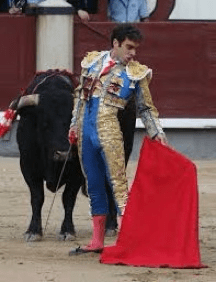
‘Yo hice una canción […] sobre la posguerra, pero había una parte que era sobre el día de la muerte de Manolete. Yo sabía que Manolete no había muerto de purísima y oro, sino de palo rosa y oro, pero para una canción de purísima y oro da mucho más bonito. Así que la hice para José Tomás’.
[I wrote the song about the post-War period, but there’s also a reference to the day of Manolete’s death. I knew that Manolete’s colours that day were pink and gold rather than blue and gold, but blue and gold were the colours I wanted for the song, so I dedicated it to José Tomás.]
The death of Manolete is the means through which Sabina constructs an evocative and suggestive sketch of poverty and oppression:
Academia de corte y confección School of Sewing (or Dame School)
Sabañones, aceite de ricino Chilblains, castor oil
Gasógeno, zapatos Topolino Kerosene and cheap shoes
El género dentro por la calor Goods inside due to heat.

The multi-sensory imagery – pain and colour of chilblains, taste of castor oil and the smell of gasógeno (a cheap fuel made by mixing benzine and pure alcohol) – are powerful metonyms which represent the impoverished interior lives of women who sew for a living, whilst the zapatos Topolino – a cheap, mass-produced high-heel shoe of the 1940s – are synonymous with women who challenged the Sección Femenina. With the reference to ration cards – el género dentro por la calor was a sign hung in shop windows – the opening stanza of the song evokes a wretched existence in post-war Madrid.
This novelist Montero Glez has described the song as ‘un fresco pintado con los colores ocres de la posguerra donde hambre y estraperlo fueron categorías que, junto al miedo, arraigaron en una época dura y plena de símbolos funestos’.[1] [a fresco painted in drab post-War shades of ochre, when hunger, the black market and fear itself took root – a harsh period packed with gruesome associations.] The minuciosity of historical detail coalesces in a text which combines the ‘espuma de la vida’[2] of the 1940s Prensa de corazón, with its allusions to bullfighting and high society, with the grotesque tremendista realism of Cela’s La colmena:
Para primores galerías Piquer For exquisite purchases, Galerias Piquer
Para la inclusa niños con anginas For the poor house, enfeebled children
Para la tisis caldo de gallina For consumption, chicken stock
Para las extranjeras Luis Miguel For foreign women, Luis Miguel
Para el socio del limpia un carajillo For the shoeshine boy, coffee with a shot
Para el estraperlista dos barreras For the spiv, standing tickets only
Para el corpus retales amarillos For Corpus Christi, yellow patches
Que aclaren el morado de las banderas which disguise the purple of the flag.
The anaphora introduces a series of metonyms associated with poverty and deprivation, along with the whitewashed face of Francoism in the figure of Luis Miguel Dominguín, Spanish macho par excellence and lover of Ava Gardner et al. The foundling hospital, or Inclusa, connotes illegitimate children, whether from prostitution or Republican families; el caldo de gallina [chicken soup] is the only treatment for tuberculosis; el estraperlista [spiv] is rewarded with two tickets for the bullfight; and the yellow flags of the Vatican bleach out the purple of the Republican flag.
Tercer año triunfal, con brillantina Third triumphal year with Brylcreem,
Los señoritos cierran Alazán The dandies close down the Alazan
Y, en un barquito, Miguel de Molina And, seabound, Miguel de Molina
Se embarca, caminito de ultramar Crosses the high seas
Habían pasado ya los nacionales The nationalists had already passed
Habían rapado a la señá Cibeles And had shaved the head of Señora Cibeles

In 1942 el faraón de la copla, Miguel de Molina, made famous by his song ‘La Bien Pagá’ (referenced later in stanza 5) left Spain for Argentina due to the persecution he suffered as a gay man. The pathos implicit in the line habían pasado ya los nacionales [the nationalists had already passed] is an expressionistic distortion of the banners hung during the siege of Madrid and the war cry of the left, No pasarán [they shall not pass]. The Roman goddess of fertility, Cybele, depicted in the Cibeles fountain, does not escape the wrath of the shaven-headed nationalists – a reference to the insults levelled at this monumental triumphal gate as the victorious nationalist troops passed through.

Stanza 4 cites and parodies Franco’s victory speech – “Cautivo y desarmado el ejército rojo, las tropas nacionales han conseguido sus últimos objetivos militares. La guerra ha terminado”. [Having captured and disarmed the red army, the nationalist troops have achieved their last-remaining military objectives.] It alludes to a broken and divided society, with its execution squads and the regime’s panem et circenses attempt to appease the public with bullfights and farándula gossip:
Cautivo y desarmado Captive and disarmed now
El vaho de lo cristales The condensation on the windows
A la hora de la zambra, en los Grabieles at Zambra dancing time in Los Grabieles
Por Ventas madrugaba el pelotón The firing squad meets the dawn at Ventas
Al día siguiente hablaban los papeles The next day the headlines were
De Celia, de Pemán y del bayón. about Celia, Peman, and dancing the Bayon.
The forfeiture of the ideals of the Second Republic and subsequent exile of the intellectual elite transformed Spain into a mercenary, dog-eat-dog society propelled by the need to survive – epitomised in the figure of the bien pagá, modelling herself on Eva Perón who visited Madrid on her Rainbow Tour of 1947:
Enseñando las garras de astracán Showing her astracan claws,
Reclinaba en la barra de chicote Leaning on the bar of El Chicote,
La bien pagá derrite, con su escote La bien pagá hypnotises
La crema de la intelectualidad The intelligentsia with her cleavage,
Permanén, con rodete Eva Perón Hair set à la Eva Perón.
The ‘fake news’ of the Franco regime is clear to see in the final line, ‘Al día siguiente hablaban los papeles de Gilda y del Atleti de Aviación’ – not exactly bread and circuses, but film stars and football.
To what extent can this emotive mosaic of a now-distant Francoist Spain of jornaleros [day labourers], prostitutes, disease and starvation be comprehended by post-Covid GenZ digital natives and related to the threat of fascism in the 21st century? It remains to be seen if the commemorative events planned by the Spanish government[3] over the coming year will alert or engage them in the face of right-wing authoritarian populism, both in Spain and globally.
Some suggestions for further material on Francoism
- La familia de Pascual Duarte (1942) Camilo José Cela
- El espíritu de la colmena (1973) dir. Víctor Erice
- Nada (1947) Carmen Laforet
- La Caza (1966) dir. Saura
- Los santos inocentes (1984) dir. Mario Camus
- La lengua de las mariposas (1999) dir. José Luis Cuerda
[1] Montero Glez, ‘Ruido y silencio. De purísima y oro’, elDiario.es, 1de julio de 2022.
[2] The objective of Mercedes Junco Calderón ‘era sacar a la superficie la espuma de la vida. La parte de la realidad que no pesa, ni hunde, sino que flota y saca a flote. Las burbujas del champán, las pompas de jabón’, obituary article for the founder of Hola magazine whose first issue was published 8 October, 1944.
[3] https://www.eldiario.es/sociedad/son-actos-conmemoraran-50-anos-espana-libertad-muerte-dictador-francisco-franco_1_11948933.html
 Bulletin of Advanced Spanish