BAS Editor William Chislett
General Franco died 50 years ago, but Francoism did not die with him. Spain, however, bore no resemblance to the country Franco took over after winning the 1936-39 Civil War. The economy in 1975 was developed, society was largely urbanised and a middle class had been created. But politically little had changed.
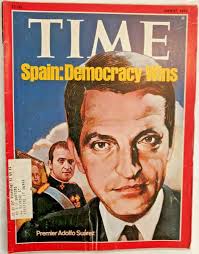
The dictator left his regime and its institutions ‘tied up and well tied up’. King Juan Carlos, Franco’s successor as head of state, used the dictator’s immense powers to transition to democracy in a pact forged between the reformist right and the non-violent left. In 2025, the 1978 constitution overtook the 1876-1923 constitution as the oldest and most stable in Spanish history.
Today Spain has a vibrant democracy, one of only 25 ‘full democracies’ in the ranking of 167 countries by the Economist Intelligence Unit (EIU), though its quality is perceived as declining and political corruption is a problem. A founding member of the eurozone, Spain is the world’s second most popular destination for international tourists, after France, and one of the world’s top 20 exporters of goods and of services.

It also has a bevy of multinationals that barely existed in 1975. The stock of Spain’s direct investment abroad, almost non-existent 50 years ago, is much higher than Italy’s in absolute and relative terms.
The unemployment rate (10.3%), however, has only been below 10% between 2005 and 2008. In education, more than half of 25-to-34 year-olds have tertiary education, above the OECD average. Women, who accounted for just under one-third of university enrolments in 1975, today account for close to two-thirds.

Society has undergone profound changes, telescoped into a relatively short period. Average life expectancy (84 years) is one of the world’s highest; the population is rapidly ageing. In 1975, 27% of the population was under the age of 15 and 10% over 65. Today, 13% is under 15 and 21% over 65.
As well as an ageing population, and the pressure this is exerting on the public pension and healthcare systems, the fertility rate has plummeted from 2.80 to 1.12, far short of the 2.10 at which existing population levels would be maintained. Deaths have substantially outnumbered births for the past 10 years.
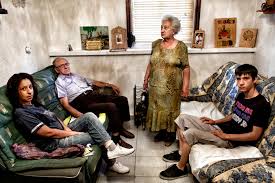
The ‘traditional’ nuclear family has changed significantly (the parents of more than half of new-borns today are not married), but the extended family is still the bedrock of society, much more than in northern Europe.
Almost 20% of the population is foreign-born (0.4% in 1975). But for the influx of immigrants over the last 30 years, Spain’s population would have long ago almost ceased to have grown. Immigrants are also a significant driver of economic growth.
Climate change is taking a heavy toll. In foreign policy, Spain, one of the most pro-EU countries, has taken a more forceful place on the world stage, while in defence it has promised to boost its very low spending.
See the full report, published by the Elcano Royal Institute, at https://www.realinstitutoelcano.org/en/work-document/fifty-years-after-franco-spains-profound-transformation-1975-2025/
 Bulletin of Advanced Spanish