
The Bulletin’s Americas Bureau Chief Clara Riveros puts the questions to Latin America expert and opinion pollster Eduardo A. Gamarra.
Do you expect Hispanic voters to cast their votes any differently this year as compared to previous elections?

According to a poll we published in December 2023[1], the majority of Hispanics continue to regard themselves as Democrats. When asked which party best represents their values, or whose policies they support, that’s how they answer – ‘the Democrats’.
The Democratic party’s problem is its leadership and representatives in Congress. Hispanics lack confidence in them, and in the institutions of government. When asked if they want President Biden to be the Democrat candidate in 2024, 45% say no.
So, all in all, our survey found no drift away from the Democrats’ values, but a lot of unease about the party’s leadership.
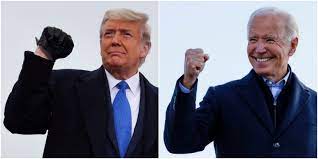
When Hispanic Republicans were asked the same questions, 57% said they didn’t want Trump to be the party’s candidate. In other words, both major parties’ likely presidential candidates are unpopular, although Trump’s score is worse than Biden’s. And when Hispanic voters are asked which of the two they would vote for, Biden comes out on top – though his support has fallen significantly. In 2020, almost 70% of Hispanics voted for Biden: now he is polling at 53% among that demographic. In the same period, support for Trump has crept up from 29% in 2020 to 33% now.
Voters were also asked if they have considered changing party in the past year. Almost 20% said they had. Of that 20%, 38% had thought about switching from Democrat to Republican.
Where a change in voting intentions becomes a real headache for the Democrats is in key states like Georgia, Arizona, Pennsylvania and Nevada – places where a swing of just 3 or 4% among Hispanic voters could affect the final result. That’s where Trump could win the election.
How would you describe the different response of Hispanic voters in Florida to Trump, on the one hand, and Governor DeSantis on the other?
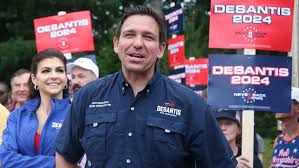
It’s an interesting question because, in November 2022, when DeSantis was re-elected Governor of Florida, he was extremely popular in the Hispanic community. He used his connection with Trump to boost his standing, harnessing Trump’s following here in Florida. DeSantis became seen as Trump’s likely successor, the most loyal trumpista of them all.
DeSantis rode that wave of popularity – until Trump entered the campaign. From that moment on, things did not go well for the Governor. DeSantis’ efforts to differentiate himself from the former president were ineffectual: Trump mocked and attacked him in typically disparaging terms, to which DeSantis could not reply in kind without alienating his potential supporters. Some radio stations here in Florida echoed the tone of Trump’s mockery of DeSantis: it’s quite interesting for us academics to observe how strident and unashamedly biased many commentators have become.
Trump’s popularity here in Florida has surprised us, especially in a district like Hialeah, just north of Miami airport, where the population is entirely Hispanic, and more than 90% Cuban. These people’s fascination with Trump is clear for all to see. My sociological explanation is that we Hispanics come from an authoritarian political culture where caudillos thrive – populist strongman-leaders with scant respect for the institutions of government. Many people admire them in Latin America, and you see this too with Hispanic voters and Trump: they see him as someone who can sort out their problems. They’re not concerned about his impact on democracy or the rule of law.

Incidentally, during the 2018 election campaign for the Florida governorship, when DeSantis was elected for the first time, the Democrats portrayed Trump as a caudillo, likening him to Fidel Castro, Chávez and Maduro. The Hispanic community was outraged at the comparison – it backfired badly for the Democrats.
Some recent studies, such as a January 2024 report in the Miami Herald, have shown that Hispanic districts in Florida, like Doral and Hialeah, have a very high per capita concentration of Obamacare patients (ie the health care system designed by the Obama administration). Ever since Trump ran for the presidency in 2016, he has been promising to close down Obamacare, a pledge he is still repeating during his current campaign. The Cuban, Venezuelan and Colombian users of Obamacare – who would not have access to medical services without it – are the very same voters who support Trump as he goes around promising to close it down. This kind of perverse behaviour is hard to explain other than through sociological means.
For Hispanic voters, what is the United States’ main problem, and its major threat?
Those were two open questions that we included in the recent opinion poll. The main problem, and the major worry for Hispanics, is the economy, despite the United States presently having the strongest economy in the world. This is a big plus point for the Biden administration: it has reduced inflation from 9% to 3.5%, unemployment is at its lowest level since 1969, and economic growth is moving up to 3.5%. And yet some people portray us as on the verge of becoming another Venezuela, wracked by hyperinflation.

The main threat is immigration and inadequate border control.
For Hispanics living in the US to be concerned about the economy and immigration puts them into alignment with the broad swathe of US public opinion. Yet it does produce irionies: for example, Trump himself boasted to a predominantly Hispanic audience in Hialeah that, if he wins the 2024 election, he will immediately put into effect a massive deportation plan targeting undocumented residents, raiding their homes and rounding them up. And this to a Hispanic audience, at least some of whom were bound not to have the requisite documents themselves.
A particular bugbear for Hispanic voters in Florida is the belief that imposing heavier sanctions against the Cuban and Venezuelan regimes may achieve something. The meagre results of the sanctions policy to date have made clear that such measures don’t work – the governments in those countries stay in power regardless. On this issue, many Hispanics feel in tune with Trump’s rhetoric, which, aside from exacerbating tensions and raising the spectre of military action, amounted to nothing when he was in office, and moved those countries not an inch closer to democratisation. Cuba has been subject to sanctions for 65 years without bringing about a change in regime, nor even any change in the regime’s modus operandi, but here in Florida people say: ‘sanctions aren’t working – impose more sanctions!’
Why do Hispanics in Florida care about immigration and border control?
It comes down to the old adage that the last man to board the ship pulls up the ladder, because the boat is full and there’s no room for more passengers. That neatly rounds up the view of those who have managed to get their documents, straighten out their situation, and become full citizens.

Those of us who have been here a while tend to think of ourselves as better and more able, in that we are here legally without having had to cross any frontiers, and are under no obligation to make life easier for any others coming from down below, especially those who are economic migrants rather than political refugees. A lot of badmouthing goes on around this issue, including claims about crime having risen because of immigration – demonstrably untrue, yet much touted in debates on this issue. Immigration feeds into populist rhetoric about closing the gate on those who could destroy the essence of US democracy and bring crime to our cities.
Eduardo A. Gamarra is a professor of political science in the Department of Politics and International Relations at Florida International University, where he also directed the Latin American and Caribbean Center (LACC) from 1994 to 2007. In February 2016 he was appointed founding director of the Hispanic Public Opinion Forum at the Stephen Green School of International and Public Affairs.
[1] The Annual Hispanic Public Opinion Survey drew on a random sample of 1,221 voters across the 22 US states with the greatest concentration of Hispanic citizens according to the US Census Bureau. The survey was conducted between 18 November and 3 December 2023 and has a margin of error of + 2.8%.
Translated by BAS editor Robin Wallis.
 Bulletin of Advanced Spanish