Avalada por una larga lista de premios como el Globo de Oro o el Óscar a la mejor película de habla no inglesa, Mar adentro es una de esas obras que no deja indiferente a la audiencia por sus grandes dosis de humanidad. En palabras del propio Amenábar, director de la película: “Se trata de un viaje, un viaje a la vida y a la muerte, un viaje a Galicia, al mar y al mundo interior de Ramón Sampedro”.
El estreno de Mar adentro hace ya dieciocho años reactivó el debate sobre la eutanasia para los que ya se habían olvidado de la muerte de Ramón Sampedro en 1998, e introdujo a aquellos que no conocían su trágica historia a un debate socio-político que parece haber sido legitimado por la aprobación de la Ley Orgánica sobre la eutanasia que entró en vigor en junio de 2021. La aprobación de la ley con 202 votos a favor, 141 en contra y dos abstenciones, y promovida por el gobierno de coalición, convirtió a España en el quinto país del mundo en regular la eutanasia.
El guión de la película está basado en la vida de Ramón Sampedro, marino y escritor gallego que se quedó tetrapléjico al tirarse de cabeza al agua en la playa de As Fumas, Galicia, en 1968, al chocar contra una roca, rompiéndose la séptima vértebra. El argumento se centra en la lucha de Ramón para terminar con su vida de una manera digna e incluye, como es de esperar, elementos y personajes ficticios para proteger la identidad de las personas que le ayudaron a conseguir su meta.
A los 55 años y tras haber pasado casi 30 postrado en una cama, Ramón ya había solicitado la eutanasia a los tribunales, siendo el primer ciudadano español en hacerlo. Es en este momento en el que Amenábar retoma la historia, recurriendo a numerosas escenas retrospectivas para ilustrar el conflicto personal de un Ramón Sampedro que había sido abandonado por las autoridades. Sin embargo, el apoyo de su entorno de amigos y familiares le llevó a aparecer en reportajes de televisión y otros medios, creando así un debate social y político sobre las implicaciones de vivir con minusvalías, además de cuestionar las leyes que prohibían la eutanasia en un país laico pero todavía con fuertes influencias de la Iglesia Católica.
La película se centra esencialmente en dos espacios, ambos significativos para Ramón. Su habitación en una humilde casa rural gallega es un espacio interior íntimo que representa su minusvalía y su frustración física, que contrasta con los espectaculares espacios abiertos que combinan mar y montaña, y que la cámara nos muestra a vista de pájaro. Estos espacios exteriores representan la memoria del pasado de Ramón antes del accidente y la liberación después su muerte.
La ventana de la habitación de Ramón se convierte así en un símbolo esencial en la película al representar la frontera entre su minusvalía y su mente liberada. Amenábar omite hacer excesiva referencia a las dificultades físicas que Ramón experimenta y se enfoca en las frustraciones producidas por su familia, amigos e incluso por los jueces, en aquellos momentos en los que sus deseos no pueden hacerse realidad.
Quizá una de las escenas más memorables del largometraje sea el momento en el que la imaginación de Ramón viaja hasta la mar sobrevolando valles y montañas cuando Gené, trabajadora social y amiga de Ramón, le invita a recordar su pasado previo al accidente como parte de su terapia. Sin embargo, el único camino hacia la redención pasa por la muerte y la eliminación del cuerpo en el que vive atrapado. Sin duda, este es el aspecto más controvertido de la película ya que el protagonista rechaza explorar estrategias que le lleven a aceptar su estado físico y extender su vida, y opta por buscar la manera de terminarla dignamente.
El Ramón real lo intentó todo y se le negó la eutanasia una y otra vez. Exhausto por las batallas legales decidió tomar las riendas y quitarse la vida, lo que logró el 12 de enero de 1998. La complejidad de la tarea involucró hasta un total de once personas, cada una de las cuales tenía una labor concreta. Todas las tareas eran perfectamente legales por separado, pero en conjunto facilitaron la eutanasia de Ramón. Cuando los forenses encontraron rastros de cianuro potásico en su cuerpo, la policía detuvo a Ramona Maneiro, Rosa en la película, pero el meticuloso plan evitó que las pruebas la incriminaran.
Lo que no reflejó el excepcional filme de Amenábar fue la posterior campaña de firmas recogidas durante el mismo año 1998 y que fueron entregadas en el juzgado de Ribeira, en las que gente de toda España aseguraba haber ayudado a morir a Ramón Sampedro. El secretario de la organización Derecho a Morir Dignamente en Galicia, calificó las 14.000 firmas recogidas como un “legado histórico” y sin duda contribuyeron a fomentar el debate social a nivel nacional. A pesar de esto, siete años después, una vez el delito ya había prescrito, fue la misma Ramona la que admitió haber suministrado el cianuro y haber realizado la grabación en la que Ramón ingirió el veneno.
For many years now the first foreign language of China has been English. Messages on the metro as well as road signs have an accompanying English translation. I have an app on my Chinese phone that allows me to photograph a text in Chinese and have it translated within seconds into English. But, as a result of the very warm overtures made recently by the Chinese government to various Latin American countries, Spanish, as China’s second foreign language, is rapidly catching up.
Though the original connection between China and Latin America was via the Maritime Silk Route, initiated by Emperor Wan Li of the Ming Dynasty (1572–1620), it was only in the 21st century that it really took off. In just five years during the period 2013–2018 President Xi Jinping visited Latin American and Caribbean countries no less than thirteen times. China is now the main trading partner of Brazil, Chile, Peru, and Uruguay, and the second-largest trading partner of several other countries in Latin America. It has free trade agreements with Chile, Costa Rica, Peru and Ecuador (the latter signed just recently on 11 May 2023).[1]
Between 2005 and 2020, Chinese banks dished out more than $137 billion in loans to the region. Most of the countries of Latin America have now joined China’s Belt and Road Initiative (BRI), a global strategy centred on developing infrastructure projects around the world. An example of this scheme is the impressive “Kise” hydropower station being built jointly by China and Argentina.
According to China’s General Administration of Customs, the trade volume between China and Latin America and the Caribbean exceeded $450 billion in 2021, and increased by 12.5% in 2022. China’s direct investment in Mexico alone has amounted to almost US$1bn in the last four years.[2] The Puerto de Chancay project in Peru, with an investment of US$4bn, is funded by Chinese companies; no surprise, therefore, that Peru will be hosting the Summit of the Asia-Pacific Economic Cooperation (APEC) Forum in 2024.[3] And China has recently signed a massive trade agreement with Brazil, which includes the inaugural introduction of China’s mature wind turbine equipment in Latin America; the LDB Wind Power Expansion Project is helping the two countries to work together in the field of green and low-carbon economic construction.[4] As a result of this project China and Brazil have decided to ditch the US dollar as an intermediary currency.[5]
This growing rapport between China and Latin America means that Spanish is more trendy now in China than it ever was. Lu Jingsheng, the Chinese government’s National Coordinator for Spanish, has pointed out that in the last fifteen years, the demand for Spanish language education in China has “increased 30 fold”.[6] It was given a further big boost in 2018 when China’s Ministry of Education included Spanish language instruction as an optional foreign language in high school, alongside French and German.
Chinese university students nowadays are also finding that knowing Spanish is a big plus in the job market. Yang Jiaming, a recent graduate from the Spanish program at Central China Normal University in Wuhan, Hubei Province, was offered a job straight out of college because the company he applied to “has business in Latin America”.[7]
This rapprochement between China and Latin America has a cultural dimension as well. In November 2014 the National Museum of China in Beijing organised one of the country’s biggest ever exhibitions on Latin America’s cultural history entitled “Mayas: The Language of Beauty” (“Mayas: El lenguaje de la belleza)”. The exhibition gave rise to new questions about the possible links between the Ancient Chinese Shu culture and the Mayas; the two cultures, after all, have a number of characteristics in common – including cultural icons and the calendar – and they may be historically linked.[8]
I am currently teaching two undergraduate courses at Hunan Normal University in Changsha, one on Latin American literature and the other on Latin American culture. I am impressed by the linguistic level of the students, as well as their enthusiasm and interest in the course materials. My first assumption was that they were studying Spanish in addition to English, but this was proved wrong when I found that – for their presentation assignments summarising a work of secondary criticism – they wanted to summarise an article in Spanish rather than English. Indeed, the departmental policy is to give all lectures and seminars in Spanish, given that it is their second language and that their linguistic proficiency is excellent.
I decided to tweak the course content a little and draw out the Chinese connection, e.g. by comparing maps of the Chinese seas with what Christopher Columbus thought he had discovered when he was actually in the Caribbean, by discussing the hypothesis of the close connections between the Ancient Shu culture and the Mayas, by focussing on the Philippines as well as Cuba and Puerto Rico during the analysis of the Spanish-American War of 1898, and by including Latin American novelists with Chinese roots in my overview of the modern Latin American novel, eg Siu Kam Wen and Carlos Francisco Changmarín. The success – or lack thereof – of this more inclusive strategy will be borne out by the essays that the students submit at the end of this term!
Spain is suffering a prolonged drought. Depleted reservoirs have sparked water rationing in parts of the country. The wildfire season started months earlier than usual, destroying crops or deterring farmers from planting them. Olive oil production –Spain accounts for 45% of the world’s supply– could be worse than halved this year. Food price inflation – 13% in April – could rise still further.
April was abnormally hot. The state meteorological agency Aemet said temperatures were between 7ºC and 11ºC above the average, making that month the hottest since records began in 1961. The temperature at one point in Andalusia reached an unprecedented 38.8ºC in Córdoba, underscoring Spain’s vulnerability to climate change. The temperature cooled considerably in May and there was torrential rain in some parts of the country. Yet at the end of the month reservoirs remained at only 47.5% of capacity, well below the five-year average of 61.6% for that time of the year.
Spain’s dramatic situation came as the World Meteorological Organisation predicted that annual average temperatures will most probably break records again in the next five years.
So desperate are people for rain that parishioners in the Andalusian city of Jaén held a procession this month, bearing aloft a statute of Christ known as El Abuelo and calling for the first time since 1949 for the Lord to open the heavens and bring rain.
The Socialist-led coalition government announced an unprecedented €2.2 billion package of measures, including increasing the availability of water by building desalination plants and doubling the proportion of water reused in urban areas.
The government also announced legislation that will ban outdoor work when the meteorological office issues high-temperature alerts. This followed the death of a Madrid street sweeper during last July’s heatwave.
Drought is not a new phenomenon in Spain, but this one is something extraordinary. Spain has not had ‘normal’ levels of rain for three years. Just one-quarter of the normal amount of rain fell in the first three weeks of April. In early May, 27% of Spanish territory was in either the drought ‘emergency’ or ‘alert’ category, creating a tinderbox. Blazes ravaged 54,000 hectares of land in the first four months of the year, three times the amount in the same period of 2022, according to the European Forest Fire Information System (EFFIS).
Spain’s last severe drought was in 1993-96 when around one-quarter of the population was subject to water restrictions. Some towns in Andalusia had supplies cut off for more than 15 hours a day. In 2008 a prolonged drought forced the authorities to supply water to Barcelona via boat to guarantee domestic use. Catalonia is again one of the most affected regions. Restrictions in many areas have been in force since March, including limiting showers to five minutes, banning the cleaning of cars and the watering of gardens. At the town of L’Espluga de Francolí (population 3,600), water supplies are turned off for nine hours during the night. The Sau reservoir, a key drinking water source, is so low that a medieval village, flooded when the reservoir was created in the 1960s, has re-emerged.
Rain is very unevenly distributed in Spain. The areas with the highest water abundance per surface unit are in the north and Galicia (known as the ‘wet’ Spain), much more sparsely populated than in the south, in particular, with values higher than 700 mm/year. A popular saying among Galician farmers –la lluvia es arte (‘rain is art’)– was once turned into a tourism slogan.
In the rest of the country (the ‘dry’ Spain), water availability does not exceed 250 mm/year. The lowest water availability in Spain occurs in the Segura basin, where it does not reach 50 mm/year (around 20 times less than in Galicia and five times lower than the national average).
In the late 1970s, the Spanish government turned Murcia, Alicante and Almería in the south-east –an area where water is minimal and none of the major rivers flow– into ‘Europe’s market garden’ by transferring water from the Tagus through the 300km Tajo-Segura Trasvase, a system of pipelines and an aqueduct. This feat of hydraulic engineering was originally planned during the Second Republic in 1931, built during the Franco dictatorship and put into service after the dictator’s death.
In a country with 17 regional governments of different political colours, as of the 1978 Constitution, water management is a sensitive issue that crosses boundaries and inflames sentiments. One of the major providers of water for the trasvase is the vast reservoir at Buendía in the region of Castilla-La Mancha, where I have long had a house. Farmers there feel aggrieved when they are restricted in using ‘their’ water because it is needed elsewhere. The trasvase has long been embroiled in disputes over how much water should or should not be transferred through it.
Farmers in the south-east produce around 70% of Spain’s vegetables and a quarter of its fruit exports. They are up in arms over the plans of the Socialist-led minority national government to raise the minimum level of the Tagus at source, as this will result in less excess water being transferred. The level needs to be increased in order to remain in line with EU regulations on river water levels, following court rulings. Ecologists say the Tagus is at risk from overexploitation by agriculture and climate change. The Government plans to increase the river’s flow from 6 cubic metres per second to 8.6 cubic metres by 2027.
Without sufficient water, 100,000 jobs are at risk, according to the farming association SCRATS. The father of the novelist Antonio Muñoz Molina, who had a market garden in Úbeda, Andalusia, used to greet ecstatically the year’s first rain with the following words: Es lo mismo que si estuvieran cayendo billetes verdes (‘It’s as if it were raining green banknotes’, in reference to the 1,000 peseta notes at the time).
The politics of the trasvase are complicated. The Socialists control the region of Castilla-La Mancha and back the national government; Valencia, which Alicante forms part of, opposes the plan, despite being also governed by the Socialists until a new government is formed, as does Andalusia, where Almería is located, and Murcia, both of them regions run by the conservative Popular Party (PP).
Farmland surrounding the Doñana national park, Europe’s most important wetland and a UNESCO World Heritage site, has been particularly prone to illegal wells. The authorities have long turned a blind eye. Virginijus Sinkevičius, the EU’s environmental chief, attacked a plan last month by the government of Andalusia to increase the amount of irrigable land around Doñana by 800 hectares. This would be tantamount to an amnesty for the strawberry farmers who have already sunk illegal wells there. He said the bloc would use ‘all the means available’ to make sure Spain complied with a 2021 European Court of Justice ruling condemning it for breaking EU rules on excessive water extraction in Doñana.
Farmers switched some years ago from olives to strawberries and other berries, which consume more water. Close to half of Spain’s aquifers are already in poor condition. Before 1985, groundwater was treated as private property and thus not subject to any regulations.
In early May, in another part of Andalusia near the city of Malaga, the Civil Guard arrested 26 people in raids on illegal wells. The Guard’s environmental crimes division identified 250 infractions by fruit farmers. Spain is Europe’s biggest producer of tropical fruit.
Prime Minister Pedro Sánchez called the drought ‘one of the central political and territorial debates of our country over the coming years’. Resolving the water problem will require a national political consensus, something that is woefully lacking in so many other areas.
Adapted from the version first published by the Elcano Royal Institute on 23 May.
La selva del Darién, situada entre Colombia y Panamá, fue definida en un documental de BBC como la región “más intransitable y peligrosa de América Latina”. Esta vasta zona se ha convertido en el paso de cientos de latinoamericanos (venezolanos, ecuatorianos, colombianos, peruanos, cubanos, haitianos, etc.,), pero también de personas provenientes de destinos remotos (Bangladesh, Somalia, Yemen, China, India, Afganistán, entre otros países). El objetivo de todos es llegar a Estados Unidos, como sea y a cualquier precio. Es la apuesta al todo o nada. Se juegan literalmente la vida en esa carrera que para algunos termina de manera trágica.
Del Mediterráneo a la jungla
Si en Europa las imágenes de cadáveres flotando en el Mediterráneo estremecen, de este lado del mundo, los registros no son menos desgarradores. No solo hay adultos poniendo en riesgo sus vidas, también exponen las de sus hijos (niños y bebés) a quienes tratan de distraer y tranquilizar prometiéndoles un viaje lleno de aventuras y emociones.
Décadas atrás, la emigración era principalmente de hombres adultos que buscaban entrar por la frontera sur de Estados Unidos. Esa tendencia se ha modificado drásticamente. Ahora no solo se ha diversificado la procedencia de los emigrantes (cada vez hay más provenientes de China, Ucrania, Haití, Rusia y otros destinos distantes de América Latina), sino que también viajan familias completas y muchos niños viajan solos constituyendo una proporción cada vez mayor en términos de inmigración irregular.
Cientos de hombres y de mujeres se lanzan en esa aventura selvática y desesperada por el Darién. Ellos se aferran a su fe y a sus creencias religiosas, invocan a Dios, sueñan con una vida mejor, desean tocar el paraíso, pisar la tierra prometida, o sea, Estados Unidos. Y para hacerlo han optado por las vías irregulares, están expuestos a mafias y a criminales, a las inclemencias de la naturaleza e incluso a ser devorados por animales salvajes en medio de la jungla. Eso es “Darién, el infierno de los migrantes”, como ilustró recientemente el excelente trabajo realizado por un equipo de periodistas chilenos, quienes hicieron ese trayecto que inicia en Medellín. Mediante su reportaje le fueron mostrando al mundo la crudeza de la inmigración ilegal, aunque también dejaron constancia de esa faceta humana y dolorosa, la de los rostros cansados, agobiados y esperanzados de esas personas de carne y hueso, con nombres y apellidos, que no son solo estadísticas y números.
Si los emigrantes logran cruzar la selva del Darién y llegar a Panamá, continuarán ese tránsito infernal durante varias semanas o meses por Centroamérica. La cantidad de tiempo invertido en el viaje dependerá de cuánto dinero llevan consigo y de cuánto puedan llegar a pagar. Después cruzarán México que viene a ser lo que es Turquía o Marruecos para Europa, es decir, el “Estado gendarme” encargado de contener la invasión, la avalancha, esas oleadas humanas tratando de llegar y de entrar a Estados Unidos de cualquier forma.
Los vídeos que circularon hace pocas semanas, dando cuenta del incendio en un centro de detención migratorio de Ciudad Juárez, en México, y que dejó como saldo 40 inmigrantes calcinados y otras decenas de heridos, ante la indiferencia de los guardias, expuso de manera muy nítida la deshumanización de la inmigración ilegal. La mayoría de las víctimas provenían de Guatemala, Venezuela, Honduras y El Salvador.
A menudo se señala a Europa y a Estados Unidos por su política restrictiva en materia migratoria, se cuestiona la falta de empatía y de compasión con los miles de emigrantes que tuvieron que dejar su tierra, su casa y salir con lo puesto huyendo de la violencia, de la miseria o de ambas. Pero, más allá de las consideraciones, juicios de valor o convicciones humanitarias a este respecto, tampoco hay que perder de vista que una política migratoria de puertas abiertas es imposible, no es realista y no es funcional.
¿Por qué desmerecer u olvidar que el primer responsable en las crisis migratorias es el país de origen del emigrante? Muchas veces los países de origen son cárceles a cielo abierto: mantienen regímenes de corte autocrático y gobiernos corruptos cuyos líderes gobiernan para beneficio propio y se han dedicado al saqueo de la riqueza y al sometimiento de sus pueblos, mientras que los ciudadanos pasan hambre, se hunden en la miseria y maquinan las formas posibles de darse a la fuga.
Las cifras y las medidas para contener y enfrentar la inmigración irregular
En 2022, hubo 350 personas fallecidas y decenas de desaparecidos en la selva del Darién. Eran emigrantes. Solo en los tres primeros meses de 2023, unos 87.390 migrantes irregulares cruzaron el Darién, la cifra es siete veces mayor a la del primer trimestre de 2022. Se calcula que este año unas 400.000 personas cruzarán esta selva, eso significa casi el doble de los más de 248.000 emigrantes que lo hicieron en 2022.
El creciente flujo migratorio hacia Estados Unidos, por esta vía, preocupa enormemente a Washington. Funcionarios estadounidenses han mantenido reuniones a lo largo del año con los gobiernos de los dos países implicados, Panamá y Colombia, para tratar la alarmante crisis migratoria que exhibe América Latina. Entre las acciones y compromisos alcanzados por las partes, se acordó “iniciar diálogos entre autoridades migratorias de Panamá y Colombia; dialogar con los países de origen de los migrantes, y fortalecer los intercambios de información judicial y labores de inteligencia”.
Adicionalmente, los gobiernos de España y Canadá trabajarán mancomunadamente con Estados Unidos para facilitar que los solicitantes de asilo latinoamericanos puedan postularse —para ir a estos países— en centros de procesamiento de migrantes establecidos en sus países de origen. En ese sentido, se establecerán centros de procesamiento de migrantes, tanto en Colombia como en Guatemala, además de la apertura de otros 100 centros en diferentes países para que los inmigrantes tramiten permisos migratorios y puedan dirigirse hacia Estados Unidos, Canadá y España.
Los países mencionados precisan trabajadores, mano de obra, en este periodo de recuperación económica tras la pandemia y, en principio, esa situación podría coadyuvar a la flexibilización para la recepción de inmigrantes procedentes de América Latina. El hecho de que Canadá y España apoyen al gobierno Biden en esta iniciativa podría redundar, en alguna medida, en aliviar la presión migratoria en la frontera sur de Estados Unidos.
Por su parte, el gobierno colombiano ha insistido a sus nacionales en que el levantamiento del Título 42 no implica la apertura de fronteras de Estados Unidos, la exención de visados, la flexibilización de los procesos de regularización o nuevas medidas de reunificación familiar. Destaca que todo intento de emigrar irregularmente hacia Estados Unidos constituye ya no solo riesgos para la vida, sino procesamientos y deportaciones a los países de origen. La expulsión viene acompañada de la prohibición de entrada a Estados Unidos por cinco años y/o procesos penales si se es reincidente.
Más allá de las advertencias del gobierno colombiano, las cifras muestran el deseo de muchos colombianos de dejar su país inmerso en la inestabilidad propiciada por el nuevo gobierno. “El número de colombianos que cruzan la frontera ha alcanzado en los últimos seis meses cifras que nunca antes se habían visto, superando en ocasiones a los venezolanos. Además, los colombianos han desplazado a los argentinos en la compra de propiedades de bienes raíces (‘real estate’) en los últimos cinco meses. Esto demuestra que algo está pasando en Colombia”, puntualizó Tomás Regalado, exalcalde de Miami, durante un foro del Interamerican Institute for Democracy celebrado hace pocos días en Miami.
Tras la sustitución del Título 42 —activado en marzo de 2020 como medida sanitaria temporal para contener la propagación de la pandemia—, por el restablecimiento del Título 8 —que es el que históricamente gestiona el tratamiento de inmigrantes y autoriza a la Oficina de Aduanas y Protección Fronteriza (U.S. Customs and Border Protection, CBP por sus siglas en inglés) a expulsar a cualquier persona que intente ingresar al país en condición de irregularidad—, Estados Unidos buscar endurecer las medidas contra la inmigración ilegal, a la vez que facilitará la apertura de canales para la inmigración ordenada y regular.
A esas medidas del gobierno federal se suman las disposiciones propias de los estados. De hecho, hay algunos estados que han promovido normativas para frenar y sancionar severamente la inmigración ilegal, el más reciente es el ‘Estado del Sol’. No hay que perder de vista que, en Florida, entrará en vigor el próximo 1 de julio, la polémica ley que criminaliza la inmigración ilegal. Una de las medidas más cuestionadas de la ley es la relativa a transportar a un inmigrante ilegalhacia este estado y que puede acarrear sanciones penales (condena y prisión por 5 años) y económicas (multa de 5.000 dólares).
La normativa de Florida busca sentar precedentes, desestimular el tráfico de personas y, en cierto modo, aterrorizar a los inmigrantes ilegales que ya contemplan con preocupación e incertidumbre la necesidad de moverse a otros estados habida cuenta de la ley que limitará su libre movimiento, el acceso al empleo, a los servicios médicos y que incentivará la denuncia y la delación de su condición y/o estatus migratorio. No obstante, en los días siguientes a la promulgación de la nueva ley de inmigración, el senador republicano Blaise Ingoglia matizó el alcance de la normativa. Dijo, entre otras cosas, que los hospitales tienen que preguntar a los pacientes por el estatus migratorio para calcular la cantidad de recursos que se gastan en indocumentados en el Medicaid, pero que ello no significa que los hospitales entregarán información a las autoridades migratorias.
El proyecto de ley fue respaldado y la ley firmada por el gobernador del estado Ron DeSantis quien mantiene un sólido respaldo a su gestión. Algunos sugieren que DeSantis ha experimentado un proceso de radicalización en sus posiciones de cara a las primarias republicanas. El veterano de guerra, egresado de Harvard y Yale, de ascendencia italiana, deberá enfrentar y vencer al carismático expresidente Donald Trump de 76 años para hacerse con la candidatura republicana y participar en la próxima elección presidencial.
De momento, la opción preferida de los electores republicanos sigue siendo Trump, quien aventaja en las encuestas a DeSantis por más de 30 puntos. Trump a menudo es recordado por sus posiciones inflexibles y comentarios despectivos sobre los inmigrantes ilegales e indocumentados. El gobernador de Florida es una joven figura política en ascenso. A sus 44 años, el político conservador defiende que está cumpliendo todo aquello que prometió en campaña.
Trump, por su parte, ha afirmado que si gana las elecciones en 2024 buscará que le sea negada la ciudadanía automática a los hijos de inmigrantes indocumentados nacidos en tierra americana y que ordenaría a las agencias federales que exijan que al menos uno de los padres sea ciudadano o residente permanente legal en Estados Unidos.
La inmigración ilegal, sin duda, será uno de los temas que marque la agenda y la exposición pública y mediática de cara a las primarias y, desde luego, la próxima contienda presidencial en Estados Unidos.
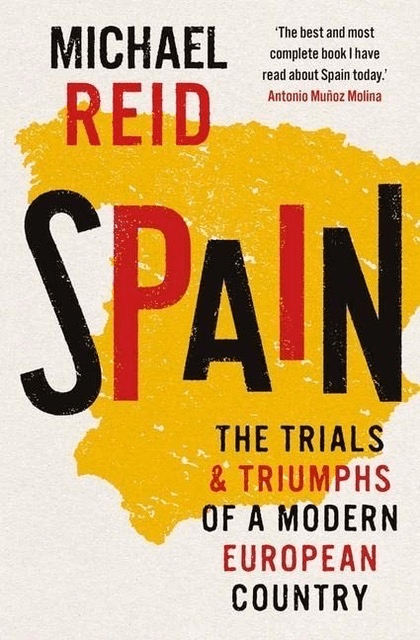
Spain’s transition to democracy after dictator Franco’s death in 1975 and the country’s profound political, economic, social and demographic transformation are widely regarded as a model of their kind. However, the country today does not function as it should or could, argues Michael Reid cogently in his recent book, Spain: The Trials and Triumphs of a Modern European Country (Yale University Press).
As befits a long-time writer and editor at The Economist, including a recent stint as the Spain correspondent (2016-21) and for many more years author of the Bello column on Latin America, the book is tightly and elegantly written, insightful, wide-ranging, and with a deep sense of history. Reid first came to Spain in 1971 as an Oxford University student and either directly or from afar has been a close observer of the country ever since.
In some aspects, such as same-sex marriage, abortion, euthanasia and, most recently, menstrual leave, Spain has been in the vanguard. In other areas the country has stood still for the past decade, hampered by deep political polarisation and fragmentation. As Reid points out, Spain is not alone among democracies (the UK is a prime case) in suffering from ‘hubris, austerity, populism, polarisation, poor leadership and the struggle to adapt to a rapidly changing world of globalisation and technological change’. Spain’s ills, he says, are not ‘principally due to any original sin surrounding the birth of its democracy’ and it is not ‘burdened by an atavistic exceptionalism nor by Franco’s ghost’.
Spain’s unravelling can be dated to 2008 (some put it further back) with the bursting of a massive property bubble, followed by a major banking crisis, years of recession, a new mould of politics, as of 2015, with the emergence of disruptive parties on the hard right (VOX) and hard left (Unidas Podemos) which eroded the essentially two-party system of the Popular Party and the Socialists of the previous 33 years, and the unconstitutional referendum on Catalan independence in 2017.
It used to be said ad nauseam, particularly by liberals during the Franco regime (1939-75), that the answer to Spain’s ills lay in José Ortega y Gasset’s famous dictum of 1910: ‘Spain is the problem, Europe is the solution’. But this is no longer so: Spain joined the EEC in 1986, which anchored democracy, and has done very well from membership, notably in the field of funds that have transformed the infrastructure.
The solution to today’s ills lies squarely with a political class that is sadly far more polarised than society as a whole (the admirable consensus spirit of the transition years is long gone). The deep partisan divide prevents even minimum agreements on issues for the good of the country, such as education (eight reforms in 40 years and none of them based on consensus) and likewise on the pay-as-you-go pensions system. Spain needs ongoing reform and not a tearing up of the 1978 Constitution, which in 2025 will be the oldest in Spain’s history, surpassing the one between 1876 and 1923.
Two of the book’s 10 chapters are devoted to Catalonia. One charts how the illegal referendum came about in 2017 and the other looks at the region’s history and its false claims to statehood. Reid is good at contextualising. For example, he reminds us that Spain’s constitutional protection of the nation’s territorial integrity is the norm in continental Europe (the US, also, does not allow secession), while Article 155 of the constitution activated by Mariano Rajoy, the Popular Party Prime Minister at the time of the referendum, to suspend Catalan autonomy and impose direct rule is similar to Article 37 of Germany’s Basic Law.
The book has some telling personal anecdotes. When covering Catalonia’s independence movement, Reid found it hard to keep a straight face when hearing officials from the regional government ‘solemnly compare Catalonia with war-ravaged Kosovo or Lithuania as it emerged from Soviet totalitarianism’. Nevertheless, he recognises that for several centuries Catalonia was treated in ‘heavy-handed and oppressive ways’ by successive governments, including the excessively violent police response to those who voted in the illegal referendum. ‘The rest of Spain needs to accept that Catalanism is a valid sentiment, and not inherently subversive’. The pardons for the jailed secessionists were necessary.
The Catalan government’s control over education (subjects are predominantly taught in Catalan) fosters an atmosphere sympathetic to secession, as does the biased coverage of the nationalist cause by TV3, a public television channel in Catalan. Catalonia, with its own language, has a good claim, however, to be a cultural nation, but as Reid points out the world has some 6,000 languages but only around 200 nation-states.
A truly federal system in Spain, not the re-centralisation sought by VOX, by clearly demarking powers and rules for resolving disputes would go a long way toward ending the permanent tug-of-war over powers between some regions and the national government. For this to happen, the Senate, a largely purposeless and toothless body and a retirement home for midlevel politicians, needs to be turned into a chamber representing the regions.
Another toothless body that needs to be reformed, and which Reid does not mention, is the Tribunal de Cuentas, the body responsible for auditing public sector accounts and scrutinising those of political parties. Its 12 members are appointed by parliament with a majority of 3/5 for nine years, effectively enabling politicians to colonise it. Given that a lot of Spain’s corruption is related in one way or another to the financing of political parties, a much more effective, proactive and independent tribunal would go some way toward mitigating this problem.
The tribunal’s reports on parties’ financial statements are published with considerable delays of up to five years, which makes it difficult for the judicial system to conduct any monitoring since most infractions of the regulations discovered are by then prescribed under the statute of limitations (five years for very serious offences, three for serious and two for minor ones). The report covering 2017 was published in February 2022.
Spain has far too many politicians. Estimates puts the number at between 300,000 and 400,000 based on the four levels of government (unique in the EU): central, regional, municipal and the provincial diputaciones. Up to 20,000 public service jobs are discretionary political appointments who can be hired or got rid of at the whim of political masters. Spain is one of the very few OECD countries where all or a high proportion of positions change systematically in the top two echelons of senior civil servants (D1 and D2 levels) after the election of a new government.
More internal democracy in political parties, something accentuated by the ‘closed’ as opposed to the ‘open’ list electoral system in which voters can only choose a party as a whole rather than a particular candidate (political leaders decide where to place candidates on the list) would reduce the disconnect between the political class and the public. The higher up a person is on the list, the better the chances of being elected. Closed party lists give excessive power to a party’s apparatus at the expense of accountability, stifle independent and minority opinion within the party’s ranks and tend to make MPs sycophantic. As Alfonso Guerra, a former Socialist Deputy Prime Minister (1982-91) who kept an iron grip on the party, said, quoting the Mexican labour leader Fidel Velázquez: ‘Move and you’re out of the photograph’.
Reid sees the plight of young adults as perhaps the biggest problem facing the country. The intergenerational gap is particularly acute in Spain. Unemployment among those aged 15 to 24 in the dysfunctional labour market is still stubbornly high at close to 30% (it peaked at 57% in 2013) and without substantial family support getting on the property ladder, in a country where most people are owner-occupiers, is a largely unfulfilled dream for many. But for the thankfully still strong Spanish family network, the bedrock of society, the patience of these people might already have snapped.
Older generations, in comparison, are relatively well looked after by the welfare state. The state pension system, however, looks unsustainable in its current form. Life expectancy is one of the highest in the world, pensions are relatively generous (well above the OECD average based on the percentage of average earnings). The baby boom happened later in Spain (between the late 1950s and the late 1970s) and will swell the number of pensioners. It remains to be seen whether the reforms announced this month will make the system more sustainable.
Reid’s book deserves to last as long as his favourite tree in Madrid’s Retiro park (one of the book’s dedicatees): a Mexican conifer (ahuehuete).
This article is an abridged version of the one published on 28 March 2023 by the Elcano Royal Institute.