

By Clorrie Yeomans, Corporate Affairs Manager at Canning House, the UK’s leading forum for Latin America and Iberia.
As global AI investment is projected to reach $200 billion in 2025[1], the technology continues to reshape industries, economies, healthcare, and governance worldwide. Just days before President Trump’s inauguration, as fears of protectionist tariffs loomed, Amazon Web Services (AWS) announced plans to establish data centers in Mexico, committing $5 billion over the next 15 years[2].

Building on its pioneering role as the first Latin American country to publish a National AI Strategy in 2018, Mexico now aims to reclaim its position as a regional tech leader under its first female president and scientist, Claudia Sheinbaum. Her administration seeks to seize opportunities for growth, innovation, and job creation in the new AI-driven global economy. But can President Sheinbaum turn Mexico into a technology powerhouse amidst geopolitical and economic uncertainties?
Mexico’s AI Governance: From Innovation to Stagnation
Once a regional pioneer in AI governance, Mexico has struggled with political shifts and lack of continuity. In 2018, Mexico made its mark as one of the first ten countries in the world—and the first in Latin America—to publish a national AI strategy, joining tech leaders such as the USA, China, and the UK[3]. The same year, under President Enrique Peña Nieto, Mexico passed the Financial Technology (FinTech) Institutions Law, the first of its kind in Latin America. However, the election of President Andrés Manuel López Obrador (AMLO) later that year marked a shift in focus. AI governance was deprioritised in favour of welfare programmes, such as increasing internet access in rural areas through the Internet Para Todos initiative.
Meanwhile, Mexico’s policy frameworks failed to keep pace with innovation. The burgeoning FinTech sector has called for modernising the 2018 FinTech Law. As of August 2022, just 36 out of 650 fintech companies were authorised to operate under the legislation[4].
In the absence of a centralised federal commitment to advancing AI policy, the National Alliance on Artificial Intelligence (ANIA)[5] emerged as a key driver for collaboration, policy dialogues, and international exchanges. ANIA, an independent and non-governmental body, unites diverse stakeholders from big tech firms, SMEs, local governments, and academia to raise public awareness of AI and advocate for the growth of Mexico’s AI ecosystem with responsible governance and ethical safeguards.

Since Mexico launched its AI strategy in 2018, other Latin American countries have overtaken it, with Brazil, Chile, and Uruguay introducing their own AI frameworks in 2021, and Argentina and Costa Rica following in 2023 and 2024, respectively. Brazil, in particular, has closed the gap and now ranks 36th in the Oxford Insights 2024 Government AI Readiness Index, leaving Mexico behind at 71st[6].
An area where Latin America’s largest economy and most populous country, Brazil, has excelled is FinTech. The Covid-19 pandemic accelerated Brazil’s FinTech boom, with a surge in demand for digital financial services for its large unbanked population. Brazilian firms such as Nubank, the world’s largest digital bank, have since left a transformative footprint on the global FinTech industry. As of 2024, Brazil hosts the largest fintech ecosystem in Latin America, with 24% of the region’s total fintech companies, compared to Mexico’s 20%[7]. So, where does that leave Mexico today?
The Need for Long-Term AI Policy Implementation
The story of Mexico, Latin America’s tech pioneer, highlights the importance of creating not only AI legislation but also a long-term plan for its continual implementation and modernisation across electoral cycles and technological breakthroughs.
A Gateway to Silicon Valley? Mexico’s Tech Hub Potential

Despite stagnation in AI governance, Mexico’s potential to sell itself as a global technology hub remains strong. A key pillar of any tech hub his human capital. Latin America’s young, tech-savvy population, combined with a culture of creative problem-solving, positions the region as a hotbed for innovation—and Mexico is no exception. The country boasts a large talent pool, with over 130,000 software engineering graduates per year[8]. Universities such as UNAM (National Autonomous University of Mexico), ranked as one of Latin America’s best for computer science, further bolster Mexico’s tech credentials.
Mexico’s geographic proximity and logistical integration with the US economy further enhances its appeal. Over the past decade, rising geopolitical tensions with China have pushed US companies to relocate their supply chains closer to home. Thanks to its strategic position as a bridge between North and South America, and its preferential access to the US market through the US-Mexico-Canada Agreement (USMCA), Mexico has seen a surge in Foreign Direct Investment (FDI) from US, but also Chinese, firms seeking to bypass tariffs.
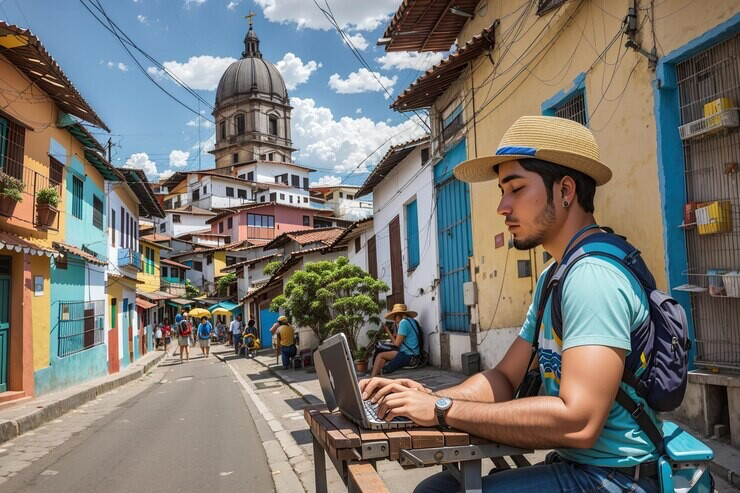
Cities such as Guadalajara, Mexico City, and Monterrey have emerged as key tech hubs. Mexico’s cost-effective labour, skilled workforce, and expertise in enterprise software development, cybersecurity, and FinTech make it an attractive destination for outsourcing and nearshoring.
The expansion of big tech in Mexico has catalysed a parallel start-up ecosystem, giving rise to several unicorns, such as used car marketplace, Kavak and cryptocurrency exchange, Bitso. In addition to homegrown firms, Mexico has become a launchpad for Latin American unicorns seeking international expansion, including digital banks Nubank from Brazil and Ualá from Argentina, Colombian Deliveroo-style app Rappi, and the Latin American eBay equivalent Mercado Libre from Argentina.
The Scientist President: Sheinbaum’s Plan to Put Mexico back on the AI Map
Mexico’s first female president and climate scientist, Claudia Sheinbaum, has vowed to place science and technology back at the forefront of Mexico’s development agenda. Upon assuming office in October 2024, Sheinbaum announced the creation of a Ministry for Science, Technology, and Innovation[9], headed by evolutionary biologist Rosaura Ruiz Gutierrez, signalling a clear commitment to advancing Mexico’s technological capabilities.

In January 2025, President Sheinbaum unveiled Plan México[10], an ambitious strategy to position Mexico among the world’s top 10 economies by 2030. The plan aims to attract $100 billion in Foreign Direct Investment (FDI) annually by 2030 and create 1.5 million new jobs in critical sectors such as technology, manufacturing, and energy. A major part of this strategy involves tapping into Mexico’s nearshoring potential by creating 10 industrial corridors, including a semiconductor production hub in Baja California[11].
To achieve these goals, Mexico will need to make significant investments in both physical infrastructure—such as roads and ports—and digital infrastructure. Strengthening Mexico’s AI and tech ecosystem will be key to long-term growth and will require a concerted effort to modernise governance and increase public sector efficiency. As part of this push, Sheinbaum also announced the formation of the Agency for Digital Transformation in January 2025[12], aimed at digitising public services and modernising state bureaucracy. This initiative underscores the crucial role that digital governance will play if Sheinbaum is to pull off her ambitious industrial strategy.
Rewiring Ties with the White House: Can Trump’s Tariffs Short-Circuit Mexico’s AI Ambitions?
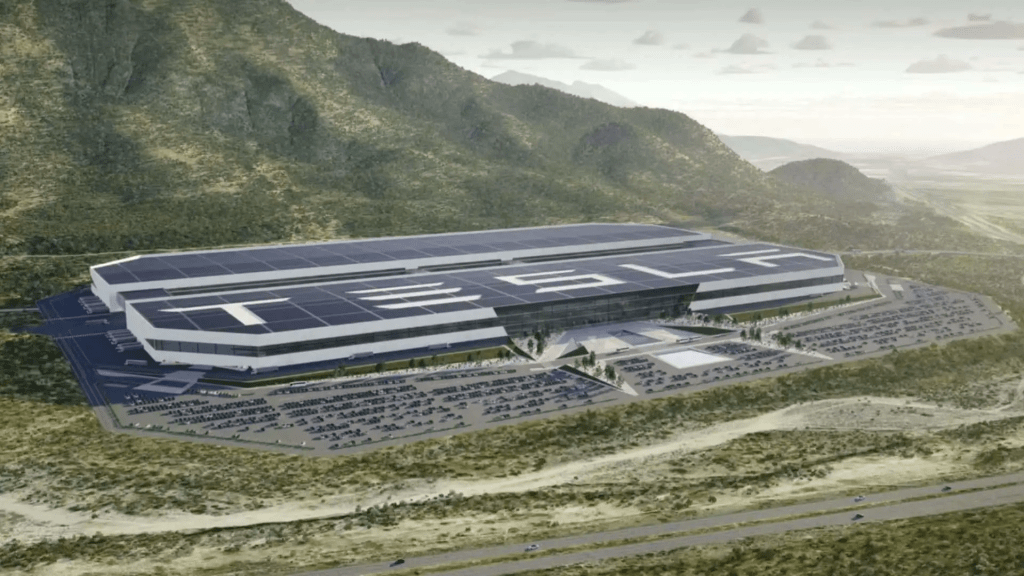
Elon Musk’s decision to pause plans to build the biggest Tesla factory worldwide in Nuevo León[13] has highlighted the uncertainties posed by Trump’s return to the White House. Trump’s threats to impose 25% tariffs on Mexico, the US’s largest trading partner, have raised concerns about the viability of Mexico as a nearshoring hub for global tech companies. A week before Trump’s inauguration, Mexico and the EU agreed to modernise their trade agreements through the EU-Mexico Global Agreement[14] to counterbalance the hit from potential US tariff increases on both economies.
Just days before President Trump assumed office, the IMF cautioned that “an intensification of protectionist policies, for instance, in the form of a new wave of tariffs, could exacerbate trade tensions, lower investment, reduce market efficiency, distort trade flows, and again disrupt supply chains.”[15] As the US’s largest trading partner, Mexico stands at the forefront of these tariffs, with key technology sectors including EVs, telecoms, and AI expected to take a big hit. Higher tariffs, the Trump administration hopes, will endow the US with more bargaining power ahead of the 2026 review of the US-Mexico-Canada (USMCA) Free Trade Agreement. Amidst these political headwinds, Mexico must, first, negotiate skilfully with its northern neighbour. In a potential contradictory scenario of tariffs and Free Trade Agreements, Mexico’s tech industry can – and must – identify and play to its relative competitive strengths in order to continue to take advantage of rising US-China tensions.
Perhaps this proximity to the US has also provoked Mexico’s growing vulnerability to cybersecurity attacks, with 31 billion cybercrime attempts recorded in the first half of 2024, representing 55% of all cyberattacks in Latin America[16].
Resilience: Mexico’s Code for Success
Mexico’s geographic proximity to the US is a double-edged sword for its leadership in technology and AI. While the country faces threats of tariffs and increasing cybersecurity risks, technologies ranging from AI to digital banking are here to stay. What sets apart Mexico, and Latin America more broadly, is the ability to turn challenges into opportunities. From addressing the needs of large, unbanked populations during the pandemic, to facilitating remittance payments amid rising migration, and even adapting to shifting trade dynamics through the creation of industrial parks to navigate US-China decoupling, the region has proven its resilience and entrepreneurial spirit. Ultimately, it is this adaptability—its capacity to innovate in the face of adversity—that will ensure the long-term strength of Mexico and Latin America’s tech sector.
[1] AI investment forecast to approach $200 billion globally by 2025 | Goldman Sachs
[2] AWS Launches Infrastructure Region in Mexico – US Press Center
[3] Mexico leads Latin America as one of the first ten countries in the world to launch an artificial intelligence strategy – Oxford Insights
[4] Finnovista_Fintech_Radar_MX_23_ENG.pdf
[5] Finnovista_Fintech_Radar_MX_23_ENG.pdf
[6] Government AI Readiness Index – Oxford Insights
[7] IDB | Study: Fintech Ecosystem in Latin America and the Caribbean Exceeds 3,000 Startups
[8] Mexico Is Flooded With Top Software Development Talent
[10] Presidenta Claudia Sheinbaum presenta el Plan México que contempla un portafolio de inversiones de 277 mmdd | Presidencia de la Republica | Gobierno | gob.mx
[11] Claudia Sheinbaum sustituirá importaciones de Asia; apuesta por semiconductores
[12] Presidenta Claudia Sheinbaum presenta la nueva Agencia de Transformación Digital para simplificar trámites y evitar la corrupción | Presidencia de la Republica | Gobierno | gob.mx
[13] Will Elon Musk scrap his plan to invest in a gigafactory in Mexico?
[15] World Economic Outlook Update, January 2025: Global Growth: Divergent and Uncertain
[16] https://forbes.com.mx/hubo-31-mil-millones-de-intentos-de-ciberataques-en-mexico-en-primer-semestre-fortinet/
 Bulletin of Advanced Spanish