BAS editor William Chislett
Spain is one of the political and economic success stories of the past 50 years post-Franco, but faces a host of challenges, some of them not new but becoming more urgent. Eight years after the unconstitutional and failed Catalan independence referendum in 2017, the disruptive and divisive secession movement has lost momentum and support, but it is not over. The economy has recovered its pre-Covid pandemic GDP level, albeit later than other EU countries, but the unemployment rate (under 12 percent, the lowest since 2008) is still around double the EU average, productivity growth is sluggish, R&D spending (1.2 percent of GDP) is very low, and the high public debt (more than 100 percent of GDP) and a structural fiscal deficit make Spain vulnerable to external shocks.
The sustainability of the relatively generous state pension system in a country with a fast-aging population and one of the world’s highest average life expectancies is under pressure. In education, the early-school-leaving rate (13.6 percent of 16–24-year-olds had left school in 2023 having completed, at most, compulsory secondary education) and the percentage of lower secondary school students who repeated a grade (7.8 percent in 2023, well above the OECD average of 2.2 percent) remain too high, although far from the levels of 15 years ago. The deep divide between the generally poor living standards of young adults and the relatively more comfortable life of the elderly is generating worrying intergenerational friction. Spain is also being hit hard by climate change, with abnormally sweltering temperatures even in the least expected months and dramatic bouts of drought. Almost three-quarters of land in Spain is likely to be affected by desertification. Coastal areas are extremely vulnerable to rising sea levels.
As if these problems are not enough, resolving them is in the hands of a government and highly polarized and fragmented political class that is frequently identified by the state pollster CIS as one of the country’s biggest problems. Tackling the problems and structural challenges for the greater good requires broad consensus across the political divide if laws and reforms are to be effective and not be overturned when a different party takes office. More than 80 percent of Spaniards, according to the private pollster Metroscopia, would like to return to the spirit of compromise of the 1975–1978 transition to democracy. Cooperation across the political divide is now so rare that when it does occur it is widely celebrated — as for instance in January 2024 when the Socialists and the Popular Party (PP), the two main parties, voted together to remove the term “handicapped” from the constitution and replace it with “persons with a disability.”

Spain had five general elections between December 2015 and July 2023 (10 in the preceding 36 years). The Socialist-led minority government that emerged from the inconclusive 2023 election depends on fragile parliamentary support from two Catalan separatist parties for its survival. One of these parties, the maximalist Junts per Catalunya (JxCat, Together for Catalonia), is particularly unreliable. The discourse in parliament is virulently aggressive, particularly between the two main parties. Political leaders treat their rivals not as adversaries but as enemies of the nation: this led one MP, representing the tiny Canarian Coalition, to ask: “Why do you hate one another so much?” With the notable exception of Catalonia, Spanish society is not ideologically radicalized to anywhere near the same extent as the political class over a whole range of issues. The average ideological self-placement of voters has moved over the past 40 years between a minimum of 4.5 and a maximum of 5, where 5 is the center, 0 is extreme left and 10 extreme right, according to the CIS.
Emblematic of the failure of the PP and the Socialists to reach consensus was the long-running saga to renew the General Council of the Judiciary (CGPJ, Consejo General de Poder Judicial), which makes judicial appointments and oversees the system. The five-year mandate for the Council’s 20 members, which began when the PP was last in power, expired in December 2018, but new members were not appointed until June 2024 and only after mediation by EU Justice Commissioner Didier Reynders broke the deadlock. (Close to 100 judicial appointments were held up because of the lack of agreement). The two parties agreed to appoint 10 new members each and were charged with agreeing to a new Council president by a three-fifths majority and hammering out by the same majority changes to the law, under which the Council is formed, and submitting them for absolute majority approval by the congress and the senate. The president was appointed, but changes had not been agreed by April 2025. The system for appointment of members has been in force since 1985, with 10 members chosen by a three-fifths majority of the congress and 10 by the senate by the same majority. Prior to that 12 were chosen by judges and eight designated by parliament. The PP’s reluctance to renew the Council was based on the appointment method not being in accordance with generally accepted EU standards, though it was happy to keep the system when it and not the Socialists were in power and, moreover, had an opportunity to change it. The European Commission and the Council of Europe want at least half of the Council’s members to be designated by judges as it might make the body more independent. There is no guarantee this will happen.
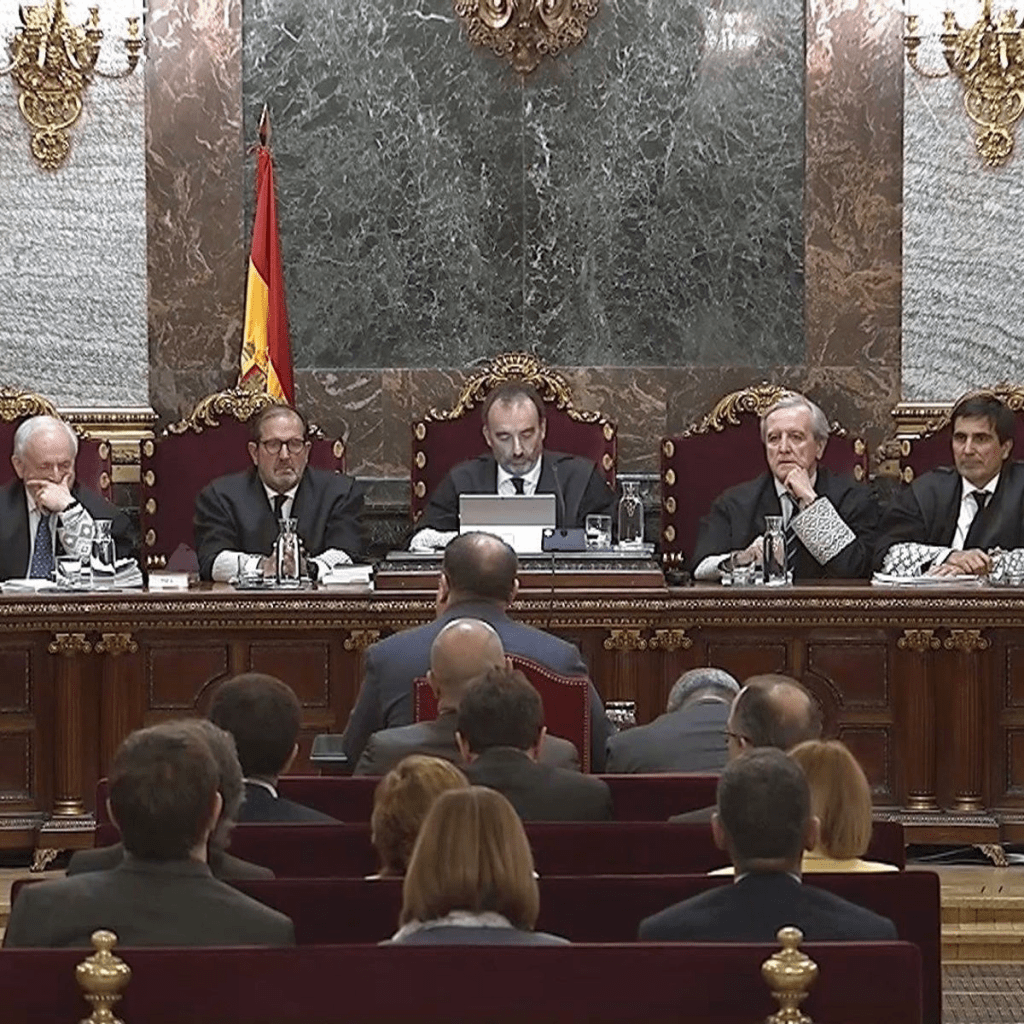
The other serious judicial problem, and one which citizens feel more acutely, is the snail’s pace at which the judiciary works, exemplified by the enormous backlog of cases at the end of each year. This is due to gross understaffing (an average of five professional judges per 100,000 inhabitants in 2020–2022, well below the EU average of 18) and IT systems that leave a lot to be desired.
Public trust in government and in parliament is among the lowest in the 27 EU countries. Nine out of every 10 Spaniards distrust the political parties, well above the EU average, according to Eurobarometer. This stems from public dissatisfaction with the way government functions (and does not function) and an impression that the quality of Spain’s democracy is in decline. The country, however, was still classified as a “full democracy,” though only just, in the 2023 Economist Intelligence Unit’s Democracy Index, ahead of the United States, which was classified as a “flawed democracy.” Problems include the colonization by politicians of state institutions and companies; the overuse of decree laws which obviate the need for parliamentary debate and are supposed to be reserved for exceptional circumstances; corruption that is perceived to be relatively high; political pressure on the judiciary; and the closed party list system to elect MPs. Under the closed party list, candidates are elected in the order in which they appear on the voting list (as decided by the party’s leadership). These closed party lists give excessive power to a party’s apparatus at the expense of accountability, making MPs beholden to the leadership and stifling independent and minority opinion and debate within the party’s ranks. As well as colonizing institutions, the two main parties, when in power, indulge in cronyism to an excessive degree, appointing friends, political allies, and people to whom favors are owed to posts in an array of state-owned companies, ranging from Correos (the postal service) and Renfe (railway company) to Paradores (chain of hotels) and Efe (news agency), rather than much better qualified people. Political affiliation also plays too much of a role in staffing the civil service, particularly among the legion of central and regional government advisors.

In the view of nine distinguished academics, who collectively published a book in 2023 called España: democracia menguante (Spain: Diminishing Democracy), Spain is moving from “a parliamentary monarchy with a division of powers to a kind of presidentialist parliamentarism.” They also perceive what they call a desbordamiento constitucional (“constitutional overflow”) in some areas, such as over Catalonia. This occurs when the government exercises its authority or makes decisions that go beyond or border the limits established by the Constitution. Without a degree of consensus among the main political parties, the 1978 Constitution is not functioning as well as it should.
Meanwhile the senate, constitutionally defined as a “chamber of territorial representation,” is not fulfilling its role and needs to be reformed along the lines of Germany’s Bundesrat. It comprises 265 members, 57 of whom are appointed by regional parliaments and the rest by popular vote. It has limited legislative powers and has become an “elephants’ graveyard” where the two main parties park second-tier politicians. A reformed senate, together with a more clearly defined division of powers between the central government and the 17 regional governments, could go some way toward defusing the independence movements in Catalonia and the Basque Country. While the Catalan independence movement was losing momentum, reflected in the poorer results of the separatist parties in the July 2023 general election and the May 2024 Catalan election, a left-wing coalition, descended from the political wing of the defunct terrorist group ETA, was on the rise in the Basque Country, EH Bildu. Bildu won 32.5 percent of the vote in the Basque election in April 2024 (27.9 percent in 2020) and 27 of the 75 seats in the region’s parliament. With this they achieved, for the first time, the same number of seats as the Basque Nationalist Party, which has ruled the region for most of the time since the 1978 Basque statute of autonomy.
Spain’s public administration is still needlessly opaque. Franco’s archaic Official Secrets Law of 1968, which allowed for classified information to be kept secret forever if deemed necessary, remains in force. Proposals to reform it have yet to be approved by parliament. In a country with more than its fair share of nepotism, there is also still no effective system to deal with conflicts of interests of politicians’ families and spouses, along the lines, for example, of the UK’s Office of Propriety and Ethics. Instead, there is an outdated Office of Conflicts whose lack of independence and autonomy is constantly criticized by the EU and the Council of Europe. A proper ethics system would have prevented a problem that arose in April 2024: Prime Minister Pedro Sánchez, understandably upset by a court’s decision to investigate his wife for alleged influence-peddling in a case brought by the extreme right Manos Limpios (Clean Hands) and hounded by the press, cancelled his public duties for a few days in order to consider resigning1. Not only is Spain out of line with advanced countries in matters of conflict of interest, but it does not even have a ministerial code of ethics or legislation on lobbies or rules limiting the use of ministerial houses or official airplanes. There is also no grilling of politicians and civil servants by cross-party parliamentary committees, such as those in the UK or public hearings in the US Congress and Senate.
Turning to the economy, strong growth is back, spurred by a surge in international tourists, a record 85.3 million in 2023, the world’s second-largest number after France, and around 95 million in 2024. Economic growth and job creation are very dependent on buoyant tourism, a key sector (13 percent of GDP), while in some parts of the country, notably the Canary and Balearic Islands and Malagá, overtourism (also called saturation tourism) is making Spain a victim of its own success. Local residents in these areas have taken to the streets calling for a more sustainable tourism model. Young adults are particularly aggrieved at being priced out of the property market as more and more apartments and shops are converted into accommodation for exclusive use by tourists. Their voice is beginning to be heard more strongly. The rise in the population of more than 8 million since 2000 has far outpaced the increase in the housing stock, particularly the rental segment. Spain’s stock of social rental dwellings (a paltry 2.5 percent of the total housing stock) is almost the lowest among the 38 OECD countries. In the Netherlands it is 35 percent. Spain is the country with the highest percentage of tenants at risk of poverty or social exclusion in the EU. The proportion of homes owned by those under 35 dropped from 15 percent in 2002 to 7 percent in 2022. Spaniards leave home on average at the age of 30 (EU average: 26).
The country has stopped converging in a sustained manner with the rest of the eurozone in terms of income since 2007, when the global financial crisis began and its massive property bubble started to burst. In purchasing power standards and current prices, its GDP per capita vis-à-vis the 19 euro-zone countries was 85 percent of the average in 2023, a gap of 15 percentage points. The slowdown in productivity growth and high unemployment (it has only been below 10 percent in three of the last 45 years) are the main reasons for the lack of convergence with peers. Spain’s growth in total factor productivity (TFP), which can be defined as the part of output growth not attributable to productive resources, between 2000 and 2022, was around 13 and 17 percentage points below that in Germany and the United States respectively. These problems, in turn, are linked to other important challenges, such as the relatively small size of companies (77 percent had between one and four employees in 2021, the highest percentage in the EU). The standard of education still falls short of EU levels, the university education on offer is slow to respond to new demands in the labour market, and the quality of and trust in institutions has declined.2 Spain was ranked 23rd in mathematics and 24th in reading and scientific knowledge out of the 38 OECD countries in the latest Programme for International Student Assessment (PISA). The results refer to 2022.
Spain has undergone profound demographic changes in recent decades, which are impacting the economy’s growth capacity, labour market dynamics, and public revenue and spending. Both fertility and mortality rates have dropped sharply (but deaths have outnumbered births every year since 2015), something that is most keenly seen in the rapid ageing of the population. This puts the sustainability of the pension system in its current form under pressure. As a result of the impressive increase in average life expectancy at birth (to 84 years, the highest in the EU), the proportion of the population over the age of 64 has more than doubled since the early 1970s to over 20 percent. The oldest woman in the world in 2024 was a Spaniard, María Branyas, who died that year at the age of 117. The ageing of the working population will hurt employment and productivity (the average employee age has risen from 37.5 to 43.5 years so far this century).
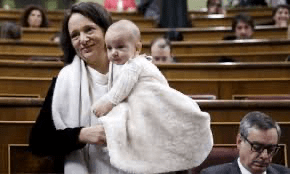
The fertility rate has fallen from 2.8 children per woman in 1975 to 1.3, one of the world’s lowest and far short of the 2.1 at which existing population levels would be maintained. Spain has become the EU country with the highest proportion of first-time mothers over the age of 40 (11 percent of births in 2021, double the EU average). But for the influx of immigrants (net foreigner inflow of close to 5 million between 2002 and 2022), Spain’s population would have hardly grown. The Venezuelan population in Spain tripled between 2018 and 2024 to more than 500,000. There has also been a significant increase in perilous sea crossings from Africa to the Canary Islands by undocumented migrants: a record 46,432 people arrived in 2024, 17.4 percent more than in 2023. The islands, struggling to cope, have become the main gateway for irregular migration from Africa to the EU.
Spain is not alone in these demographic changes, but they have been and will be more pronounced. The number of retirees from the baby boom3 generation (those born between 1958 and 1975) will increase significantly in the coming decades and will not be offset by new entrants into the labour market, unless there is another surge in immigrants. The dependency ratio (the ratio of the population aged over 66 to those aged 16–66) will increase by 27.2 percentage points (pp) to 53.8 percent in 2053, compared with a rise of 16.6 pp (to 45.8 percent) on average in the EU, according to Eurostat projections. In a separate forecast, the European Commission’s Aging Report in 2024 says Spain’s pension expenditure under the baseline scenario will escalate to 17.3 percent of GDP in 2050. Analysis of the pension reforms between 2021 and 2023 points to higher long-term obligations that are not fully offset on the revenue side.
As regards the green transition, Spain is already quite advanced in the use of renewable energy (56 percent of electricity in 2024 was generated by renewables), but if it wants to meet some highly ambitious climate targets over the coming decades it will require improving and increasing green taxation, an area where Spain has raised less revenue than other EU economies. The tax system, as a whole, needs overhauling. The relative weight of consumption tax, for example, which is low in comparison with other EU economies, could be increased and the vulnerable groups affected compensated by earmarking some of the extra revenue for them in transfers. The country is a laggard in adopting electric vehicles and in charging points (the tiny Netherlands had almost five times more than Spain in 2024).

Eleven years after the abdication of King Juan Carlos I in 2014, due to ill health and financial and personal irregularities, the heated debate among the left on keeping the monarchy as reinstated by Franco or restoring a republic (the Second Republic was crushed during the 1936–1939 Civil War) has abated. The exemplary life of Juan Carlos’s son, Felipe VI, who inherited a toxic situation from his father, has restored trust in the institution. In a country so sharply polarized and politically fragmented, the nonpartisan monarchy, albeit an apparently anachronistic institution in the 21st century,4 serves Spain better than a republic by standing above the fray and acting as a symbol of unity by not being identified with any political party. A change in the form of the state will not resolve the country’s fundamental problems and could, history suggests, even exacerbate them.
This is an abridged version of the last chapter of the second and updated edition of Spain: What Everyone Needs to Know (Oxford University Press), published in the United States in April 2025 and in the United Kingdom on 8 August. The first edition was published in 2013.
Endnotes
1. See the article by Miriam González Durántez in the Financial Times on April 28, 2024 at https://www.ft.com/content/b4658093-6d48-44f2-9583- 3eb66289f359. Durántez knew what she was talking about as not only is she a lawyer but also the wife of Nick Clegg, a former UK deputy prime minister.
2. Chapter 2 of the Bank of Spain’s 2023 annual report looks at these structural challenges in great detail. Available at https://www.bde.es/f/webbe/SES/ Secciones/Publicaciones/PublicacionesAnuales/InformesAnuales/23/Files/ InfAnual_2023_Cap2_En.pdf.
3. Spain’s baby boom was some 10 years later than in most of Europe because of the impact of its Civil War.
4. It is striking that many of the most prosperous and democratic countries in the world are parliamentary monarchies. Of the 24 countries classified as “full democracies” in the 2023 democracy index of the Economist Intelligence Unit (EIU), including Spain, eight are parliamentary monarchies. Nine of the top 30 countries in the UN’s Human Development Index (UNHDI) are parliamentary monarchies.
 Bulletin of Advanced Spanish