
Stephen M. Hart, BAS editor
For many years now the first foreign language of China has been English. Messages on the metro as well as road signs have an accompanying English translation. I have an app on my Chinese phone that allows me to photograph a text in Chinese and have it translated within seconds into English. But, as a result of the very warm overtures made recently by the Chinese government to various Latin American countries, Spanish, as China’s second foreign language, is rapidly catching up.
Though the original connection between China and Latin America was via the Maritime Silk Route, initiated by Emperor Wan Li of the Ming Dynasty (1572–1620), it was only in the 21st century that it really took off. In just five years during the period 2013–2018 President Xi Jinping visited Latin American and Caribbean countries no less than thirteen times. China is now the main trading partner of Brazil, Chile, Peru, and Uruguay, and the second-largest trading partner of several other countries in Latin America. It has free trade agreements with Chile, Costa Rica, Peru and Ecuador (the latter signed just recently on 11 May 2023).[1]
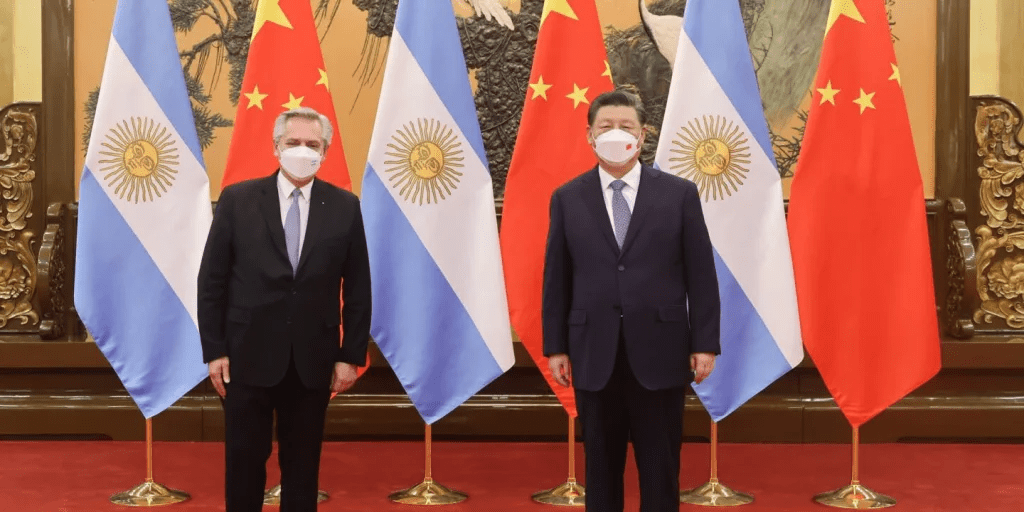
Between 2005 and 2020, Chinese banks dished out more than $137 billion in loans to the region. Most of the countries of Latin America have now joined China’s Belt and Road Initiative (BRI), a global strategy centred on developing infrastructure projects around the world. An example of this scheme is the impressive “Kise” hydropower station being built jointly by China and Argentina.
According to China’s General Administration of Customs, the trade volume between China and Latin America and the Caribbean exceeded $450 billion in 2021, and increased by 12.5% in 2022. China’s direct investment in Mexico alone has amounted to almost US$1bn in the last four years.[2] The Puerto de Chancay project in Peru, with an investment of US$4bn, is funded by Chinese companies; no surprise, therefore, that Peru will be hosting the Summit of the Asia-Pacific Economic Cooperation (APEC) Forum in 2024.[3] And China has recently signed a massive trade agreement with Brazil, which includes the inaugural introduction of China’s mature wind turbine equipment in Latin America; the LDB Wind Power Expansion Project is helping the two countries to work together in the field of green and low-carbon economic construction.[4] As a result of this project China and Brazil have decided to ditch the US dollar as an intermediary currency.[5]
This growing rapport between China and Latin America means that Spanish is more trendy now in China than it ever was. Lu Jingsheng, the Chinese government’s National Coordinator for Spanish, has pointed out that in the last fifteen years, the demand for Spanish language education in China has “increased 30 fold”.[6] It was given a further big boost in 2018 when China’s Ministry of Education included Spanish language instruction as an optional foreign language in high school, alongside French and German.
Chinese university students nowadays are also finding that knowing Spanish is a big plus in the job market. Yang Jiaming, a recent graduate from the Spanish program at Central China Normal University in Wuhan, Hubei Province, was offered a job straight out of college because the company he applied to “has business in Latin America”.[7]
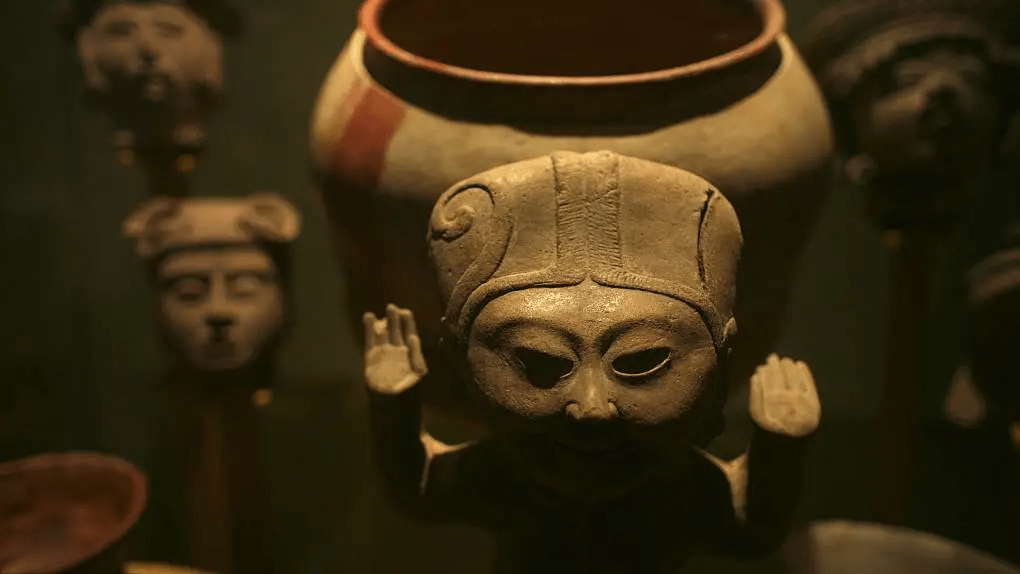
This rapprochement between China and Latin America has a cultural dimension as well. In November 2014 the National Museum of China in Beijing organised one of the country’s biggest ever exhibitions on Latin America’s cultural history entitled “Mayas: The Language of Beauty” (“Mayas: El lenguaje de la belleza)”. The exhibition gave rise to new questions about the possible links between the Ancient Chinese Shu culture and the Mayas; the two cultures, after all, have a number of characteristics in common – including cultural icons and the calendar – and they may be historically linked.[8]
I am currently teaching two undergraduate courses at Hunan Normal University in Changsha, one on Latin American literature and the other on Latin American culture. I am impressed by the linguistic level of the students, as well as their enthusiasm and interest in the course materials. My first assumption was that they were studying Spanish in addition to English, but this was proved wrong when I found that – for their presentation assignments summarising a work of secondary criticism – they wanted to summarise an article in Spanish rather than English. Indeed, the departmental policy is to give all lectures and seminars in Spanish, given that it is their second language and that their linguistic proficiency is excellent.
I decided to tweak the course content a little and draw out the Chinese connection, e.g. by comparing maps of the Chinese seas with what Christopher Columbus thought he had discovered when he was actually in the Caribbean, by discussing the hypothesis of the close connections between the Ancient Shu culture and the Mayas, by focussing on the Philippines as well as Cuba and Puerto Rico during the analysis of the Spanish-American War of 1898, and by including Latin American novelists with Chinese roots in my overview of the modern Latin American novel, eg Siu Kam Wen and Carlos Francisco Changmarín. The success – or lack thereof – of this more inclusive strategy will be borne out by the essays that the students submit at the end of this term!
[1] https://www.chinadaily.com.cn/a/202305/11/WS645c842aa310b6054fad268d.html
[2] http://www.china.org.cn/world/2023-03/11/content_85161207.htm
[3] https://andina.pe/Ingles/noticia-peru-to-host-apec-2024-summit-our-country-will-deepen-position-in-asiapacific-880512.aspx
[4] https://news.cgtn.com/news/2023-01-25/China-Latin-America-ties-to-enter-new-era-of-equality-mutual-benefit-1gSmJFPqi52/index.html
[5] See China, Brazil reach agreement to ditch intermediary US dollar – Chinadaily.com.cn Chinadaily, 30 March 2023.
[6] https://www.languagemagazine.com/chinas-demand-for-spanish-speakers/
[7] https://global.chinadaily.com.cn/a/202208/03/WS62e9d064a310fd2b29e6ff71.html
[8] https://www.chinadaily.com.cn/culture/2014-11/18/content_18931764.htm
 Bulletin of Advanced Spanish